AI GENERATES NOVEL PATHWAY TO SUSTAINABLE TOURISM DEVELOPMENT IN VIETNAM
VNA•21/05/2026 16:44
With digital transformation accelerating worldwide, using science and technology – especially artificial intelligence (AI) – has shifted from being a choice to a vital necessity for the tourism industry. In Vietnam, AI is unlocking new opportunities by enabling deeply personalised services, optimising management and operations, and enhancing destination marketing. These advances are increasingly seen as a key lever to help the country’s tourism sector speed up growth while ensuring long-term sustainability.
From “digitalised services” to a digital tourism ecosystem
According to the 2026 Travel Outlook Report released by Agoda, Vietnamese travellers are leading Asia in their readiness to adopt AI for travel planning. The report shows that 81% of Vietnamese respondents intend to use AI for their next trip, significantly higher than the regional average of 63%. This indicates not only a high level of digital literacy among Vietnamese travellers but also a growing openness to integrating advanced technologies into everyday experiences.
In practice, AI is already being widely used by travellers in Vietnam to optimise their journeys. Common applications include recommendations on tourist attractions and local experiences, suggestions for restaurants and cuisine, personalised itinerary creation, and real-time language translation. Around 30% of users rely on AI tools for itinerary planning and translation alone, demonstrating how embedded these technologies have become in travel decision-making
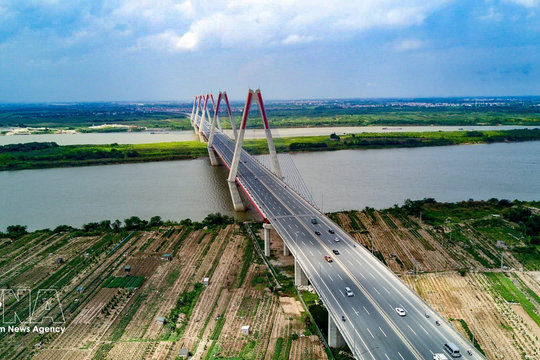
Museums and relic sites are boosting technology application to improve visitor experiences. (Photo: VNA)Digital technology is considered one of the drivers for tourism breakthroughs. (Photo: VNA)AI helps travellers explore destinations, restaurants and cuisine, personalise itineraries, and translate languages in real time. (Photo: VNA)Digital technology helps visitors enjoy more interesting experiences. (Photo: VNA)
These trends reflect a broader transformation in tourism demand, shifting from basic digitalisation such as online booking systems, towards the creation of an integrated digital tourism ecosystem. In this new paradigm, travellers expect seamless, flexible, and highly personalised experiences across every stage of their journey, from inspiration and planning to booking, on-site experiences, and post-trip sharing.
Recognising this shift, Vietnam’s Ministry of Culture, Sports and Tourism has taken steps to establish a supportive legal and institutional framework. Key initiatives include the development of a national tourism database system and a programme to apply Industry 4.0 technologies in fostering smart tourism. These policies create a foundation for digital transformation that benefits both public management and private sector development.
At the operational level, the tourism industry has introduced a range of core digital platforms designed to serve three main objectives: improving governance efficiency from central to local levels, supporting business activities, and enhancing the overall tourist experience. These platforms include the Vietnam tourism database system, a nationwide tourism statistics reporting platform, and the national tourism application “Vietnam Travel”, which provides comprehensive information and services for users.
1
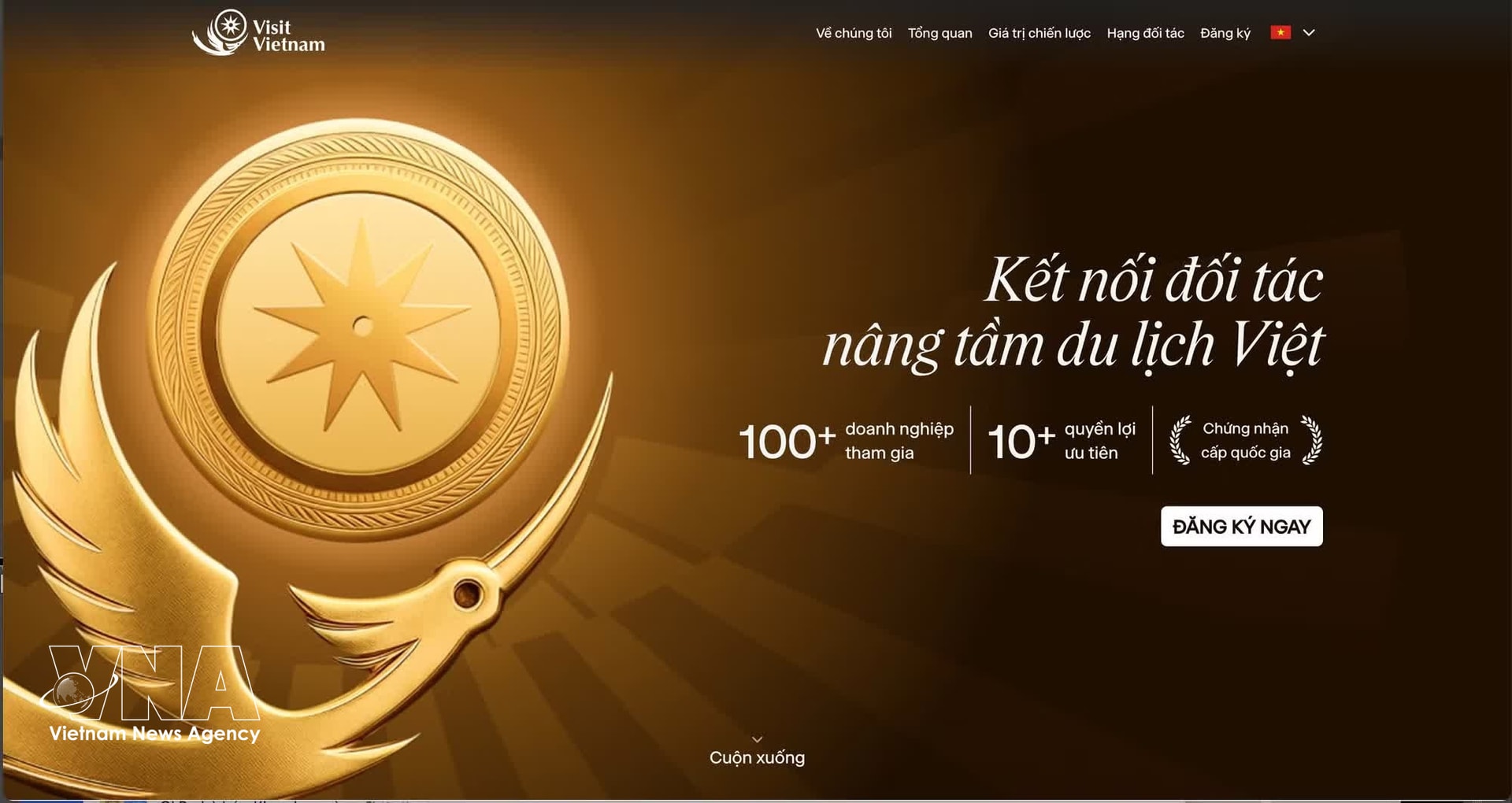
Vietnam tourism database system
Interface of the Visit Vietnam platform (Screenshot photo)
2
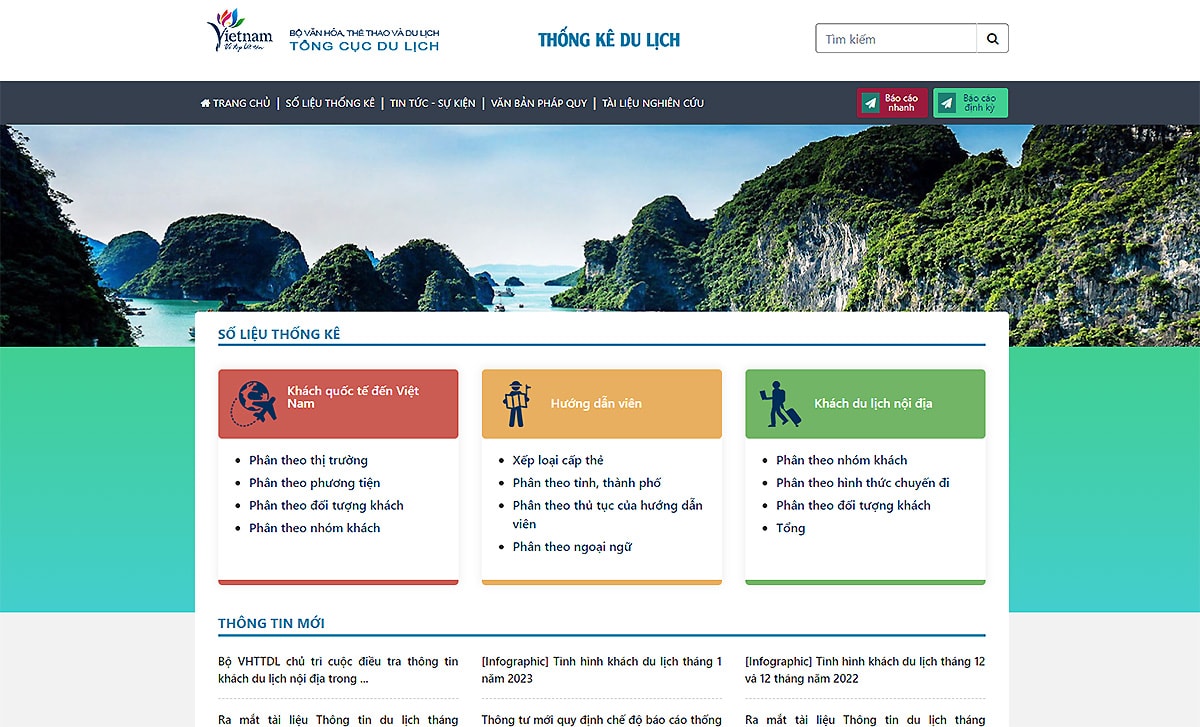
Tourism statistics reporting software from central to local levels
The tourism statistics reporting system stipulated in Circular No. 18/2021/TT-BVHTTDL, issued by the Ministry of Culture, Sports and Tourism, was developed by the Tourism Information Centre under the Vietnam National Authority of Tourism. (Screenshot photo)
3
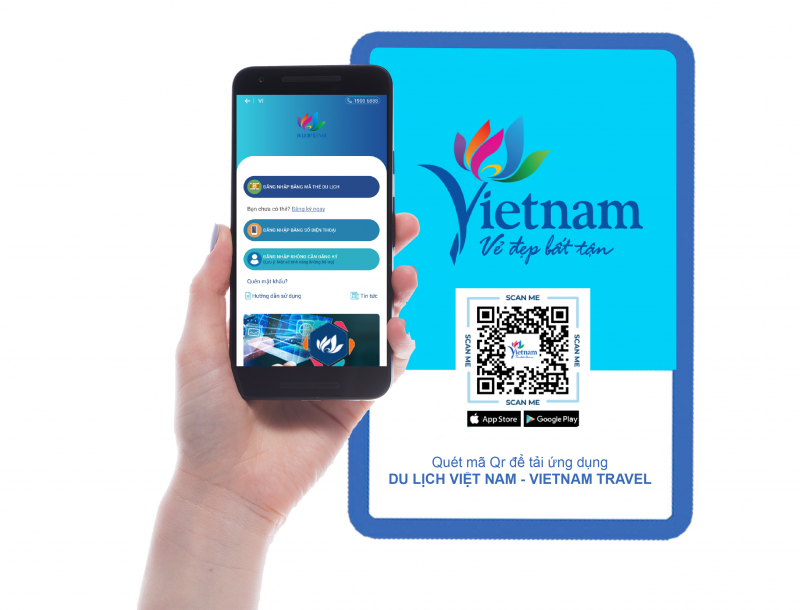
National tourism application “Vietnam Travel”
The Vietnam Travel multi-service tourism application is provided by the Vietnam National Authority of Tourism. (Screenshot photo)
4
Vietnam Travel Card – Smart tourism card
Vietnam Travel Card – a smart tourism card – is a strategic product within the smart tourism ecosystem. (Photo: vietnamtourism)
5
“Tourism Management and Business” application
Each smartphone installed with the Tourism Management and Business application within the smart tourism ecosystem can function as a mobile POS payment device. (Photo: VietnamPlus)
Additional innovations include the Vietnam Travel Card – a smart tourism card integrating multiple services, and the “Tourism Management and Business” application supporting enterprises. Other ideas include an electronic ticketing system and a multimedia guide system that enriches visitor experiences at destinations.
AI becomes a driving force for Vietnam’s tourism industry. (Photo: VNA)
Across the country, local authorities and tourism enterprises have embraced digital transformation. Many destinations have invested in smart tourism solutions while businesses adopted AI-driven tools to remain competitive in a rapidly evolving market. This widespread adoption reflects a growing recognition that technology is not merely a support tool but a central driver of growth and innovation in tourism.
AI is also proving invaluable in improving operational efficiency within tourism businesses. It can automate and optimise tasks such as booking management, dynamic pricing of hotel rooms, and forecasting visitor demand at specific destinations. By analysing large volumes of data in real time, AI helps businesses respond more effectively to market fluctuations, reduce risks, and maximise revenue. At the same time, it enables better resource allocation, helping to address issues such as overcrowding and uneven distribution of tourist flows.
AI adoption as an inevitable pathway
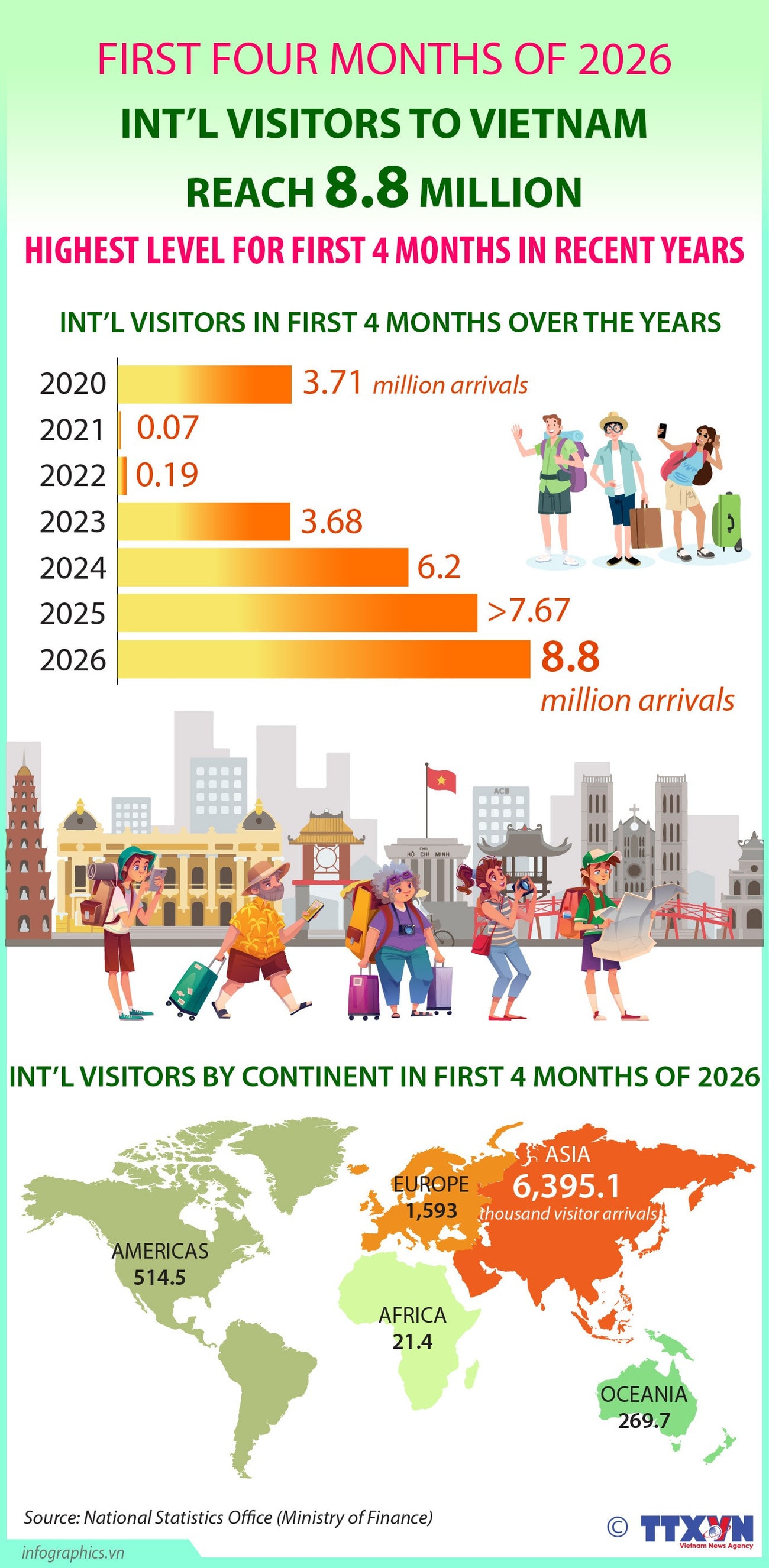
Vietnam’s tourism sector experienced a strong rebound in 2025, marking a significant milestone in its recovery from previous disruptions. The country welcomed 21.2 million international visitors, an increase of 20.5% compared to 2024, while serving 137 million domestic tourists, up 24.5%. Total tourism revenue hit a record of 1 quadrillion VND (about 38 billion USD), representing a growth rate of over 19%.
While these figures highlight impressive progress, they also underscore emerging challenges. Rapid growth has placed increasing pressure on infrastructure, natural resources, and the environment. At the same time, maintaining service quality and improving governance capacity have become more complex tasks. In this context, the adoption of advanced technologies, particularly AI, is no longer optional but essential to ensure fast yet sustainable development.
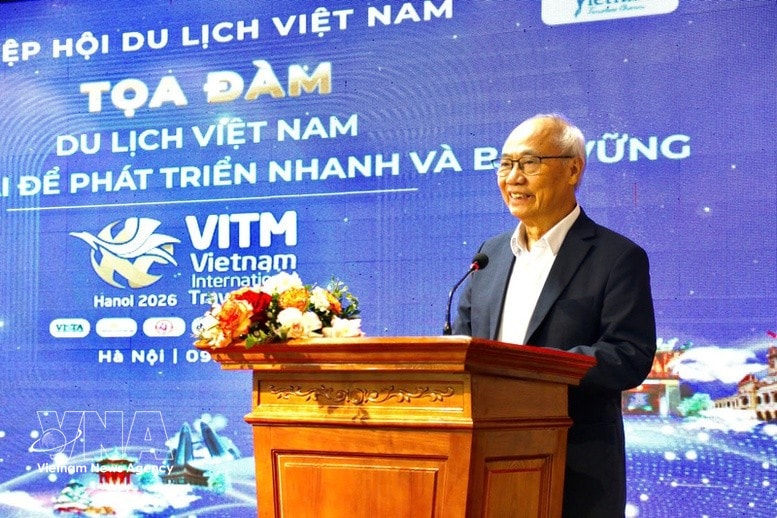
At an April 9 seminar on promoting digital transformation and AI application for fast and sustainable tourism development, held within the framework of the Vietnam International Travel Mart 2026, Chairman of the Vietnam Tourism Association Vu The Binh emphasised the need for a fundamental shift in the sector’s development model.
Binh also highlighted that digital transformation has moved beyond the stage of encouragement and has become a practical necessity for all stakeholders in the tourism ecosystem, from government agencies, industry associations and local authorities to private enterprises. The rapid evolution of AI is reshaping traveller behaviour in profound ways, influencing how people search for information, select destinations, book services, and share their experiences.
“
Vietnam must transition from an extensive growth model – based largely on increasing visitor numbers – to one driven by technology, data, innovation, and smart governance. Such a transformation would enable the industry to enhance productivity, improve service quality, and create more value from each visitor.
Chairman of the Vietnam Tourism Association Vu The Binh
“
AI requires stronger collaboration among key stakeholders, including the government, businesses, local communities, and international partners. Enhanced coordination among ministries, sectors, localities and tourism associations is also crucial to creating a unified approach that can accelerate digital transformation and maximise its impact.
Deputy Director of the Vietnam National Authority of Tourism Pham Van Thuy
Echoing this view, Deputy Director of the Vietnam National Authority of Tourism Pham Van Thuy described digital transformation and AI adoption as an essential pathway for Vietnam to “leapfrog” in the global tourism landscape. He stressed that tourism professionals must not only adopt but also master these technologies to remain competitive.
From a research perspective, Dr Nguyen Anh Tuan, Director of the Institute of Tourism Economics, underscored the importance of building a national digital tourism ecosystem supported by open data platforms. Such a system would facilitate seamless connectivity among stakeholders, enabling more efficient data sharing and collaboration.
He emphasised that AI should play a central role in forecasting tourism trends, personalising visitor experiences, and improving destination management. At the same time, he called for the integration of smart tourism development with green growth strategies, ensuring that technological progress contributes to environmental sustainability. Supporting small and medium-sized enterprises in adopting digital technologies was also identified as a priority.
From smart management to digital marketing, developing tourism applications, and bettering visitor experiences, technology has made significant contributions. Amid growing competition, any country that masters data, technology, and the visitor experience will hold a strong competitive advantage. For Vietnam, the door of opportunity has opened; the remaining issue lies in the speed of action and the determination to change./.
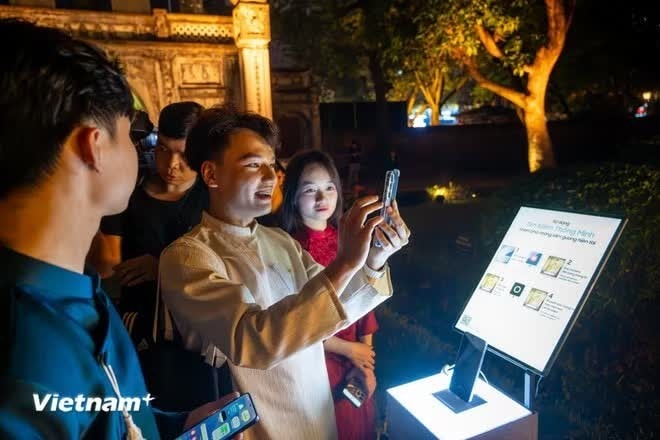
In the sacred setting of the Temple of Literature, night tours are offering a new approach to heritage experiences by harmoniously blending traditional values with modern digital technology. (Photo: VNA)
Bình luận của bạn đã được gửi và sẽ hiển thị sau khi được duyệt bởi ban biên tập.
Ban biên tập giữ quyền biên tập nội dung bình luận để phù hợp với qui định nội dung của Báo.