




Gửi bình luận
LongForm
Promoting sustainable tourism in craft villages through heritage-based creativity
For Vietnam’s traditional craft villages to achieve sustainable development, artisans must be placed at the heart of the value chain, while local communities should be the primary stakeholders and direct beneficiaries of tourism activities.

Four Hanoi craft villages - Bat Trang Pottery Village, Van Phuc Silk Village, Chuyen My Mother-of-Pearl Inlay and Lacquerware Village, and Son Dong Fine-Art Woodcarving Village - have been admitted by the World Crafts Council (WCC) to its global network of creative craft cities. The recognition has helped strengthen the position of the capital’s craft villages on the international cultural map while opening up new opportunities for the sustainable development of Vietnam’s heritage.
However, these craft-village heritages continue to face numerous challenges. They are still seeking an answer to a pressing question: how can traditional cultural values be preserved while building a sustainable local economy through craft-village tourism?
Identifying potentials and challenges
With more than 1,350 craft villages and villages practising traditional crafts, Hanoi possesses a distinctive advantage shared by few capitals worldwide. These villages represent a valuable cultural resource that gives the capital’s tourism sector a unique identity at a time when many localities are stepping up the development of cultural tourism. Hanoi’s traditional crafts have demonstrated remarkable resilience, combining technical expertise, cultural values and creativity while adapting to market mechanisms.
Nguyen Tien Dat, Vice Chairman of the Hanoi Tourism Association, said that while historical sites and traditional museums preserve cultural and historical values behind closed doors, the capital’s craft villages can be regarded as “living museums.” There, cultural traditions remain part of everyday life and are preserved and passed down through the work and production activities of artisans and local communities. This vitality has become a major attraction for international visitors, particularly Western tourists.
“Today’s travellers want to take part directly in the process of making products. They want hands-on experiences, such as shaping pottery in Bat Trang or weaving silk in Van Phuc, while listening to stories about the history of the villages and the people who have preserved their crafts over generations. These authentic experiences and emotionally engaging stories create a distinctive value,” Dat said.
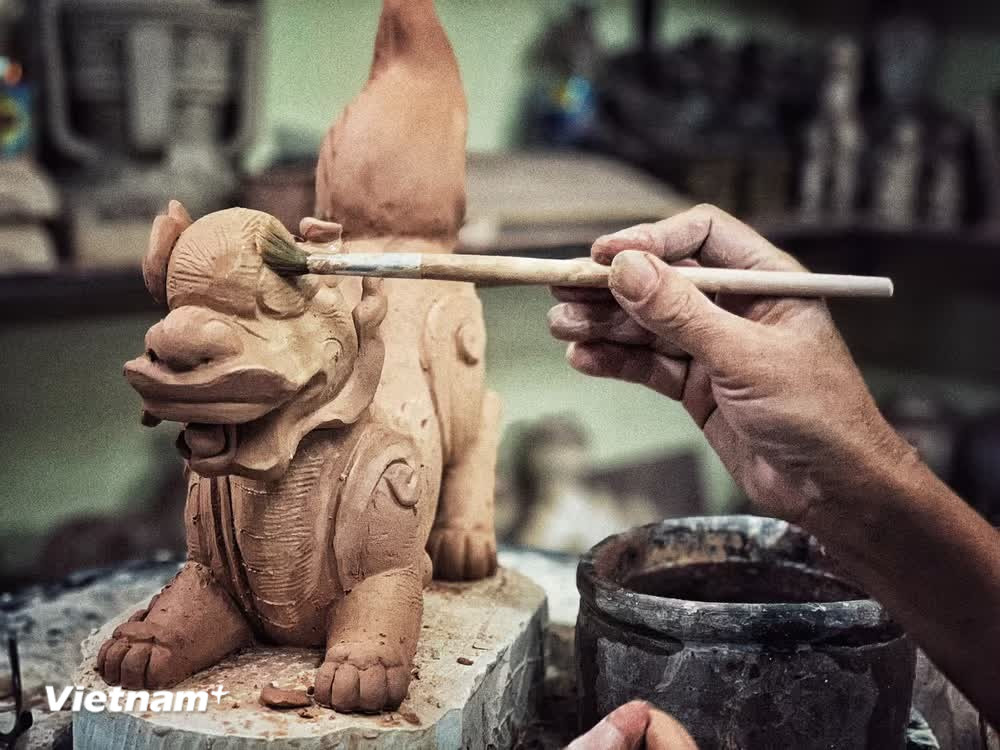


After each journey, every opportunity for visitors to touch Vietnamese culture becomes a lasting memory, a powerful emotion and a source of deeper understanding. (Photo: Mai Mai/VietnamPlus)
Tourism experts agree that the true value of each journey - and every opportunity for visitors to “touch” Vietnamese culture - lies in the lasting memories, emotions and deeper understanding they gain of a place by immersing themselves in the daily lives of local communities.
Despite these positive signs, many craft villages are facing a shortage of successors. Younger generations are showing less interest in traditional crafts, while the artisans who remain deeply committed to their trades are growing older.
Nguyen Thi Thuy Huong, Vice Chairwoman of the People’s Committee of Chuyen My commune in Hanoi, expressed concern that without timely and appropriate solutions, a shortage of skilled successors and a disruption in the transmission of traditional craftsmanship could become a real possibility.
Moreover, only a small number of craft villages, such as Bat Trang pottery village and Van Phuc silk village, have developed a comprehensive tourism service ecosystem, including spacious parking areas, standardised public toilets and teams of artisans capable of telling engaging cultural stories. In most other villages, residents remain focused primarily on production and have yet to develop proper plans for welcoming tourists.
This lack of infrastructure and services has prevented craft-village tourism from transforming and breaking out of a persistent vicious cycle: local authorities are reluctant to invest because visitor numbers remain low, yet without systematic investment, the villages lack the conditions needed to attract and accommodate tourists.
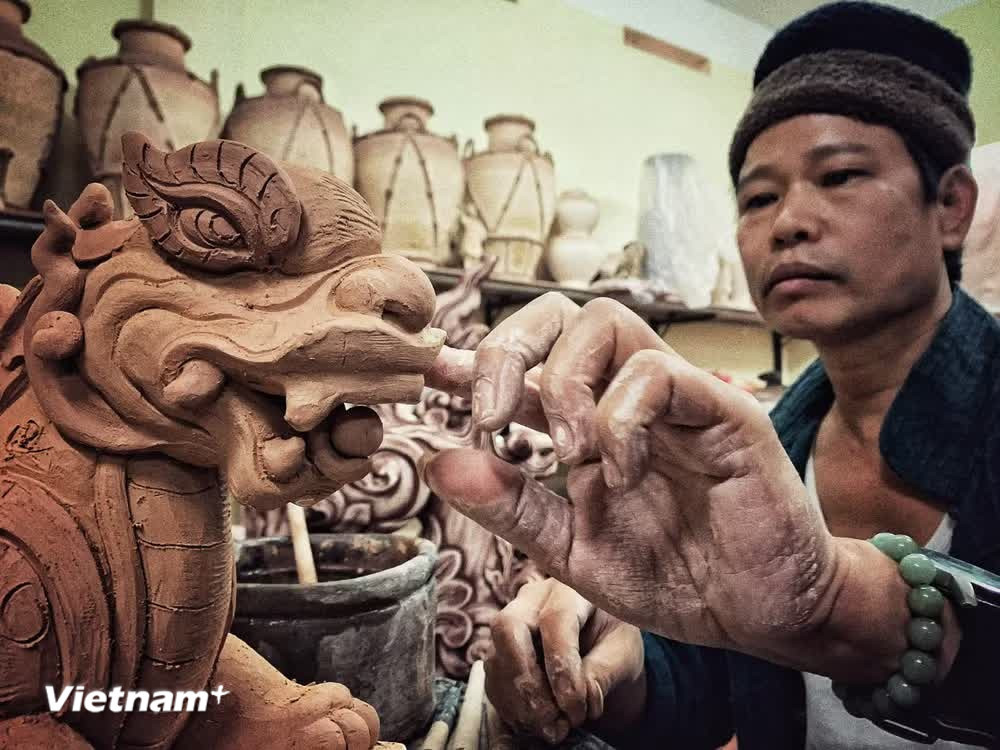

Meritorious Artisan Tran Tuoc introduces handcrafted ceramic products he created at his home in Bat Trang village. (Photo: Mai Mai/VietnamPlus)
Many craft villages in Hanoi and across the country are like “uncut gems” waiting to be polished. To become vibrant destinations, they need more than skilled artisans; they also require hands-on experience spaces, appealing cuisine, homestay accommodation, cafés and other services that encourage visitors to stay longer.
Chuyen My commune authorities noted that many local production establishments still have limited capacity in brand building, product design, digital transformation and access to international markets. These shortcomings weaken the competitiveness of craft-village products compared with others in the same market segment globally.
Solutions inspired by innovative practices worldwide
Many Asian countries have successfully transformed traditional craft villages into attractive cultural and tourism destinations while, importantly, generating sustainable economic value for local communities. Their experiences offer valuable models for Hanoi and other provinces and cities across Vietnam to learn from.
Nguyen Tien Dat cited Japan as an impressive example of how craft villages tell the stories behind their products. At pottery, leatherworking and silversmithing villages, visitors do not simply purchase handicrafts; they can also take part in the production process alongside artisans and learn about the villages’ history. As a result, handcrafted products can command significantly higher prices. Notably, the Japanese Government has introduced various policies to support artisans, enabling them to remain committed to their crafts and pass their skills on to future generations.

In China, prominent craft villages in provinces such as Yunnan and Guizhou have been developed into integrated tourism complexes with diverse service ecosystems, including restaurants, homestays, cultural performances and hands-on activities for visitors. These services help extend tourists’ stays, increase spending and turn craft villages into attractive destinations.
Meanwhile, the Republic of Korea offers a successful example of combining traditional craftsmanship with modern design thinking. Through cinema and other media activities, the country’s craft-village products have been widely promoted, enabling them to reach international markets and enhance their brand value.
“Hanoi can certainly draw lessons from these successful models, but they should not be applied mechanically. What matters is developing strategies suited to the distinctive characteristics of each craft village, gradually investing in and harnessing local strengths to preserve traditional values while creating momentum for sustainable tourism development,” Nguyen Tien Dat said.
However, executives from several travel companies said that for Vietnam’s traditional craft villages to become professional tourism destinations, artisans - the custodians and creators of their core values - must be placed at the centre of the value chain, while local communities should directly benefit from tourism activities. Experience-based tours should enable artisans to tell the stories of their crafts, demonstrate their skills, guide visitors through hands-on activities and sell handmade products at higher value. This is the truly sustainable path for the development of craft-village tourism.
Against the backdrop of implementing the Politburo’s Resolution No. 57-NQ/TW, dated December 22, 2024, on breakthroughs in science and technology development, innovation and national digital transformation, the Vice Chairwoman of the Chuyen My commune People’s Committee emphasised that digital transformation not only helps expand markets but also supports craft-village branding and enables traditional knowledge and skills to be digitised and passed on to future generations.

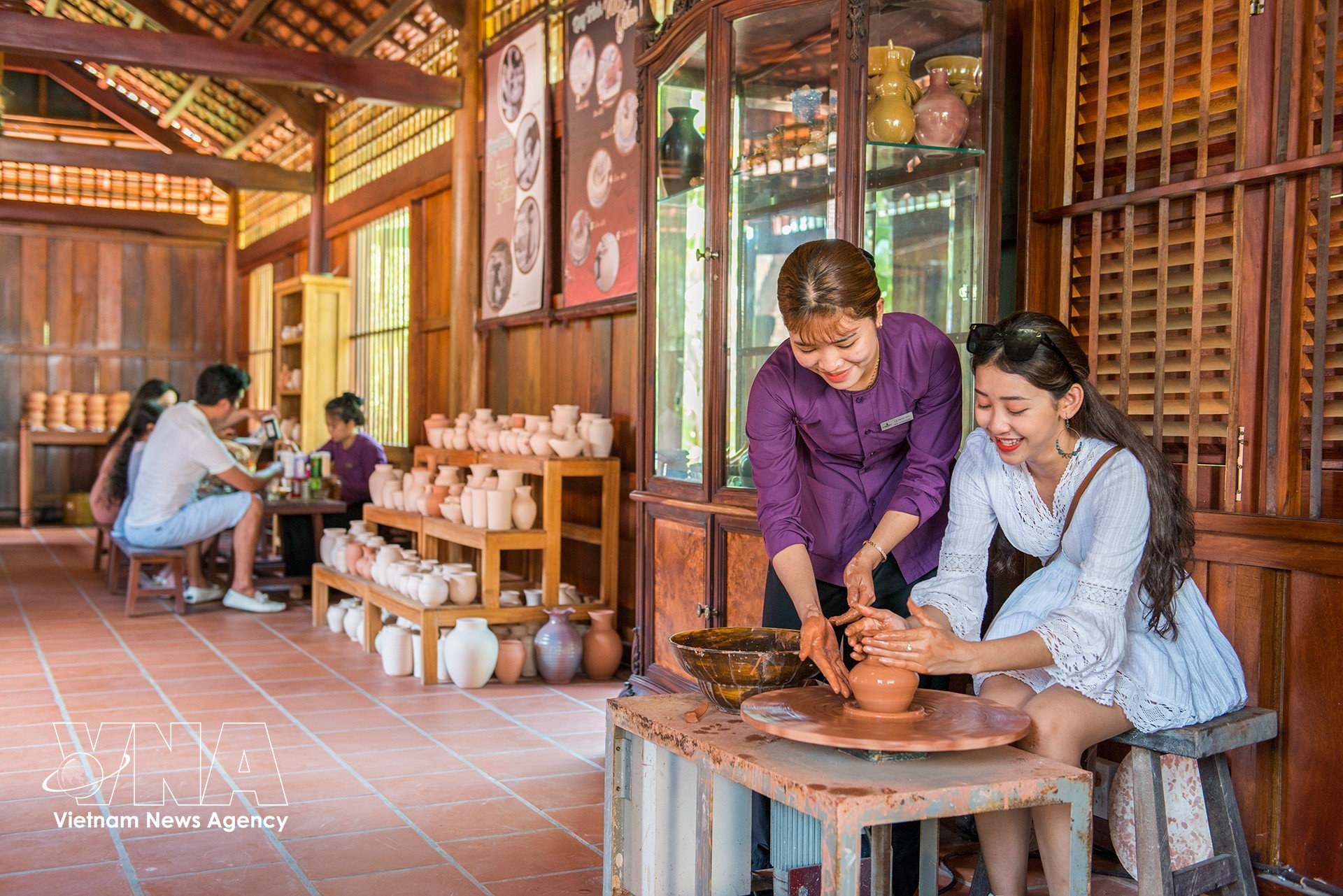

For Vietnam’s traditional craft villages to become professional tourism destinations, artisans must be placed at the centre of the value chain, while local communities should directly benefit from tourism activities. (Photo: Contributor/VietnamPlus)
This will create further opportunities for craft villages to develop smart tourism, making information more accessible to visitors and providing them with more engaging experiences. Nevertheless, digital transformation should be regarded as a tool to enhance and spread the core values of craft villages, rather than replace traditional values and the human heritage embodied by artisans and local communities.
When local people earn a stable income, take pride in their traditions and recognise the development opportunities offered by their cultural heritage, traditional crafts will naturally be preserved through the community’s own vitality.
Therefore, by effectively harnessing these enabling factors, Vietnam’s craft villages can achieve more sustainable development, enhance their competitiveness and deepen their international integration in the near future./.