MARICULTURE - NEW GROWTH DRIVER FOR VIETNAM'S OCEAN ECONOMY
{VNA}•22/08/2026 17:47
Resolution No 20-NQ/TW adopted by the 14th Communist Party of Vietnam Central Committee at its third plenum on July 28, 2026, on building and developing Vietnam into a strong maritime nation identifies marine farming as a new pillar of the marine economy. It targets mariculture production value growing by an average of around 8% annually and accounting for 15% of the total fisheries sector value.
As room for land-based aquaculture is nearing its limits, the sea is emerging as a new growth space for Vietnam’s fisheries sector. However, turning this potential into a growth driver requires a major shift from small-scale, nearshore farming to industrial, high-tech marine farming and the development of integrated value chains.
Potential from the “last field”
The United Nations has described the 21st century as the century of the seas and oceans, with marine farming seen as the planet’s “last field” for food production.
Vietnam has more than 3,260 km of coastline, over 1 million sq.km of exclusive economic zone (EEZ) and more than 4,000 large and small islands, providing favourable conditions for large-scale mariculture.
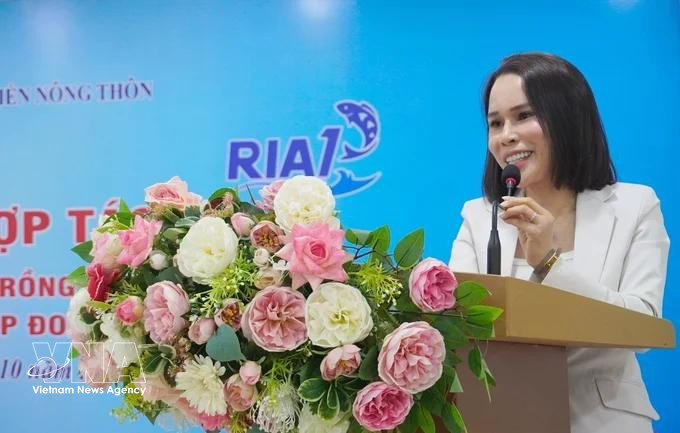
According to Chairman of the Vietnam Seaculture Association Nguyen Huu Dung, if only around 0.1% of Vietnam’s EEZ is used for marine fish farming, as recommended by the Food and Agriculture Organisation of the United Nations (FAO), the country can produce around 10 million tonnes of marine fish annually, without taking into account the vast potential for shellfish and seaweed farming.
Dung said that as land-based aquaculture has limited room for further expansion, the ocean represents a new growth space for the fisheries sector.
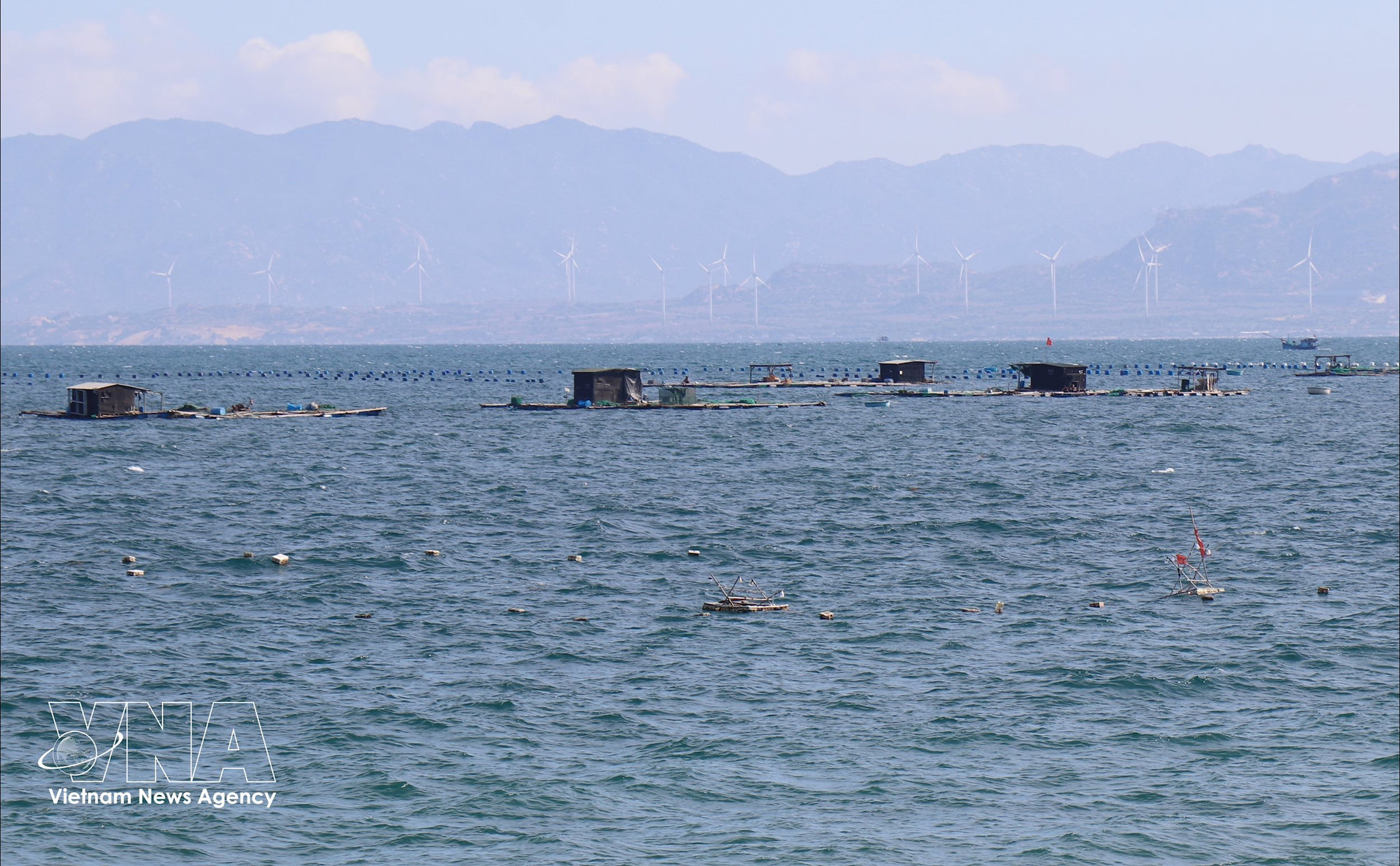
Industrial marine farming can not only provide food but also be combined with tourism, offshore wind power, oil and gas and other marine economic activities to make more efficient use of ocean resources.
“
Industrial marine farming can not only provide food but also be combined with tourism, offshore wind power, oil and gas and other marine economic activities to make more efficient use of ocean resources.
Chairman of the Vietnam Seaculture Association Nguyen Huu Dung
Experts say marine farming should not be limited to raising fish or shrimp, but should also involve the management, conservation and sustainable use of marine ecosystems, thereby creating long-term economic value.
Following the reorganisation of administrative units, Vietnam now has 21 coastal provinces and cities, creating favourable conditions for integrated marine economic planning. Ho Chi Minh City, whose maritime area stretches from Can Gio to Con Dao, is assessed to have significant potential for developing high-tech marine farming linked with tourism, logistics and other marine economic activities.
“
Marine farming planning should be carried out in parallel with planning for tourism, offshore wind power and other marine economic sectors to ensure efficient use of marine space.
Nguyen Thi Hai Binh, CEO of STP Group
Nguyen Thi Hai Binh, CEO of STP Group, said Con Dao has good marine environmental quality, rich ecosystems and a large number of tourists, making it suitable for marine farming models combined with experiential tourism.
However, marine farming planning should be carried out in parallel with planning for tourism, offshore wind power and other marine economic sectors to ensure efficient use of marine space.
From exploitation to marine farming
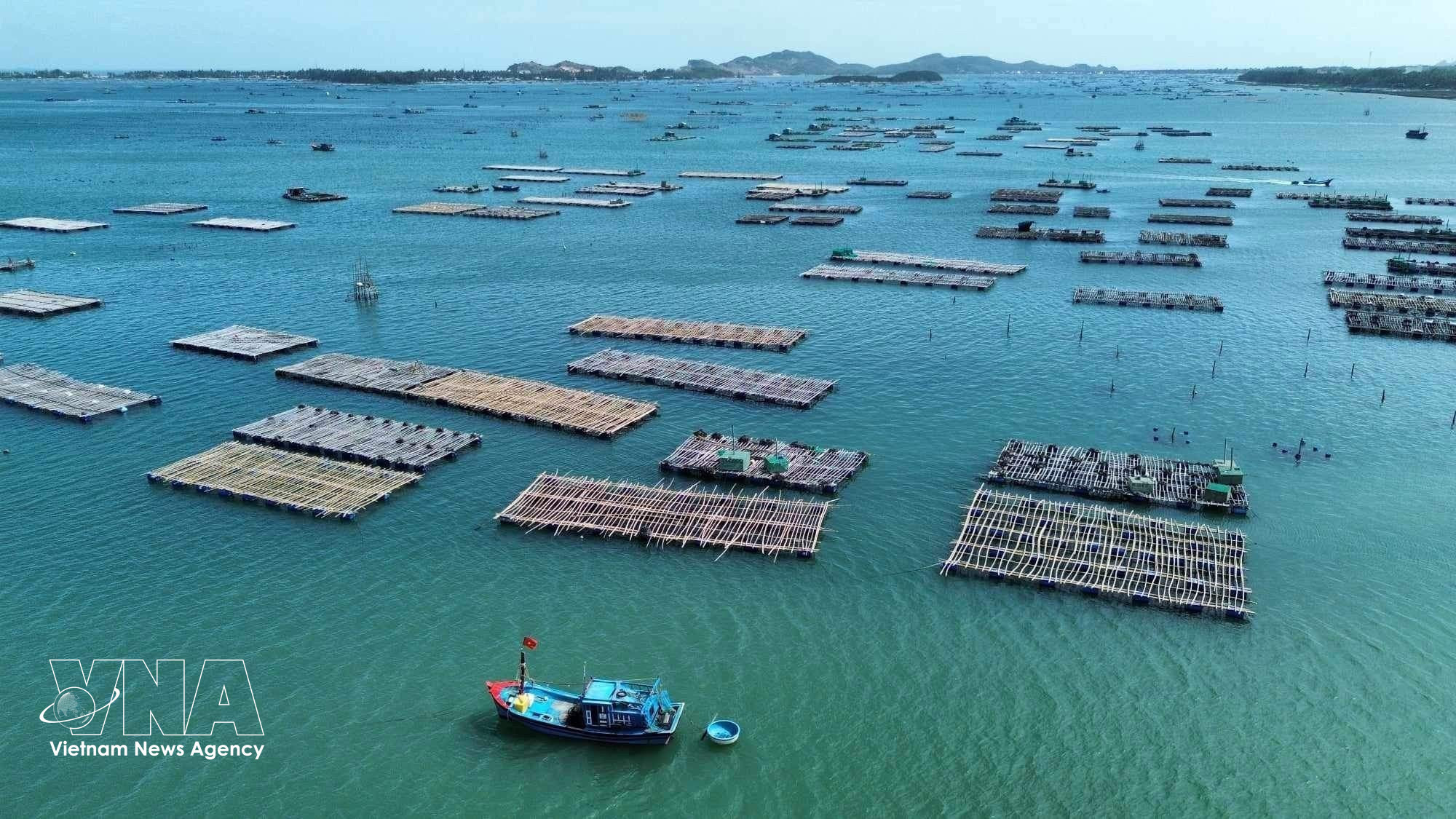
Although marine aquaculture is practised in all 21 coastal provinces and cities, most farms remain concentrated in nearshore areas.
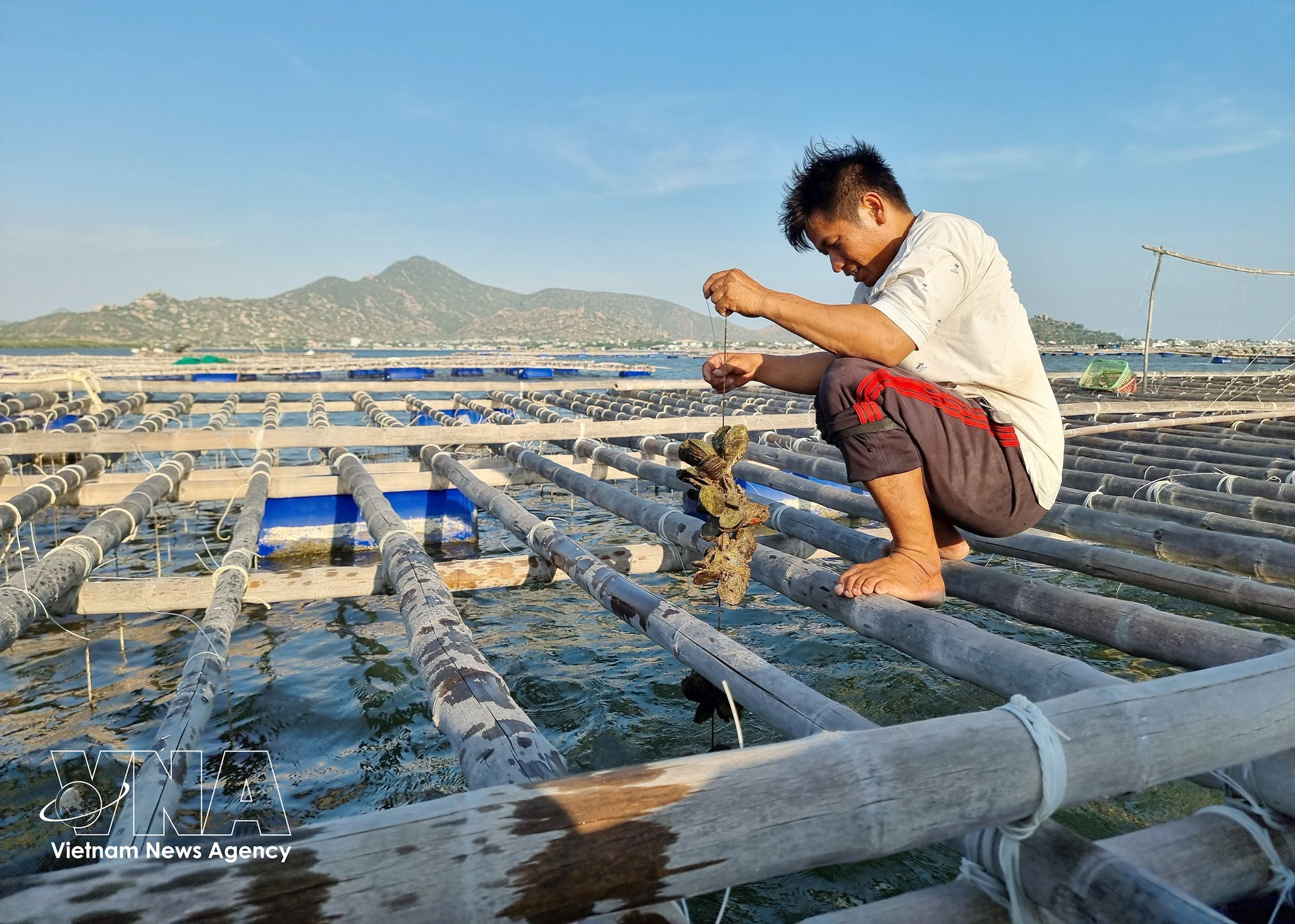
Oysters grown on suspended ropes in floating cages. (Photo: VNA)
According to the Ministry of Agriculture and Environment, Vietnam currently has more than 6,500 marine fish farming establishments with around 244,000 cages. Meanwhile, offshore industrial mariculture is still at an early stage of development.
The concentration of farms in nearshore areas is putting pressure on the marine environment and aquatic resources while exposing limitations in scale, technology and competitiveness. The shift towards large-scale industrial marine farming linked with spatial planning and value chains is therefore considered essential.
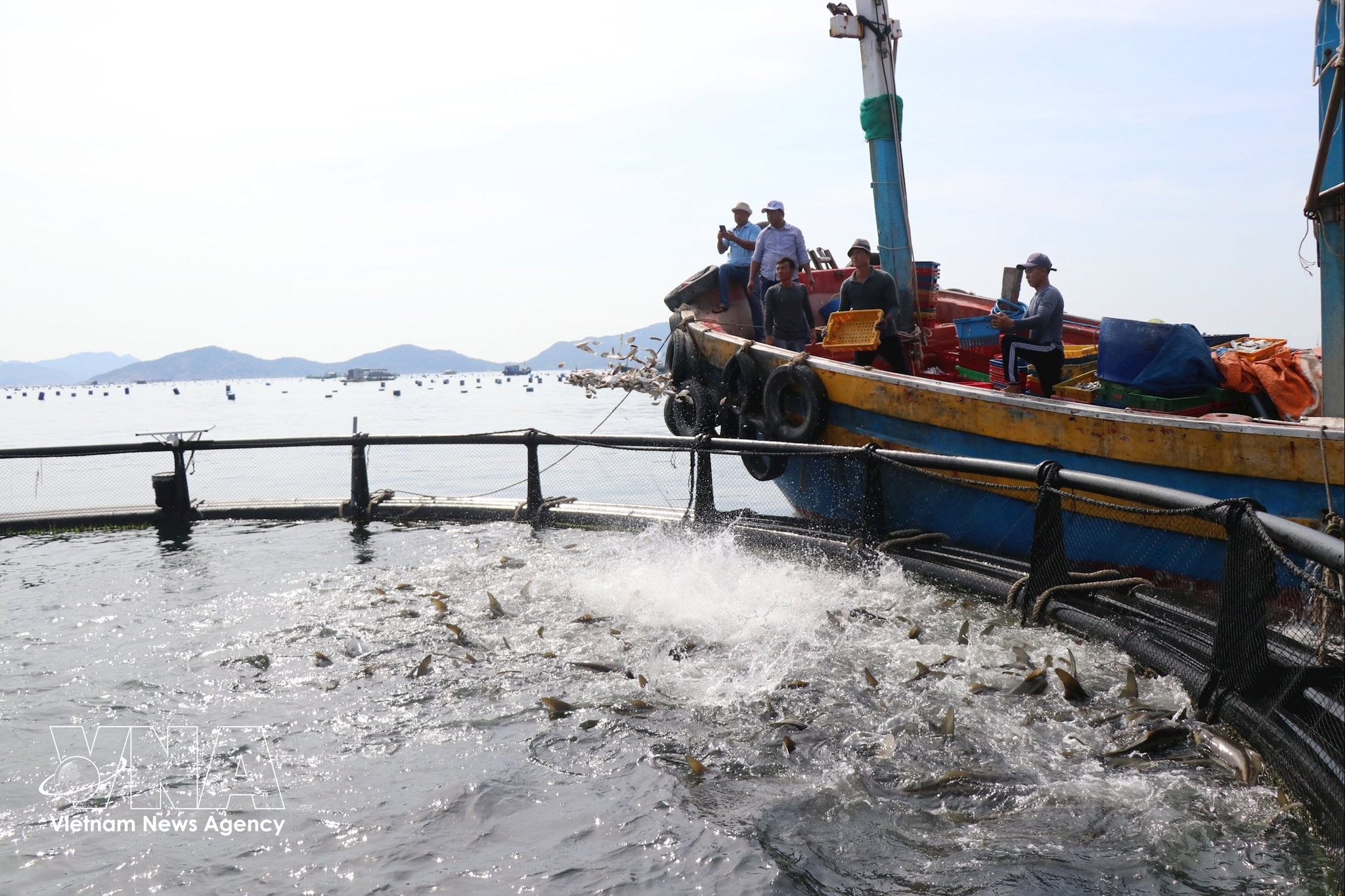
Fishermen feed fish in an HDPE cage. (Photo: VNA)
Businesses say the transition must be based on modern technology and infrastructure. The use of durable high-density polyethylene (HDPE) cages, combined with artificial intelligence (AI), automated environmental monitoring, modern early-warning and traceability systems, can help reduce risks, improve productivity and expand offshore mariculture.
At the same time, the development of environmentally friendly materials, modern marine farming infrastructure and supporting industries will help improve product quality and meet increasingly stringent international market standards.
According to the Vietnam Seaculture Association, to promote industrial mariculture, Vietnam needs to further improve regulations on the allocation of marine areas, develop long-term credit policies and mariculture insurance, and attract businesses to invest in offshore farms.
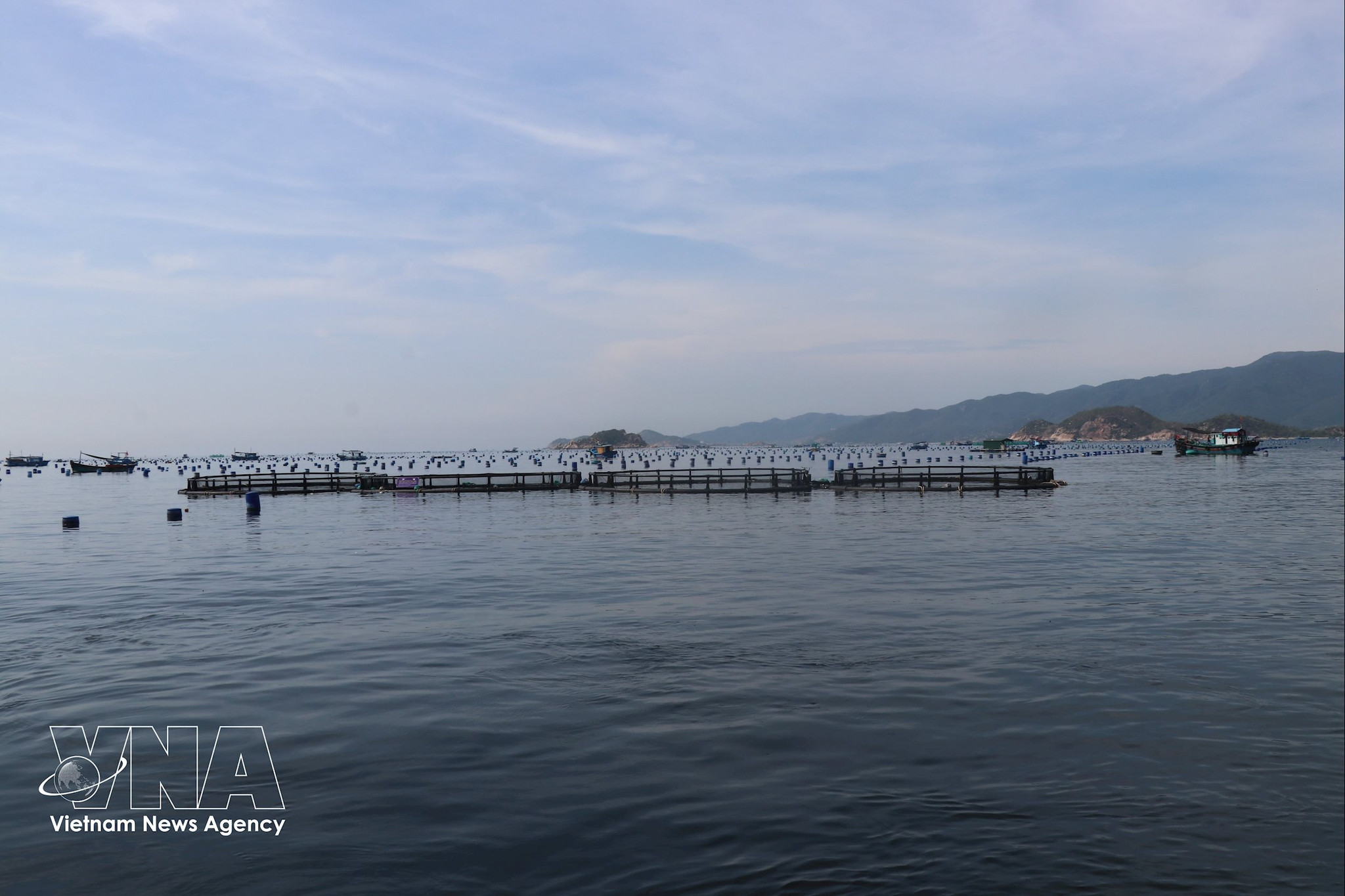
The HDPE cage model is piloted in offshore waters of Khanh Hoa province. Photo: VNA
Factors including marine spatial planning, the development of modern marine farming communities, better-quality aquatic breeds, workforce training and the completion of value chains from farming to processing, logistics and exports will decide the sector’s competitiveness in the coming time.
Experts also called for the development of concentrated farming zones suited to the natural conditions of each area, while promoting links between mariculture, tourism, offshore wind power and other marine economic sectors.
For Ho Chi Minh City, its advantages in seaports, logistics, manufacturing and science-technology could enable it to become a regional hub for producing equipment and materials, providing logistics services and transferring technology for the marine aquaculture sector in southern Vietnam.
The shift from nearshore farming to industrial, high-tech mariculture and integrated value chains will not only increase the added value of the fisheries sector but also help realise Vietnam’s goal of becoming a strong maritime nation and developing a modern, green and sustainable marine economy./.
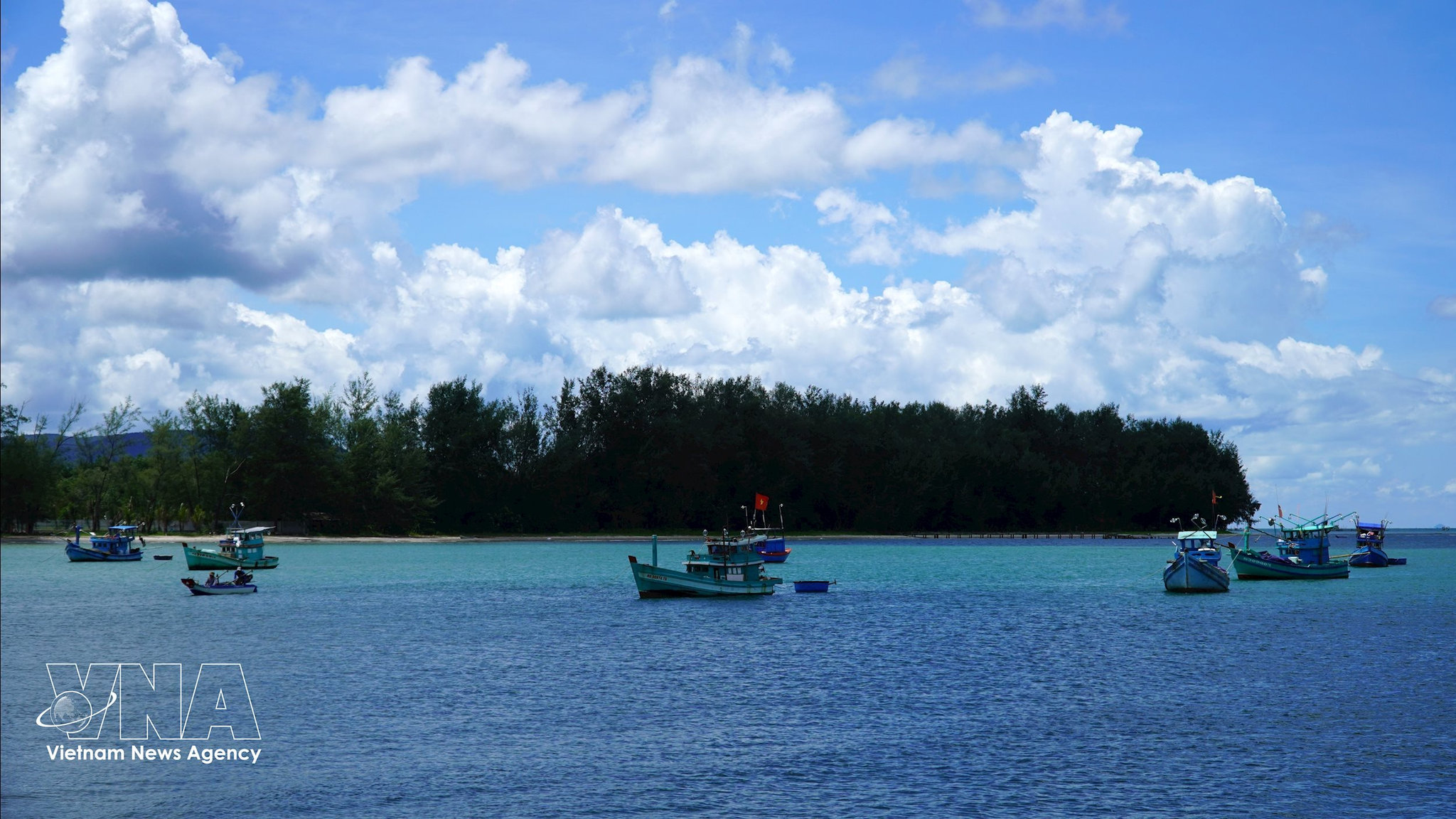
Fishing vessels in Phu Quoc special zone. (Photo: VNA)
Bình luận của bạn đã được gửi và sẽ hiển thị sau khi được duyệt bởi ban biên tập.
Ban biên tập giữ quyền biên tập nội dung bình luận để phù hợp với qui định nội dung của Báo.