

Gửi bình luận
LongForm
LOW-ALTITUDE ECONOMY OPENS NEW "AIRWAY" TO TRILLION-US-DOLLAR GROWTH
According to Morgan Stanley, a US-based multinational investment bank, the global low-altitude economy could reach 9 trillion USD by 2050.
Da Nang is positioning the low-altitude economy, driven by unmanned aerial vehicles (UAVs), as a trillion-US-dollar breakout opportunity, but unlocking it will require clearing legal hurdles.
The Politburo’s Resolution 57-NQ/TW on breakthroughs in science and technology has opened new pathways for localities, and Da Nang’s draft technology strategy for 2026-2030 now puts aerospace and UAVs at the centre.
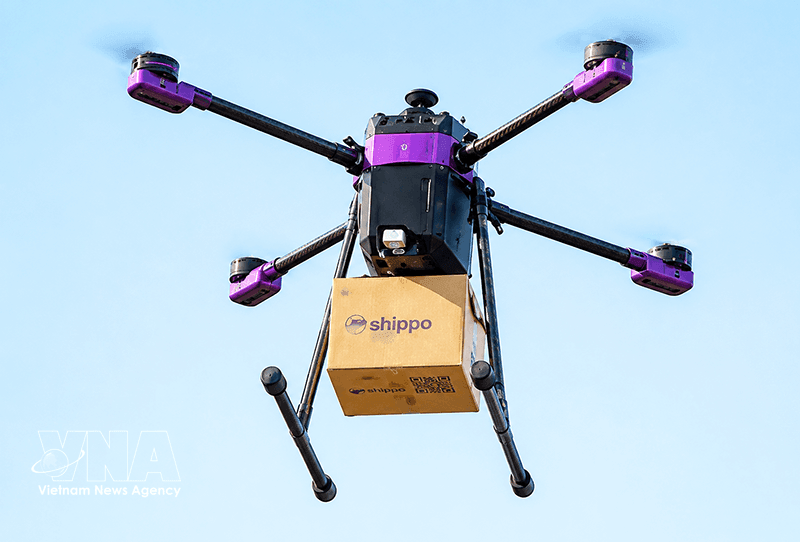
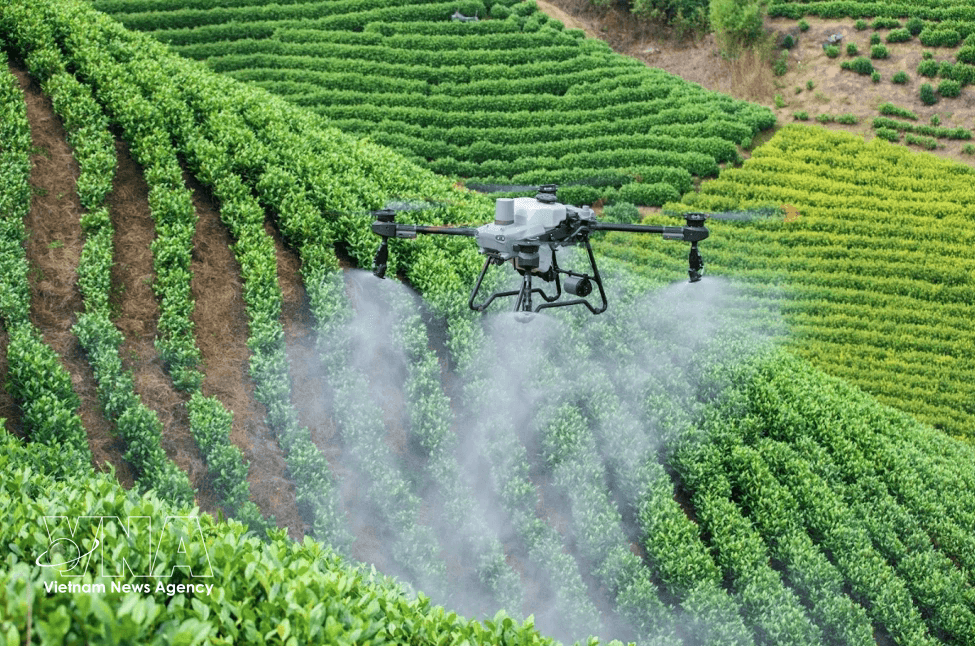
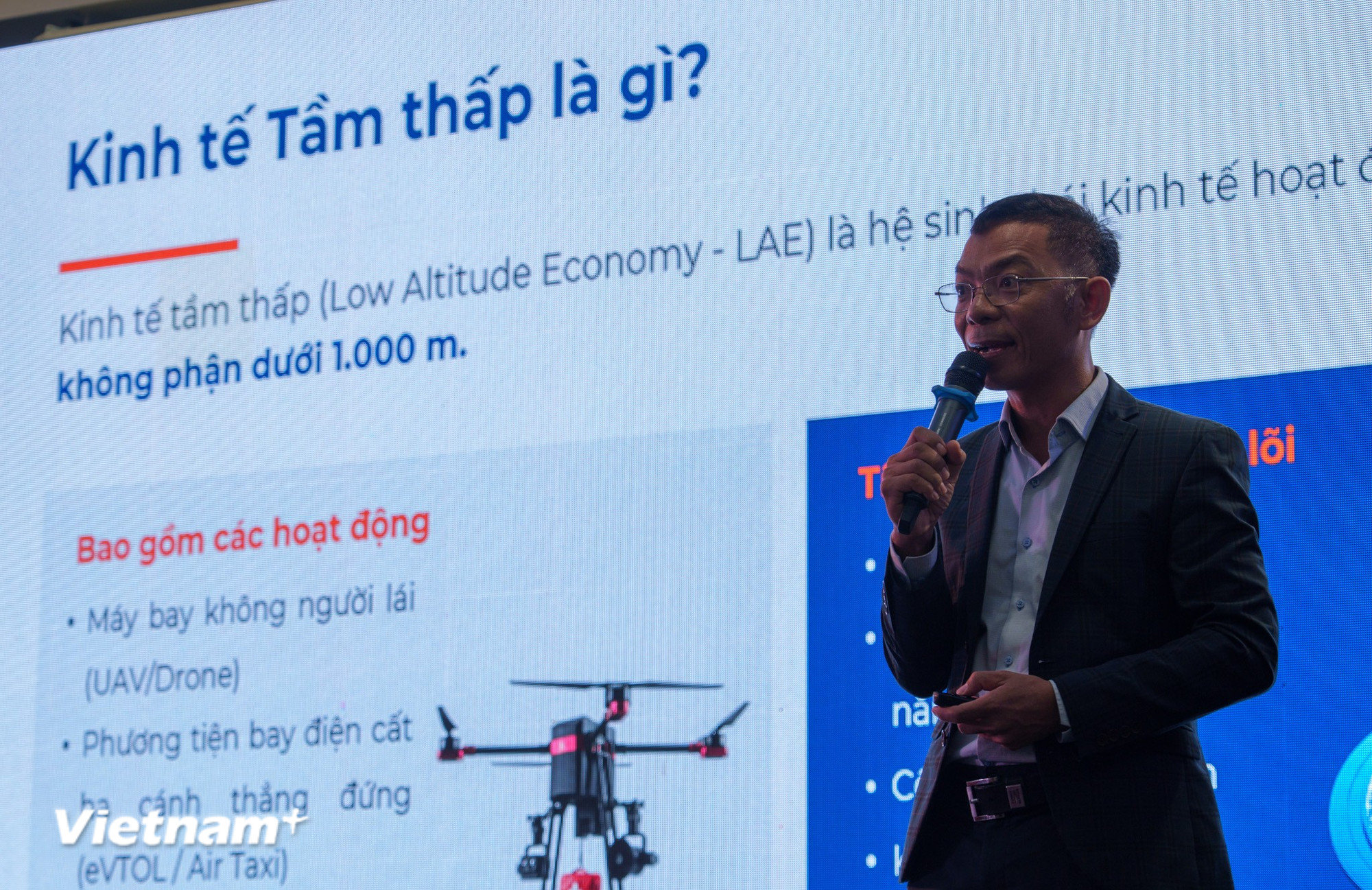
The technologies form the core of the low-altitude economy. It is an ecosystem of civilian and commercial activity below 1,000m that turns airspace into a new corridor for emergency medical transport, delivery, smart agriculture, firefighting, urban management, and search and rescue.
Morgan Stanley, a US multinational investment bank, sees the global low-altitude economy
reaching 9 trillion USD by 2050, while a 2025 Vietnam Chamber of Commerce and
Industry report estimated that the sector could generate 10 billion USD and 1
million quality jobs by 2035.Presentation by Tran Anh Tuan, Vice Chairman of the Low Altitude Economy Alliance
Digitising a trillion-dollar airspace
The merged planning of Da Nang and Quang Nam has created a regional megacity of more than 3 million people and nearly 12,000 sq.km, with vast skies overhead. That scale brings a more difficult management landscape spanning offshore areas and mountainous terrain, with frequent storms, floods and extreme weather.
A mature UAV ecosystem would generate commercial returns while acting as an emergency shield.
The Mekong Delta has about 10,000 agricultural drones and 30,000 pilots even though severe storms are uncommon, while central Vietnam
faces a serious shortage of technology-based emergency response capacity.Tran Anh Tuan, Vice Chairman of the Low Altitude Economy Alliance
“When roads are cut off, and waterways become inaccessible, drones can deliver life-saving equipment,” Tuan said, urging Da Nang to build a dedicated UAV unit combining commercial operations with search-and-rescue missions. A prerequisite is 3D spatial mapping. Centimeter-level mapping using UAVs with LiDAR and RTK can compress infrastructure planning from months to one or two days, giving Da Nang a chance to master the technology through pilot apps before wider deployment.
The key to round-the-cock UAV operations
For the aerial economy to scale, technology must replace manual operations. Automated takeoff and landing stations are already removing manpower and operating-time constraints at the micro level, and are being deployed in several countries.
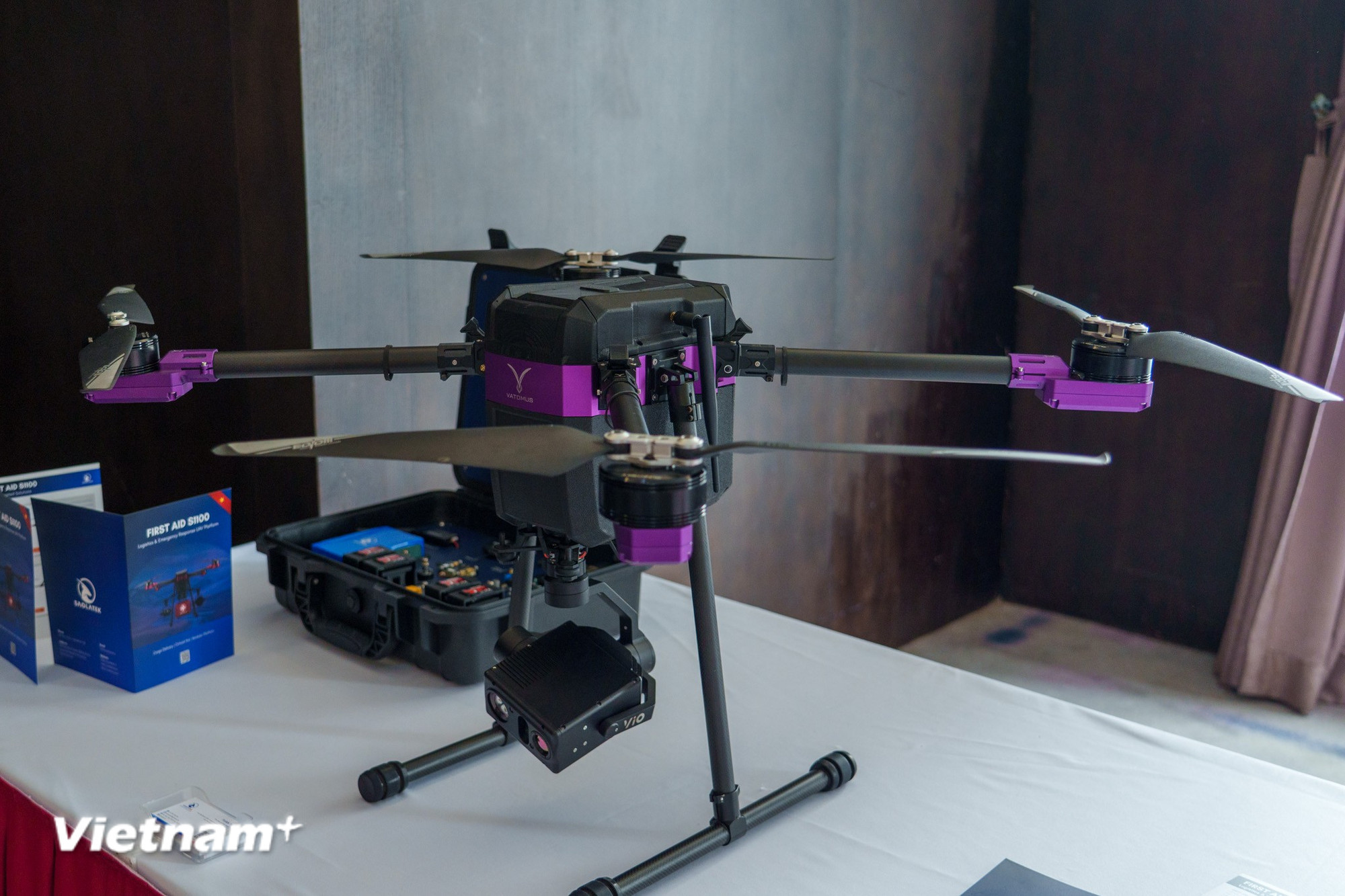
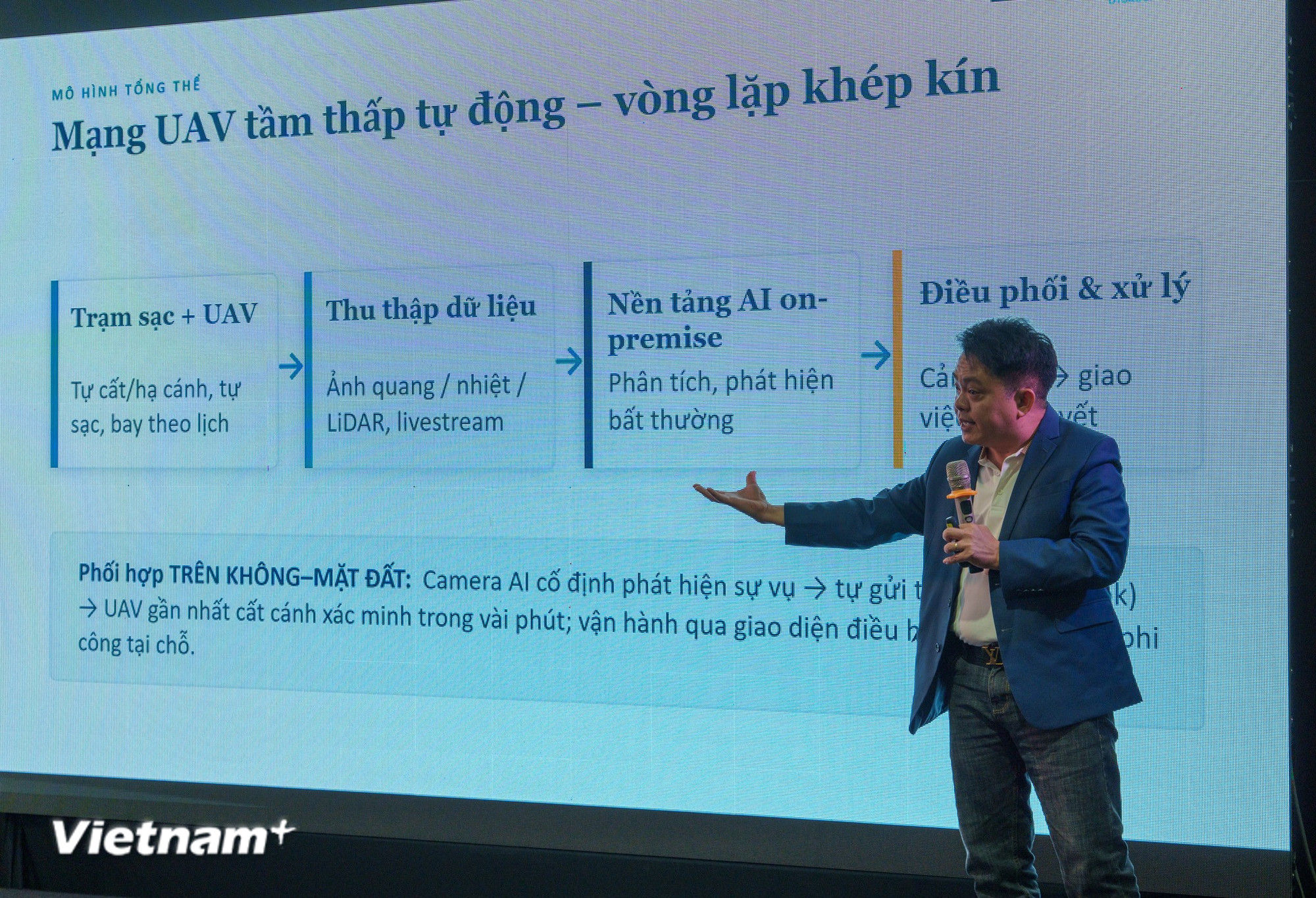
Dr. Trinh Cong Duy from Da Nang University of Science and Technology frankly highlights the current applications of drones and the potential for fully autonomous management worldwide (Photo: VietnamPlus)
Dr. Trinh Cong Duy from Da Nang University of Science and Technology said managers now only need to schedule flights. Drones open their covers automatically, conduct urban surveillance using more than 40 AI-driven violation-detection scenarios, and when batteries run low, locate the nearest charging station and replace batteries within seconds instead of waiting 35 minutes.
That technology underpins a fully automated UAV network capable of round-the-clock surveillance in Da Nang.
Da Nang also has a strong R&D base at its high-tech park, where labs have shrunk flight controllers from tabletop-sized units to devices small enough to fit between two fingers.
Controlling that core technology could position the city as an export hub for proprietary UAV designs, generating millions of US dollars in value.
Building rules to open the skies
Despite available resources, the biggest obstacle to international investment in UAVs remains the lack of a flexible, controlled local testing mechanism, or sandbox.
Experts proposed that Da Nang seek approval for specialised sandbox zones, including cross-border East-West logistics flight corridors for testing and short-range drone delivery services along the coast and Han River.
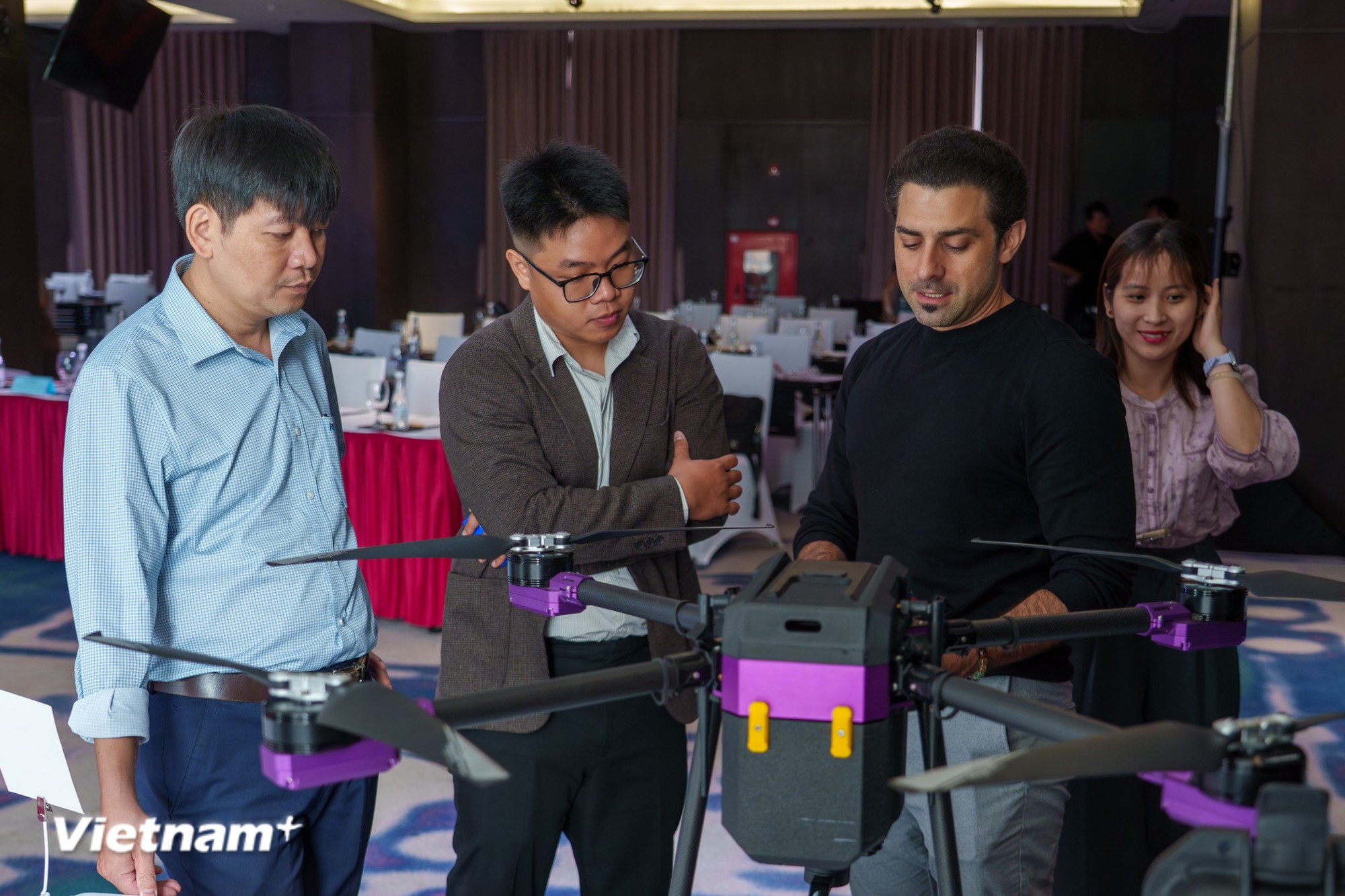
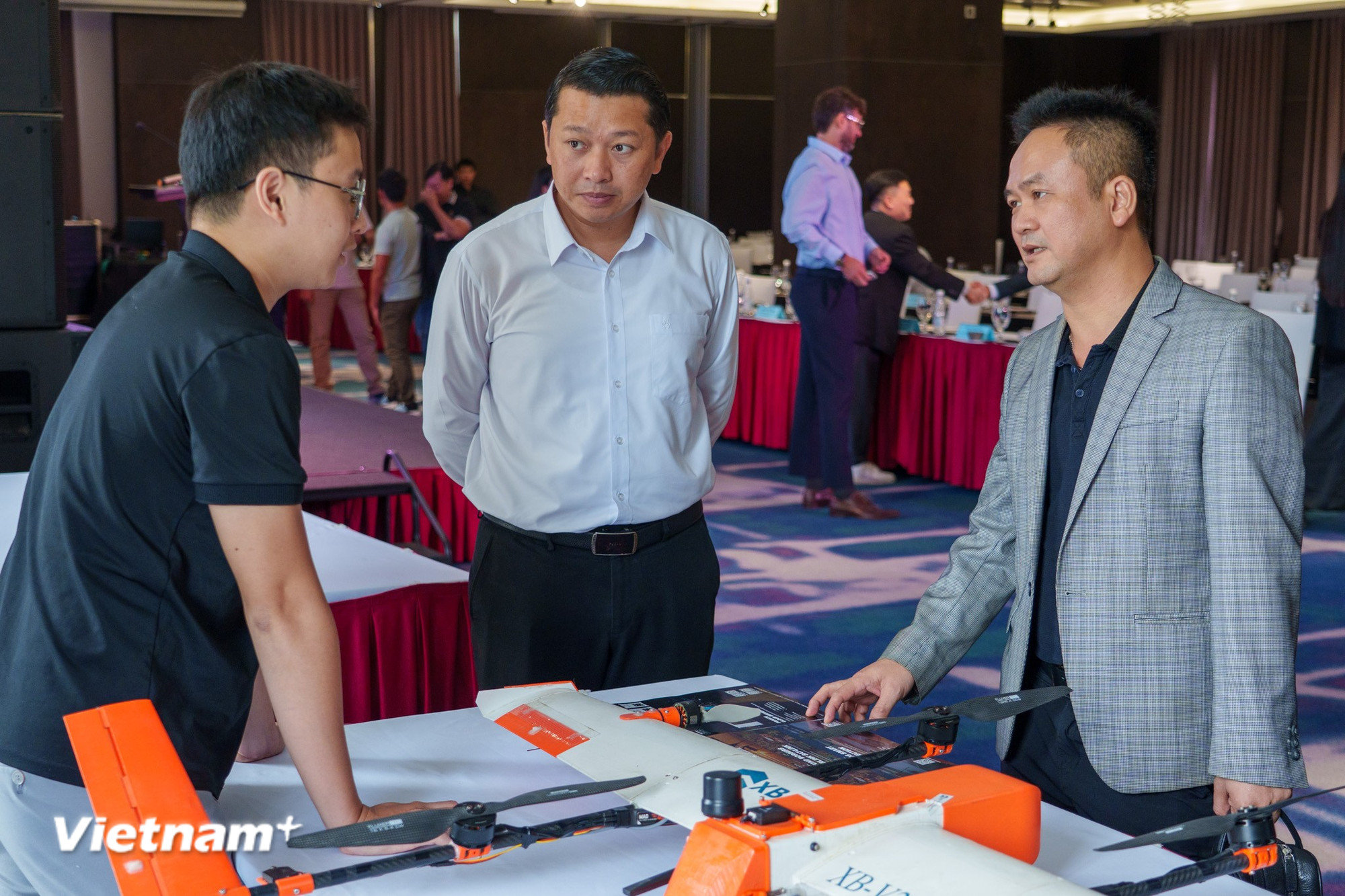
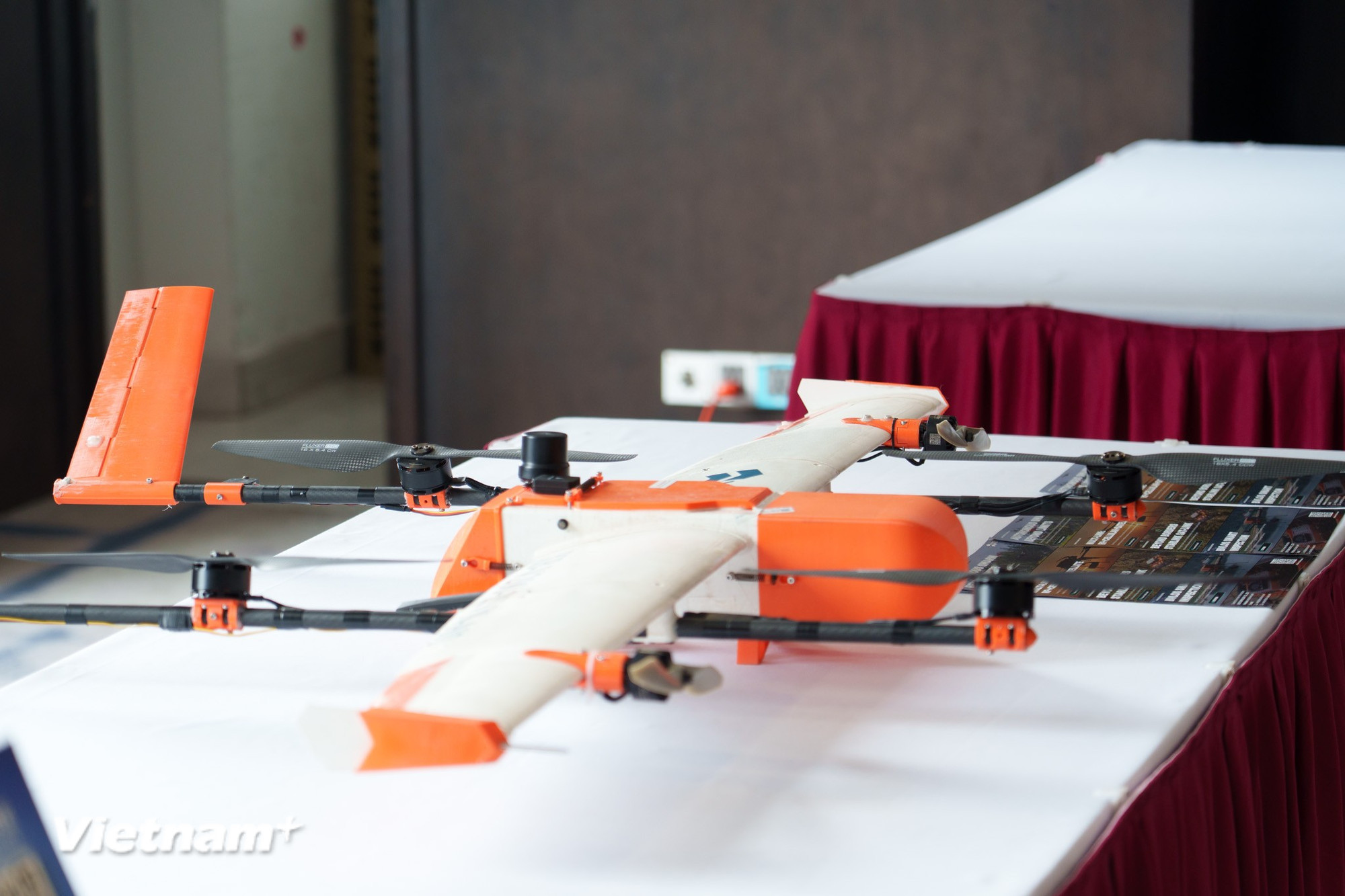
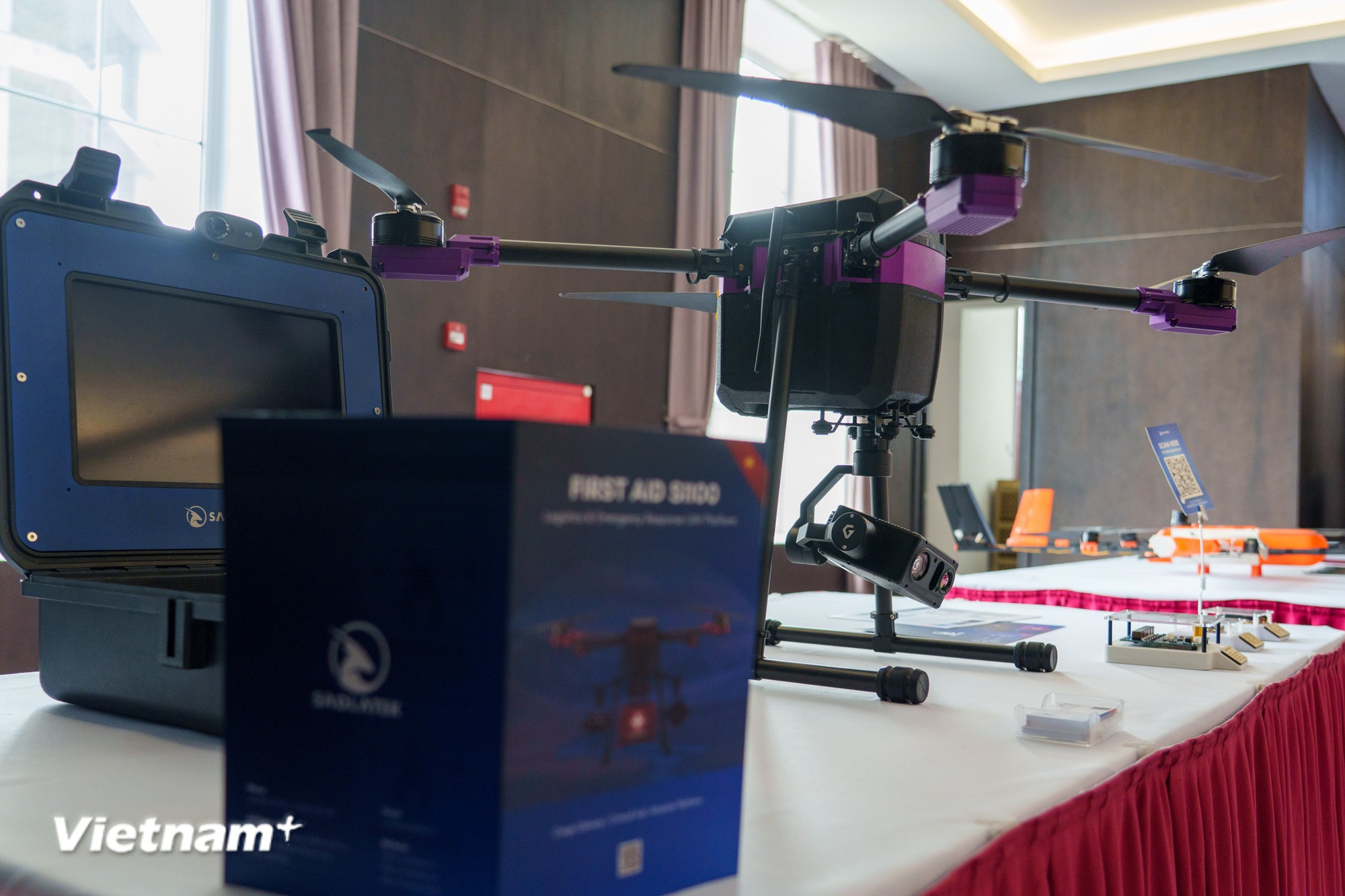
Domestic and foreign experts discuss the UAV development suited to Vietnam's terrain and weather conditions (Photo: VietnamPlus)
With the city’s large airspace, Da Nang offers an ideal real-world testbed for a nationwide Unmanned Aircraft System Traffic Management (UTM) pilot. The Ministry of National Defence recently set up a dedicated unmanned aircraft unit, strengthening Da Nang’s case to become a UTM pioneer.
Le Thi Thuc, Deputy Director of the Department of Science and Technology, said the State would act as an enabler, with the draft technology strategy including 1-2 billion USD a year in support of intellectual property protection.
Removing testing barriers would send a strong investment signal. The low-altitude economy can only break through once mechanisms are in place to clear the way, giving Da Nang a solid foundation to join the top five science and technology cities and emerge as a Southeast Asian innovation hub by 2030./.