


Gửi bình luận
LongForm
ELEVATING DIGITAL INFRASTRUCTURE TO DRIVE NEW ERA OF DEVELOPMENT
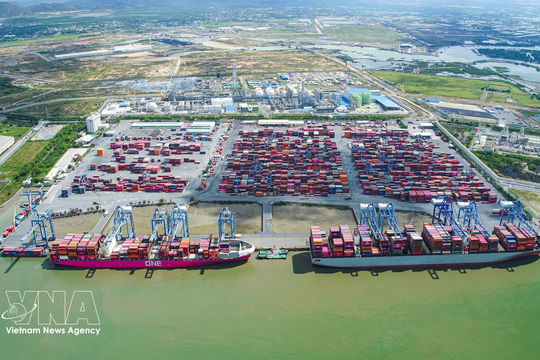
To create new growth momentum for the country in a new development phase, the Politburo's Resolution No. 57-NQ/TW emphasises the need to develop modern digital infrastructure, expand access to high-quality Internet services and build large-scale data centres as the foundation for a national data platform. Digital infrastructure development is no longer solely a task for the information and communications sector, but a prerequisite for the effective operation of the entire national innovation ecosystem.
Digital infrastructure makes breakthrough progress
In recent years, digital infrastructure in general and Vietnam’s telecommunications infrastructure in particular have developed towards greater integration, modernisation and inclusiveness.
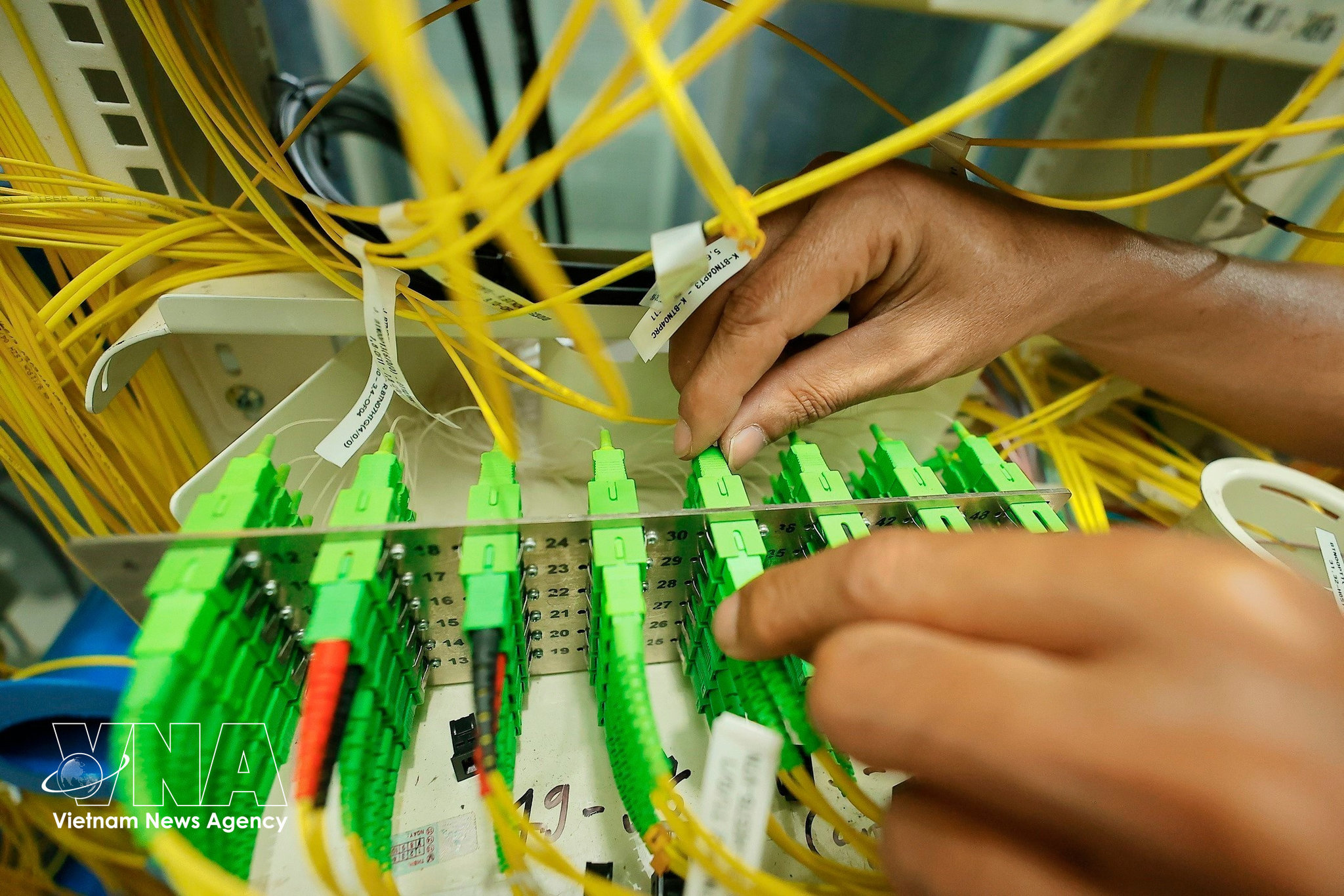
Vietnam has rapidly expanded its fibre-optic network, enabling most urban areas to access high-speed fibre-optic Internet. The country’s fibre-optic coverage is now among the highest in Southeast Asia.
Mobile broadband has brought 4G coverage to most of the country's territory, while 5G services are being commercially deployed in major cities and have expanded to cover more than 91% of the population. With speeds many times faster than previous generations, ultra-low latency and the capacity to connect millions of devices, 5G provides a foundation for smart factories, industrial robots, the Internet of Things (IoT) and real-time AI applications.
In April 2026, Vietnam’s average mobile broadband speed reached 200.54 Mbps, ranking 11th among 104 countries surveyed. Compared with 55.41 Mbps in July 2024, mobile Internet speeds in Vietnam had increased nearly fourfold in less than two years. This was among the fastest rates of growth in the region, reflecting the rapid upgrading of infrastructure and optimisation of networks.
In fixed broadband, Vietnam is also approaching the world’s leading group, with speeds of nearly 282 Mbps, ranking 12th among 154 countries. This provides a solid foundation for the development of digital services, cloud computing and the digital economy.
Combining mobile and fixed broadband, Vietnam is now among the regional leaders, ranking second in Southeast Asia and surpassing countries with highly developed telecommunications infrastructure such as Singapore, Malaysia and Thailand.


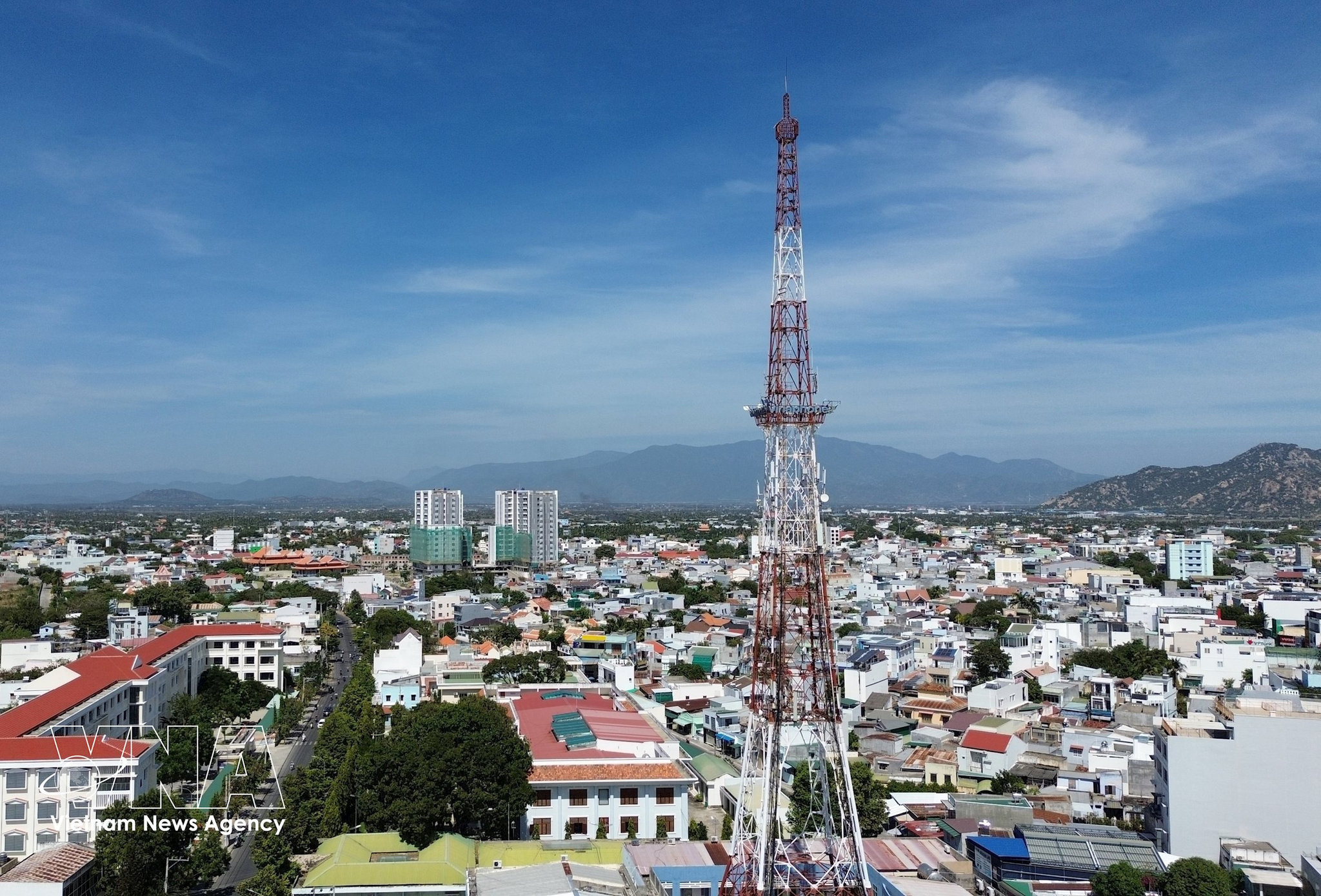
Vietnam's digital infrastructure, including the telecommunications network, is being developed in a coordinated, modern and inclusive manner. (Photo: VNA)
Vietnam currently has six major submarine fibre-optic cable routes directly connecting the country with major data centres in the region and around the world. One of the routes has a capacity of 50 Tbps, enough to simultaneously carry millions of video calls and digital transactions per second.
To reduce dependence on foreign infrastructure, Vietnam is also diversifying its Internet infrastructure. The VSTN terrestrial fibre-optic cable, with a designed capacity of up to 12 Tbps, has been put into operation, allowing domestic operators to maintain end-to-end control and reduce the risks associated with cable disruptions.
In early 2026, Starlink satellite Internet service also completed procedures for a pilot programme in Vietnam. The service is expected to provide important support for terrestrial fibre-optic networks, helping maintain communications in areas with weak coverage, mountainous regions and islands, while maximising the effectiveness of communications infrastructure during disaster response.
These figures directly reflect the experience of more than 110.5 million mobile broadband subscribers in Vietnam. The country has a dense Internet network, with 107.9 mobile subscriptions per 100 people – a level rarely achieved by developing countries.
At the same time, the digital divide between urban and rural areas is gradually narrowing, creating an important foundation for nationwide digital transformation.
.jpg)
.jpg)
.jpg)
.jpg)
Vietnam has achieved extensive Internet coverage, with 107.9 mobile subscriptions per 100 people. (Photo: VNA)
According to the Ministry of Science and Technology, by the end of June 2026, telecommunications networks had covered 99.56% of villages nationwide. More than 400 villages remain without mobile coverage, mainly in high mountainous, border and island areas or locations with difficult terrain and sparse populations, where infrastructure investment costs are high.
These “cellular dead zone” are being categorised to develop appropriate solutions, ensuring that everyone has access to the Internet and digital services and that no one is left behind in the country’s national digital transformation.
Paving the way for comprehensive digital transformation
In just two years, Vietnam’s digital infrastructure landscape has undergone remarkable changes, reflecting an unprecedented level of priority given to digital infrastructure investment in the country’s development policies.
Digital infrastructure has shifted from being a “supporting tool” to becoming “essential infrastructure of the economy”, providing the foundation for administrative reform, business development, innovation, education, healthcare, finance and improvements in people’s quality of life.
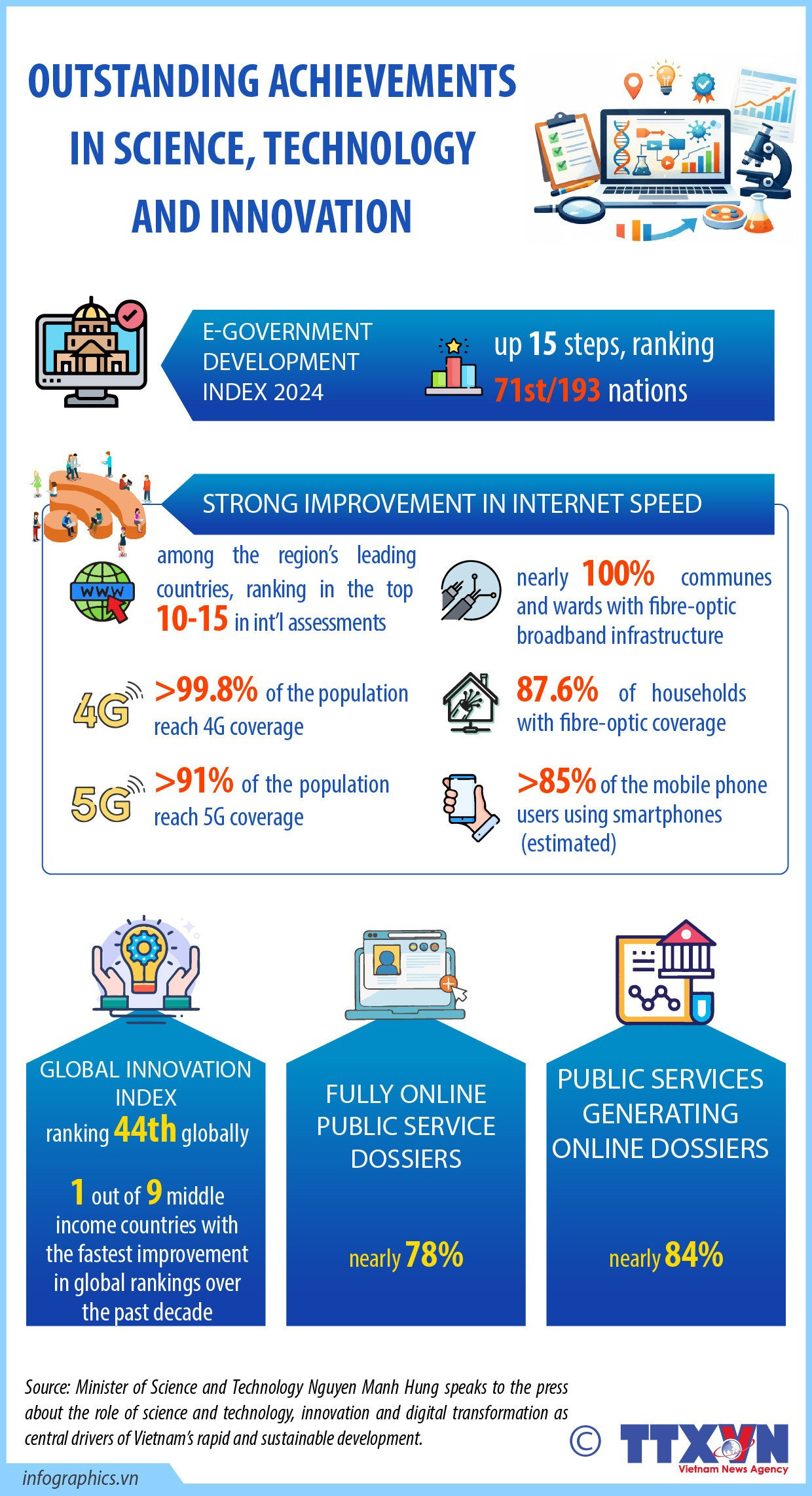
The sector’s targets for 2026 are clear: 5G coverage for 99% of the population and access to 1 Gbps Internet for around 40% of people.
By 2030, Vietnam aims to have at least 10 additional submarine fibre-optic cable routes with a combined capacity of at least 350 Tbps, including at least two routes fully invested in by Vietnamese enterprises. The country is also working towards becoming a regional data transit hub in Southeast Asia.
The sector’s targets for 2026 are clear: 5G coverage for 99% of the population and access to 1 Gbps Internet for around 40% of people.
Data is now regarded as a new national resource, playing a pivotal role in policymaking, socio-economic development, national defence and security, and the enhancement of national competitiveness.
The National Data Centre No. 1, which has recently become operational, is regarded as the “heart” of national digital transformation. It is leading efforts to connect, share and open up data, creating a secure data ecosystem to support development and innovation.
The national data integration and sharing platform has connected dozens of ministries, sectors, localities and organisations, with databases operating continuously to support governance and business activities on digital platforms.



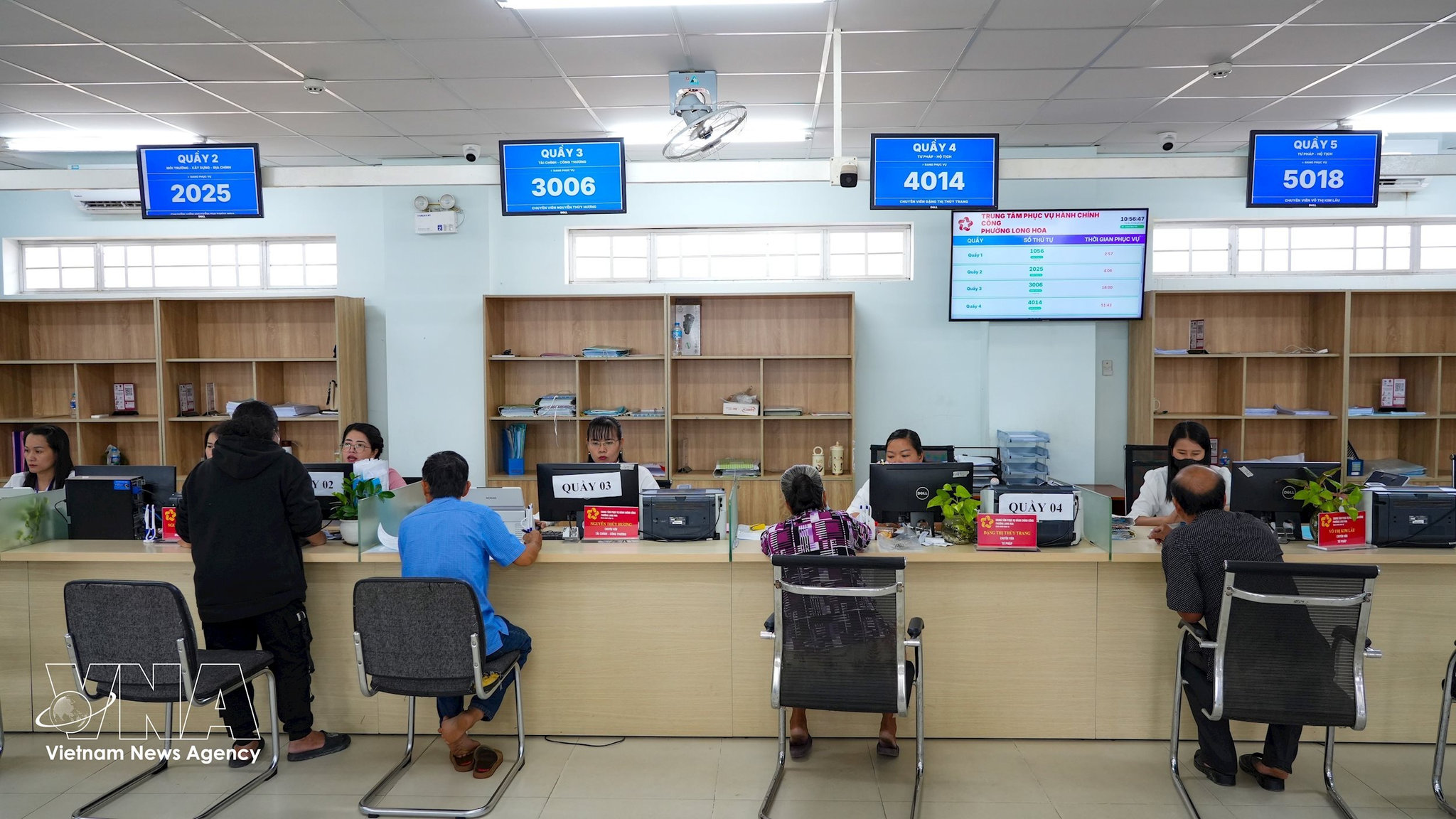
Upgrading digital infrastructure enables State agencies to expand online public services. (Photo: VNA)
To date, the National Public Service Portal has published more than 5,100 administrative procedures and integrated more than 3,700, while eliminating 697 procedures and 1,754 business conditions.
Upgraded digital infrastructure has enabled State agencies to expand online public services, interconnect databases and process applications electronically. This has directly helped shorten the time needed to process procedures, reduce social costs and improve transparency in administrative and public-service operations.
Digital transformation is not limited to the public sector. Many Vietnamese businesses have shifted to digital operations, using management systems, online meetings, cloud-based data storage, supply chain management and AI-powered customer services.
In particular, 5G networks and high-speed Internet are creating the conditions for smart factories, the Internet of Things, remote equipment monitoring and smart manufacturing.
In 2025, Vietnam’s digital technology industry continued to affirm its role as an important growth driver of the economy, with financial and export indicators posting strong growth well above targets.
The number of digital technology enterprises increased 10% year on year. Total industry revenue reached 198 billion USD, up 26% from 2024 and 16% above the annual target, contributing nearly 1.1 quadrillion VND to national GDP. The industry also recorded high operational efficiency, with estimated profits exceeding 371 trillion VND (14.17 billion USD).
As data and AI increasingly become new drivers of growth, investment in digital infrastructure is, in effect, investment in the competitiveness of the entire digital economy, digital society and digital government, as well as in the sustainable development Vietnam is pursuing./.