COMMAND FROM ASPIRATION FOR GROWTH:CREATING NEW PUSH FOR ECONOMIC TAKEOFF (PART 2)Identifying capital flow bottlenecks:From institutions to absorptive capacity
VNA•24/07/2026 17:53
Only when legal obstacles are eliminated, a culture that protects initiative and responsible decision-making is established, and transparent standards are embedded, will capital genuinely become the driving force that enables the country to make a breakthrough in the new era.
In the drive to propel the economy towards breakthrough growth, capital is regarded as the "lifeblood" that sustains development objectives. (Photo: VietnamPlus)
In the drive to propel the economy towards breakthrough growth, capital is regarded as the "lifeblood" that sustains development objectives. However, that flow is currently obstructed by "blood clots" on three fronts: the banking system, the internal business weakness, and the institutional framework.
Unless these bottlenecks are clearly identified and addressed, the ambition of achieving double-digit economic growth will remain out of reach, even though society has the capital to do so.
Capital flows constrained by the lack of a risk-sharing mechanism
Bank credit is under strain as the capital market (bonds and stocks) has yet to fully gain investor confidence following recent upheavals. This places pressure on banks by creating maturity mismatches, given that around 80% of funding mobilised by credit institutions is short-term, whereas businesses require medium- and long-term financing for infrastructure and technology projects.
Dao Minh Tu, a member of the National Advisory Council for Financial and Monetary Policies, pointed out that excessive reliance on bank credit increases systematic risk. Banks must safeguard liquidity, meaning they cannot relax lending conditions indiscriminately. The key bottleneck, he said, is the absence of a clear risk-sharing mechanism between the State and banks for nationally significant projects.
At the same time, lending appraisal procedures continue to rely heavily on traditional collateral requirements. Although the State Bank of Vietnam has instructed lenders to shift towards cash-flow-based lending and creditworthiness assessments, implementation at branch level remains cautious due to concerns over bad debts.
Lending appraisal procedures continue to rely heavily on traditional collateral requirements. (Photo: VietnamPlus)
“
Bank credit is currently bearing an excessive burden as the capital market (bonds and stocks) has yet to fully regain investor confidence following recent upheavals.
From the perspective of commercial bank implementation, Le Ngoc Lam, Chief Executive Officer of the Bank for Investment and Development of Vietnam (BIDV), proposed a series of measures aimed at "breaking the ice" for medium- and long-term capital flows.
Among them was a recommendation to allow non-performing loans to be sold at market prices, even below their original value, provided the process remains transparent. He described this as an urgent solution to release resources currently "locked up" in unresolved bad debts, enabling banks to clean up their balance sheets and rapidly redirect capital towards new productive sectors instead of waiting years for lengthy asset disposal procedures to conclude.
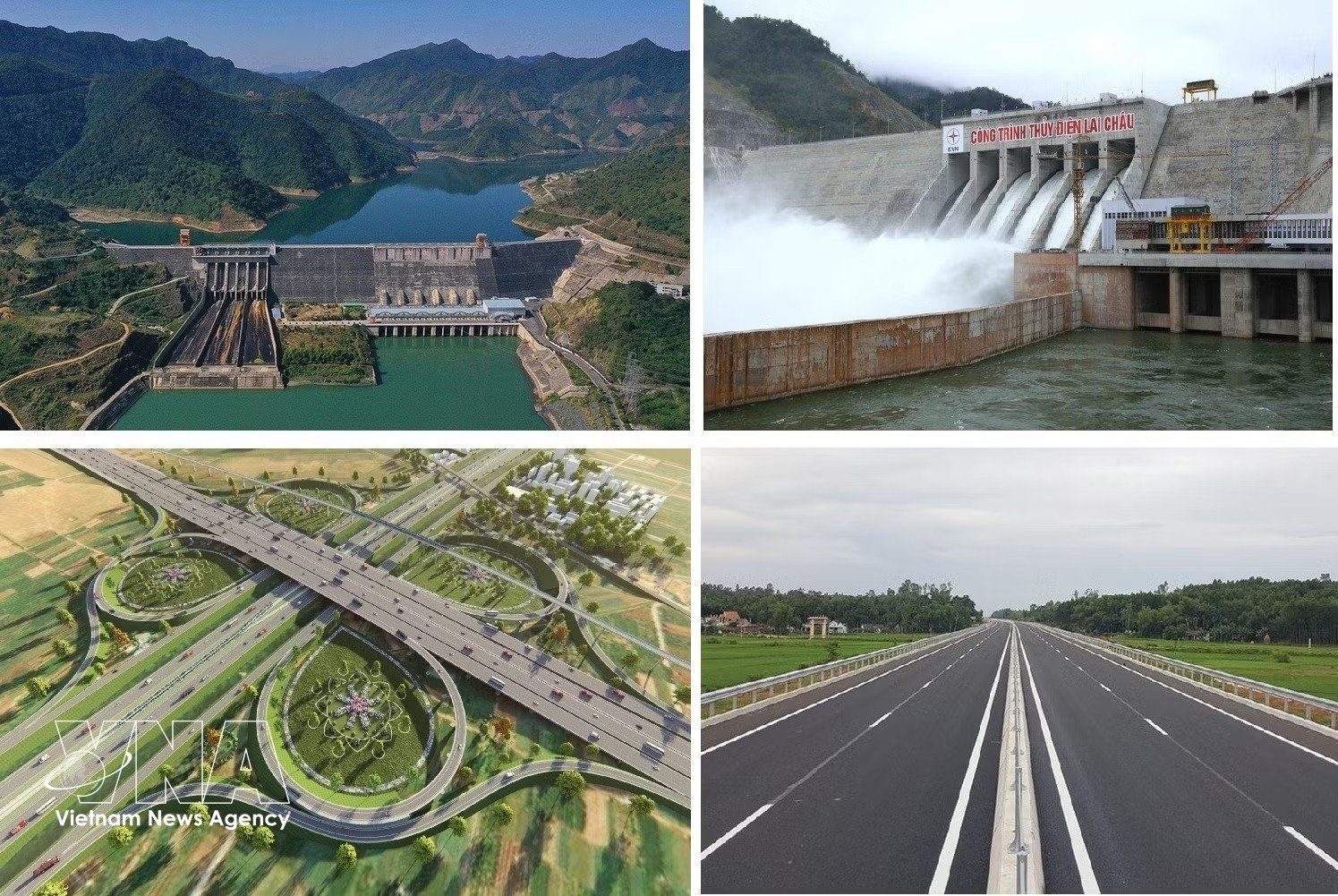
Another major bottleneck lies in financing strategic infrastructure. At present, large-scale energy and oil and gas projects undertaken by EVN and Petrovietnam, among others, often require investment running into tens of trillions of Vietnamese dong, bringing them close to the maximum lending limits permitted for a single borrower under State Bank safety regulations.
Lam therefore proposed introducing a special mechanism to ease these restrictions, similar to the model set in the National Assembly’s Resolution No. 258/2025/QH15, enabling leading banks to concentrate their resources on financing nationally significant projects.
Large-scale projects often require investment amounting to tens of trillions of Vietnamese dong, easily reaching the maximum lending limits for a single borrower under State Bank safety regulations. (Photo: VietnamPlus)
Institutional framework: The bottleneck behind all bottlenecks
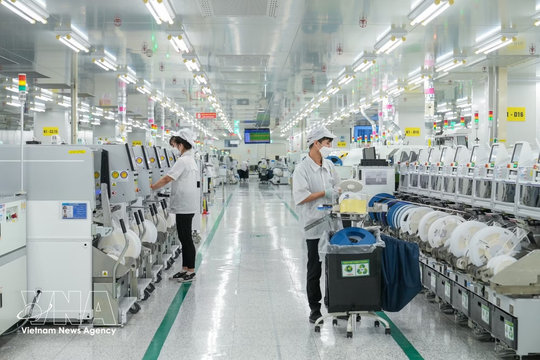
From the business perspective, particularly among small- and medium-sized enterprises (SMEs), weak financial capacity and a lack of transparency remain the greatest barriers to accessing capital. Following the pandemic and subsequent market disruptions, many businesses have seen their equity capital eroded, leaving them unable to satisfy the financial safety indicators required for borrowing.
Pham Thi Thanh Tam, Deputy Director of the Department of Financial Institutions under the Ministry of Finance, said the efficiency of capital utilisation among Vietnamese enterprises remains low. A high incremental capital output ratio (ICOR) reflects outdated technology and management practices. Many businesses continue to operate as family-run enterprises without standardised financial reporting, making both credit institutions and international investors reluctant to provide funding.
When businesses are transparent, capital will naturally seek them out instead of businesses having to "ask" for funding. (Photo: VietnamPlus)
“
For SMEs, weak financial capacity and a lack of transparency remain the greatest barriers to accessing capital.
Even for large enterprises, the absence of effective foreign exchange and interest rate risk management tools continues to hamper access to international financing.
Truong Gia Binh, Chairman of FPT, said Vietnamese businesses must upgrade themselves to international standards to improve productivity and increase data transparency, thereby building the confidence needed to attract long-term investment. When businesses are transparent, capital will naturally seek them out instead of businesses having to "ask" for funding.
At the same time, the most frequently cited and arguably the greatest bottleneck remains institutional barriers, legal procedures and delays in public administration. Although Vietnam's legal framework governing investment, land and procurement has undergone considerable reform, overlapping regulations persist, leaving officials reluctant to make decisions for fear of making mistakes, which in turn has stalled both public and private investment projects.
Prime Minister Le Minh Hung identified weak administrative discipline as the principal reason behind the slow disbursement of public investment. He stressed the need to shift from a management mindset towards one focused on facilitating development, alongside meaningful reductions in administrative procedures to lower compliance costs for businesses. Situations in which "capital waits for projects", or where property and infrastructure developments remain stalled for years because of procedural obstacles, have frozen enormous volumes of capital across the economy.
International venture capital has yet to flow strongly into Vietnam. (Photo: VietnamPlus)
Moreover, the lack of regulatory sandbox mechanisms for new economic models, including fintech and the digital economy, has prevented international venture capital from flowing more strongly into Vietnam.
Duong Thanh Tung, Deputy Chief Executive Officer in charge of strategy, risk and transactions advisory services at Deloitte Southeast Asia (Vietnam), argued that the core issue is not a "lack of capital", but rather a "lack of the appropriate structure to absorb capital."
He highlighted the distinction between long-term and short-term international capital. Long-term capital requires sustainable cash-flow generation that is not dependent on short-term fluctuations and consistently seeks reliable exit channels such as initial public offerings (IPOs) or share transfers upon divestment.
He described this as the need for an "operating system" for the capital market that is sufficiently deep and credible not only to extend investment horizons but also to enhance corporate valuations.
Long-term and short-term international capital flows are different. (Photo: VietnamPlus)
“
The lack of regulatory sandbox mechanisms for new economic models such as fintech and the digital economy has prevented international venture capital from flowing more strongly into Vietnam.
According to Tung, this "operating system" is embodied in an International Financial Centre (IFC) supported by a comprehensive institutional package and integrated ecosystem. This includes a reliable legal framework, effective contract enforcement, transparent dispute resolution procedures, and internationally recognised disclosure standards that protect investors' rights and obligations.
He stressed that such a centre will serve not only as a gateway for welcoming foreign investment but also as a platform for enhancing Vietnamese businesses' ability to compete internationally, creating the conditions necessary for long-term capital to be absorbed effectively in support of sustainable high growth.
SMEs remain disadvantaged in terms of both capital and technology. (Photo: VietnamPlus)
Offering a practical perspective from the business community, Nguyen Van Than, Chairman of the Vietnam Association of Small and Medium Enterprises (VINASME), identified another systematic institutional bottleneck: the absence of an effective mechanism linking different economic stakeholders.
Than noted that although Vietnam has more than one million enterprises and 5.2 million business households, cooperation among the economy's "four pillars"—public officials, large corporations, foreign-invested enterprises (FDI), and SMEs—remains weak. He candidly observed that the current model of larger companies leading smaller firms has yet to become meaningful in practice, relying primarily on personal relationships rather than a legally grounded and mutually supportive ecosystem.
"We cannot achieve breakthrough growth if businesses continue operating in isolation. To drive systematic transformation, the Government must play a coordinating role by establishing specific policy frameworks that either encourage or require large corporations to support smaller enterprises in joining value chains," he proposed.
The absence of an institutional "conductor" capable of connecting different segments of the business community has not only left SMEs at a disadvantage in terms of capital and technology, but has also slowed the circulation of resources throughout the economy at a time when double-digit growth is being pursued.
To unlock capital flows, removing institutional bottlenecks must become the foremost priority. Only when legal obstacles are eliminated, a culture that protects initiative and responsible decision-making is established, and transparent standards are embedded, will capital genuinely become the driving force that enables the country to make a breakthrough in the new era./.
Removing institutional bottlenecks must become the foremost priority in order to unlock capital flows. (Photo: VietnamPlus)
Bình luận của bạn đã được gửi và sẽ hiển thị sau khi được duyệt bởi ban biên tập.
Ban biên tập giữ quyền biên tập nội dung bình luận để phù hợp với qui định nội dung của Báo.
COMMAND FROM ASPIRATION FOR GROWTH: CREATING NEW PUSH FOR ECONOMIC TAKEOFF (PART 2) Identifying capital flow bottlenecks: From institutions to absorptive capacity
.jpg)