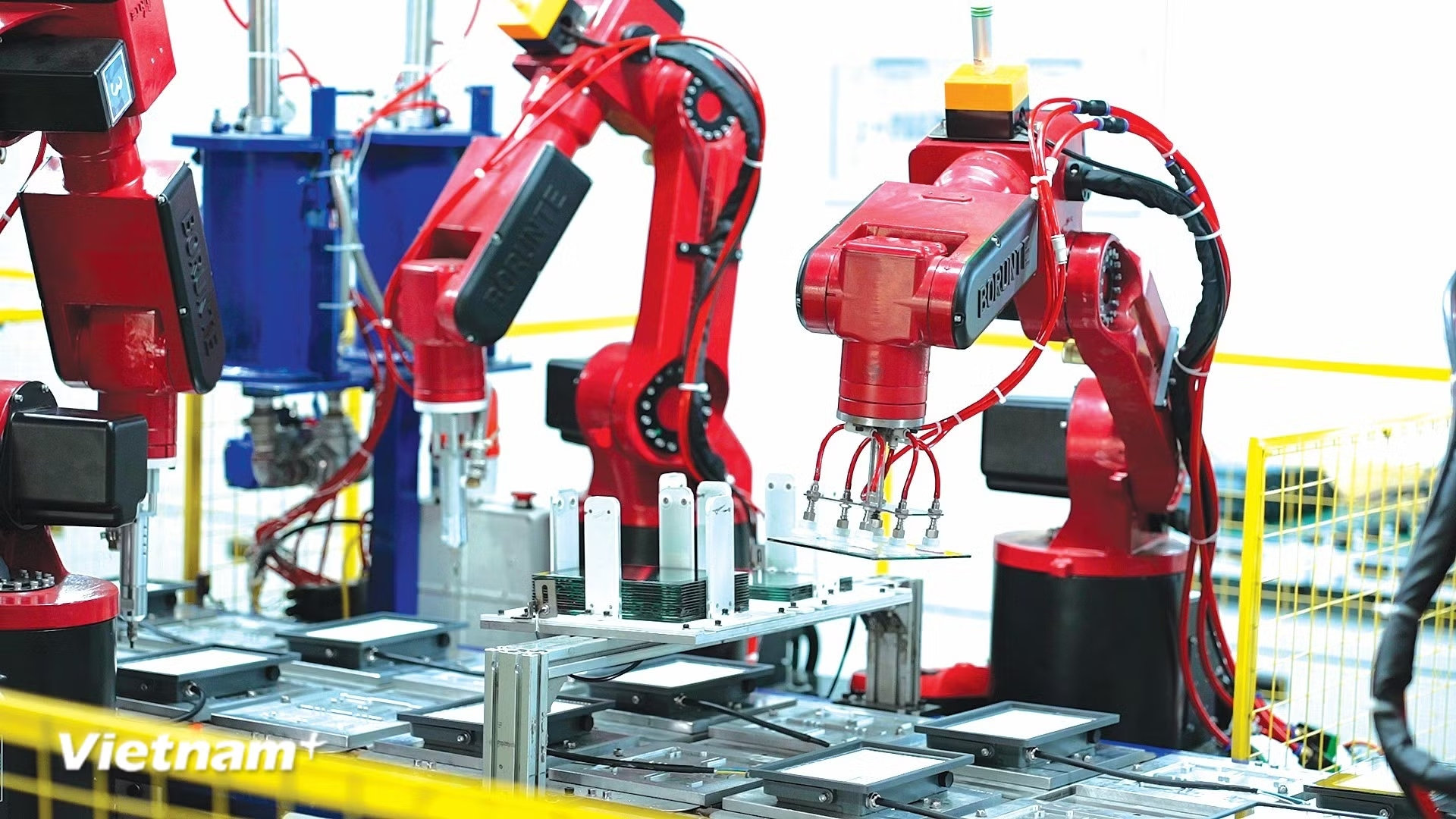




Gửi bình luận
COMMAND FROM ASPIRATION FOR GROWTH: CREATING NEW PUSH FOR ECONOMIC TAKEOFF (PART 3)
SynchroniSing fiscal and monetary policies: Keeping the growth engine running
The synchronisation between the fiscal and monetary wheels plays a crucial role in ensuring liquidity and fostering new growth drivers.

In the art of macroeconomic management, fiscal and monetary policies are likened to the two wheels of a cart. For Vietnam's economy to achieve double-digit growth targets in the 2026-2030 period, these two policies must be coordinated in a dynamic balance. If fiscal policy is expansionary while monetary policy is tight, it will lead to high interest rates, stifling private investment. Conversely, if both policies are loosened simultaneously, the risk of inflation spiraling out of control will increase.
Fiscal space and monetary pressure
Looking at the current financial landscape, Vietnam enjoys an important comparative advantage in the form of ample fiscal space. Public debt has fallen sharply from 42.7% of GDP in 2021 to around 36-37% by the end of 2025, far below the statutory ceiling of 60%. This represents a strategic reserve of resources that allows the Government to mobilise capital more boldly for major infrastructure projects, such as the North-South high-speed railway and clean energy hubs.
From the perspective of growth-model research, Associate Professor Dr Nguyen Thuong Lang from the Institute of Trade and International Economics at the National Economics University stressed that, to achieve a breakthrough and reach annual growth of 10%, Vietnam must establish a new growth model driven by scientific and technological advances and continuous improvements in total factor productivity, or TFP.
He outlined specific quantitative targets for the 2026–2030 period: TFP’s contribution to economic growth must increase from 45% to 55%, the digital economy’s share must rise sharply from 14.6% to 30% of GDP, and, in particular, the incremental capital-output ratio, or ICOR, must be reduced from 4.5 to between 3 and 3.5.
Vietnam possesses a significant comparative advantage with ample fiscal space. To date, public debt has decreased sharply from 42.7% of GDP in 2021 to approximately 36-37% by the end of 2025, much lower than the 60% ceiling.
According to Lang, the central task is the coordination between expansionary fiscal policy and flexible monetary policy. Regarding fiscal policy, it is necessary to increase the proportion of development investment spending to over 50%, especially allocating 2% of GDP to research and development (R&D) to create a foundation for key industries, such as semiconductors and AI.

On the monetary front, he proposed maintaining M2 money supply growth at 13% and credit growth at around 15% in 2026 to ensure adequate liquidity while keeping inflation under control.
Such coordination would not only stimulate demand through improvements in wages and social welfare, but also foster green supply chains, helping the economy escape the middle-income trap and transform into a modern industrialised country.
Monetary policy, however, is approaching the limits of further easing. Vietnam’s credit-to-GDP ratio has reached 146%, among the highest for developing economies. This means there is limited room to expand the money supply through the banking system while still safeguarding financial stability.
At a working session with the State Bank of Vietnam in late April, Prime Minister Le Minh Hung issued key directions on credit management, asking the banking sector to manage credit growth flexibly and in line with actual developments. The target is projected at around 15% in 2026 to support a breakthrough growth scenario.

The Prime Minister stressed the need to maintain discipline in capital flows. Credit must be directed towards production and business activities, priority sectors and sustainable growth drivers. At the same time, the State Bank of Vietnam must closely monitor and control lending to sectors with high potential risks.
In particular, the Prime Minister called for measures to prevent capital from flowing into speculative activities and the hoarding of assets such as gold or high-risk segments of the property market. The aim is to minimise the risk of asset bubbles, safeguard the financial system and preserve the foundations of macroeconomic stability.
One of the most persistent challenges in recent years has been the time lag in policy transmission. At times, monetary policy has lowered interest rates while fiscal policy has been slowed by sluggish public investment disbursement, preventing capital from reaching actual production and business activities. Coordination between the Ministry of Finance and the State Bank of Vietnam therefore needs to become more strategic and more regular.
To realise the ambition of breakthrough growth, addressing policy delays and inconsistencies in economic management has become a top priority. At two strategic working sessions with the State Bank of Vietnam and the Ministry of Finance on April 29, 2026, Prime Minister Le Minh Hung set out a new approach to economic management, with coordination at the highest level to solve the challenge of mobilising capital for a growth breakthrough.
Monetary and fiscal policies must function as two organic and closely coordinated components, like the two legs of one body. Under this approach, the State Bank of Vietnam takes the lead in managing liquidity and interest rates, while the Ministry of Finance plays the central role in mobilising and allocating national resources.

New approach needed to fiscal-monetary policy coordination
To realise a double-digit growth scenario, experts believe that Vietnam needs a coherent and interconnected set of solutions.
Fiscal policy should take the lead through public investment in strategic infrastructure, while monetary policy should serve as a supporting pillar by ensuring adequate liquidity. The financial market also needs to further develop Government and corporate bond channels to ease pressure on the banking credit system.
Accordingly, policy coordination in the coming period should go beyond balancing macroeconomic indicators and aim to create a new financial engine for the country.
Fiscal policy needs to play a leading role through strategic infrastructure public investment, while monetary policy provides a support mechanism to ensure liquidity.

Dr Nguyen Quoc Viet, Deputy Director of the Vietnam Institute for Economic and Policy Research (VEPR), argued that fiscal policy needs a “revolution” in thinking, including a bolder approach to raising the effective public debt ceiling in order to mobilise capital for large-scale, foundational infrastructure projects.
Given Vietnam’s current fiscal space, maintaining an excessively low level of public debt while demand for strategic infrastructure investment-such as high-speed rail and digital infrastructure-remains substantial could be regarded as a waste of opportunity costs.
At the same time, he said monetary policy must serve as a stabilising backstop by keeping inflation and exchange rates under control, thereby creating a sufficiently secure environment for the economy to absorb massive investment flows.
Commenting on this shift, Viet noted that while fiscal and monetary policies previously focused mainly on stabilisation and supporting economic recovery, in the new era of national advancement they must become powerful levers for unlocking resources.
More specifically, their coordination should aim to raise total factor productivity’s contribution to growth to at least 60% by 2030.
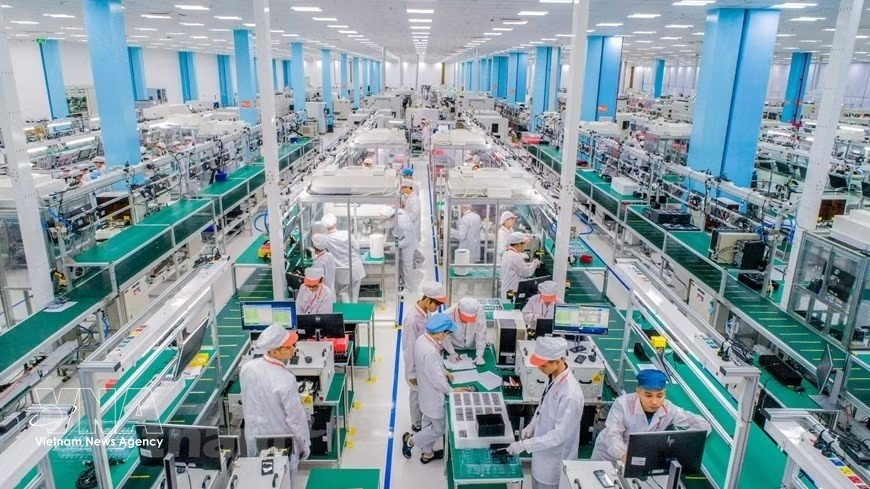
Sharing this view, Nguyen Thuong Lang said an “integrated monitoring and early-warning mechanism” should be established between the Ministry of Finance and the State Bank of Vietnam.
Built on big data and artificial intelligence, the mechanism would automatically assess the impact of policy measures, enabling timely responses to fluctuations in the global geopolitical environment. Allowing regulatory sandbox mechanisms for financial technology and new economic models would also provide a key means of unlocking venture capital flows and helping raise total factor productivity’s contribution to growth in line with the stated target.
Nguyen Quang Ngoc, Deputy Head of the Credit Policy Division at the Vietnam Bank for Agriculture and Rural Development (Agribank), also recommended that the Government promptly approve plans to increase the charter capital of State-owned commercial banks to strengthen their lending capacity.
At the same time, relevant authorities should accelerate the development of mechanisms for linking population and land databases, allowing banks to conduct faster and more accurate credit assessments while reducing cumbersome procedures for businesses.
In the long term, such coordination should aim to create an “innovation ecosystem” in which fiscal resources are channelled into basic research and data infrastructure, while bank credit and venture capital funds finance the commercialisation of technology./.