BREAKTHROUGHS UNDER RESOLUTION NO. 57 AFFRIM LEADERSHIP IN DIGITAL ERA
Mega Media•29/01/2026 09:40
Khanh Hoa province is accelerating digital transformation in tandem with building a smart city. (Photo: VNA)
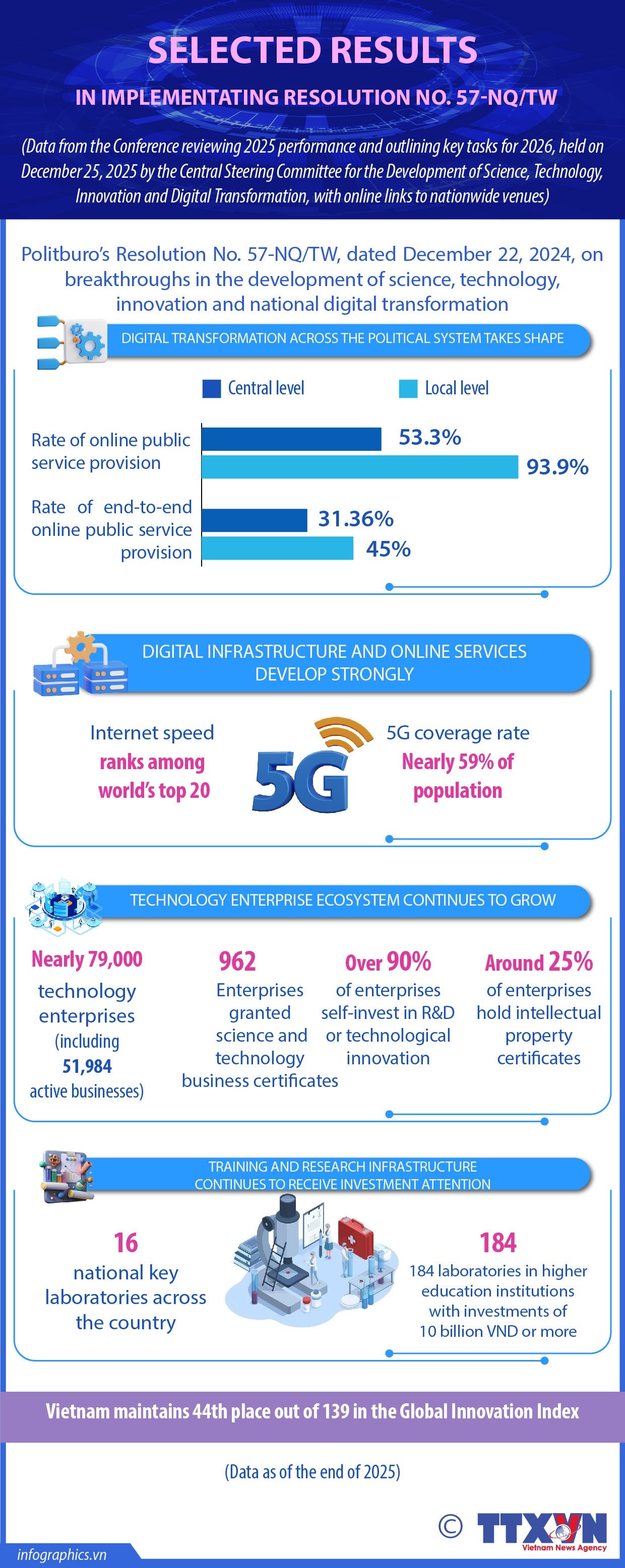
After one year of implementing the Politburo’s Resolution No. 57-NQ/TW on breakthroughs in science, technology, innovation, and national digital transformation, numerous digital models and knowledge-based initiatives have been rolled out, bringing digital transformation to communities and contributing to the fulfilment of socio-economic development targets.
A lever for comprehensive and sustainable development
Fully embracing the content of the resolution, localities have devised clear roadmaps and action plans tailored to new development conditions.
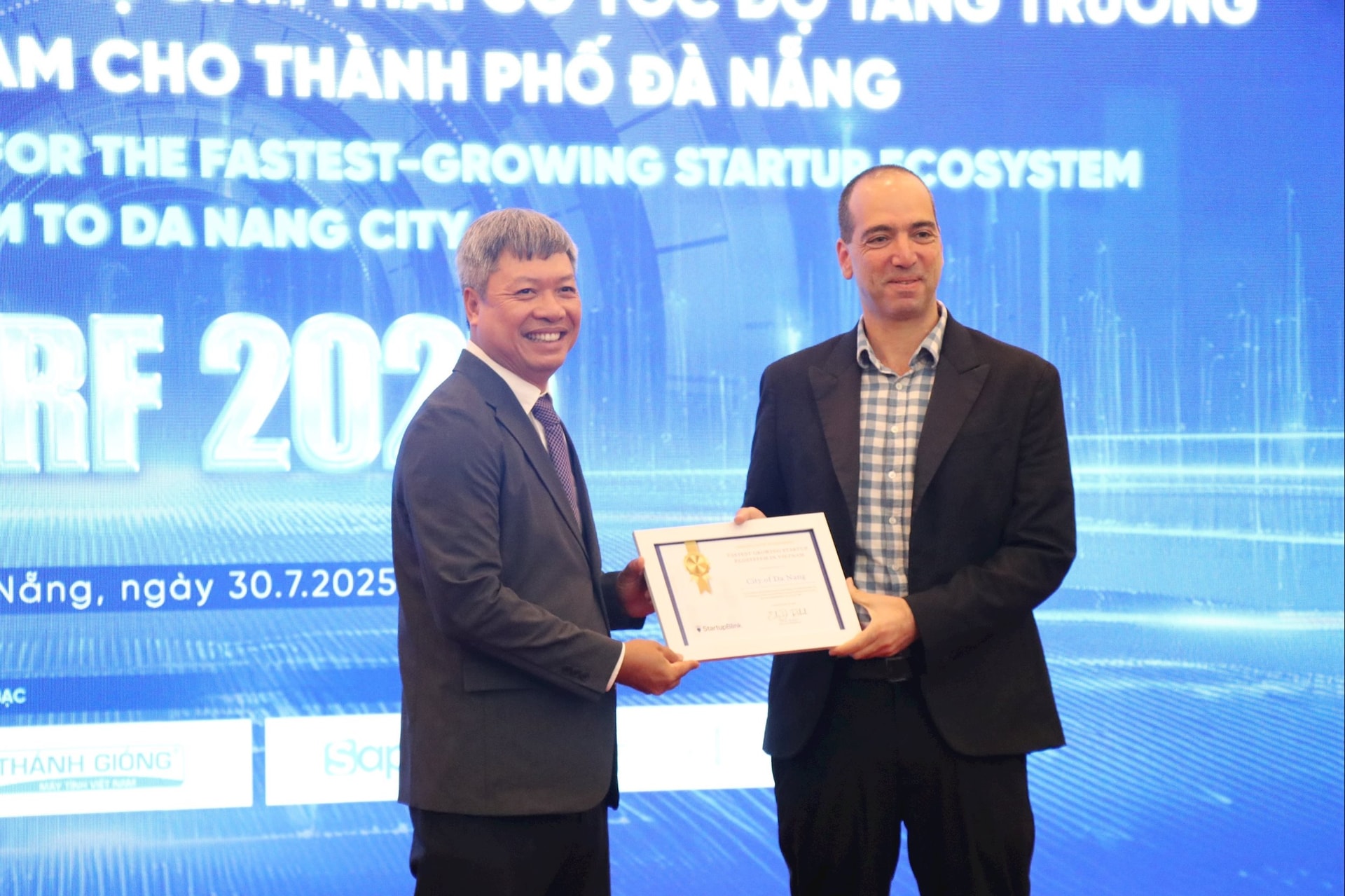
Da Nang is recognised by StartupBlink, a global startup ecosystem research and mapping centre, as the fastest-growing ecosystem in Vietnam. (Photo: VNA)
For Da Nang, Resolution No. 57 has affirmed its leadership role in the central city's development process, serving as a crucial foundation for the new phase of growth in the digital age. Da Nang's innovation and startup ecosystem continues to expand, advancing by 130 places in the global ranking, reaching 766th among the world’s top 1,000 leading cities. It is recognised by StartupBlink, the global startup ecosystem research and mapping centre, as the fastest-growing ecosystem in Vietnam. It was also honoured in the top 10 exemplary localities for developing innovative startup ecosystems at Techfest Vietnam 2025.
In the fields of science and technology, the city has made significant breakthroughs in high-tech industries, semiconductor manufacturing, and digital infrastructure, with numerous events, including the inauguration of the Da Nang Software Park No. 2 and the launch of the Advanced Packaging Technology Laboratory Project.
Officials mark the launch of the advanced packaging manufacturing laboratory project (Fab-Lab) in Da Nang city in July 2025. (Photo: VNA)
The site of the advanced packaging manufacturing laboratory project (Fab-Lab), invested in by the VSAP LAB Joint Stock Company, in Da Nang. (Photo: VNA)Minister of Science and Technology Nguyen Manh Hung (right) and the delegation visit the site of the advanced packaging manufacturing laboratory project (Fab-Lab). (Photo: VNA)
After merging with Ninh Thuan, the newly formed Khanh Hoa province possesses all the favourable conditions. Scientific research, technology, and innovation efforts have seen significant transformation, yielding clear results. The number of proposed science and technology tasks for 2025 tripled compared to previous years, and its Provincial Innovation Index (PII) for 2025 ranked 9th out of 34 provinces and cities.
Nghiem Xuan Thanh, Secretary of the Khanh Hoa provincial Party Committee, outlines tasks for implementing KPIs across the province. (Photo: VNA)
In April 2025, Khanh Hoa became the first province to research and comprehensively implement a software toolset to assess the performance of each civil servant, enabling the digitalisation of the evaluation process.
The province's Data Centre has two locations in Nha Trang and Phan Rang, equipped with a synchronised network system of servers, storage, and devices to meet security and confidentiality requirements. Khanh Hoa has completed the first phase of the smart monitoring and operation centre project and the development of the network security monitoring and operation centre for the province's information systems. The smart monitoring and operation centre, with synchronised and periodically shared data from government agencies and local systems, supports the analysis and processing of multi-disciplinary and multi-sector data. This infrastructure enables provincial leaders to detect problems early, coordinate responses promptly, and enhance management efficiency and transparency in administrative operations.
Civil servants handle administrative procedures at the Khanh Hoa provincial Public Administrative Service Centre. (Photo: VNA)A resident registers information for the settlement of administrative procedures at the Khanh Hoa provincial Public Administrative Service Centre. (Photo: VNA)
Comprehensive digital transformation from grassroots level
Following the implementation of the two-tier local administration model, many localities have identified the consolidation and strengthening of community digital technology teams as a key task to ensure organisational coherence, enhance operational effectiveness, and meet the requirements of Resolution No. 57.
With a network covering all villages and residential areas and more than 24,000 members, these teams, together with Project 06 on developing applications of population data, digital identification and authentication in service of national digital transformation for the 2022–2025 period have become an effective extension of digital transformation steering committees at all levels, bringing digital skills and digital services closer to the public.
Da Nang city currently has 3,766 community digital technology teams, with 24,303 members.
Members of community digital technology teams in Da Nang play a core role in communications and guidance, helping locals access and use online public services. (Photo: Da Nang IOC Centre) The community digital technology team of Ban Thach ward, Da Nang, guide residents in how to submit online public service applications. (Photo: Da Nang IOC Centre)
The teams are a core force in implementing digital transformation at the grassroots level, helping translate the Party, State, and city guidelines and policies into real-life action. They are also tasked with rolling out the “Digital Literacy for All” movement in conjunction with “Digital Learning” as part of their routine activities within residential communities. This approach focuses on creating a strong foundation so that digital transformation moves past policy and becomes a natural part of everyday life, especially for vulnerable groups with limited access to technology.
“
In 2025, the northern mountainous province of Lao Cai fulfilled 100% of the requirements and timelines for all 167 tasks assigned by central authorities. With this result, Lao Cai has the highest completion rate in implementing centrally assigned tasks related to Resolution No. 57.
The Lao Cai steering committee for the development of science, technology, innovation and digital transformation
Suoi Chai village is the latest in the mountainous border commune of Bat Xat to roll out the “Digital Village” model. This is a particularly disadvantaged village, where 100% of households belong to ethnic minority groups. The village has 86 households with a total population of 440, of which around 75% are classified as poor households.
A resident in Suoi Chai village, Bat Xat commune, is guided in how to submit online applications via the public service portal. (Photo: VNA)The Party cell of Suoi Chai village holds an online meeting. (Photo: VNA)The launch of the “Digital Village” model in Suoi Chai village, Bat Xat commune, Lao Cai province (Photo: VNA)
The “Digital Village” model in Suoi Chai focuses on people-centred initiatives, including assisting residents in carrying out online public administrative procedures directly in the village, guiding the use of chip-based citizen ID cards and digital utilities, deploying electronic party member handbook and organising Party meetings on digital platforms. A synchronised system of online cameras, large-screen televisions, computers, and internet-connected electronic equipment supports these activities.
In Lao Cai, the digital transformation process has gained momentum, not only facilitating public access to administrative services but also encouraging farmers to apply information technology, social media, and e-commerce in production and business activities. Many farmers now use smartphones to take photos and videos, promote their products, and offer local agricultural products on e-commerce platforms, gradually building brands and expanding markets.
Based on outcomes across localities, Resolution No. 57 has been seen as a major “lever” and a solid, important “stepping stone” enabling provinces and cities to synchronously deploy, apply, and effectively harness their inherent potential and advantages./.
Bình luận của bạn đã được gửi và sẽ hiển thị sau khi được duyệt bởi ban biên tập.
Ban biên tập giữ quyền biên tập nội dung bình luận để phù hợp với qui định nội dung của Báo.