
Gửi bình luận
Special flights to Venezuela:The race against time before take-off
.jpg)
Vietnam Airlines successfully operated two special flights carrying rescue personnel and relief supplies to Venezuela, completing the journey as quickly as possible while ensuring the highest standards of safety.
Behind the journey halfway around the world was a frantic effort by teams across Vietnam Airlines to draw up contingency plans, make rapid operational decisions and prepare for challenges that had never been encountered before. Meetings continued through the night, while staff worked around the clock to get everything ready.
And behind the scenes were many people whose work rarely attracts attention but was crucial to ensuring that the flights departed safely, stayed on schedule and fulfilled their mission.
An unprecedented mission
Nguyen Anh Tuan, Head of the Operations Division at Vietnam Airlines’ Airport Services and Operations Centre (ASOC), was directly involved in organising the two relief flights to Venezuela. He recalled a nearly 60-hour race against the clock to develop and implement a series of operational plans that had never been used before.
The original plan called for the flight to operate on June 29, but the departure was brought forward to June 28. One flight became two consecutive flights, while the planned technical stop for refuelling at Milan Malpensa Airport in Italy was switched to Paris Charles de Gaulle Airport in France.
Valencia was initially selected as the destination because Caracas had yet to fully restore its capacity to receive aircraft following the earthquake. That plan, too, was changed, with Caracas becoming the destination just 90 minutes before departure.
“Every change meant a whole series of tasks had to be redone, reconfirming ground-handling capacity, adjusting refuelling plans, checking equipment, updating operational documents and working with authorities and international partners to make sure everything could be carried out safely, smoothly and on schedule. It really was a race against time,” Tuan recalled.
Under normal circumstances, organising a flight to a new destination can take weeks or even months. Airlines need time to survey the airport, assess its handling capacity, select service providers, develop an operating plan and complete the necessary procedures.
For these two special relief flights, Vietnam Airlines had to devise several solutions that had never been used before.
One of the biggest challenges was transporting 10 service dogs in the passenger cabin. The arrangements had to meet strict requirements for flight safety and weight distribution, while also ensuring the animals’ health and allowing the crew to respond to any problems during the long journey.
“We had less than 60 hours to prepare and
coordinate ground handling for the two special humanitarian flights to Venezuela.”Nguyen Anh Tuan
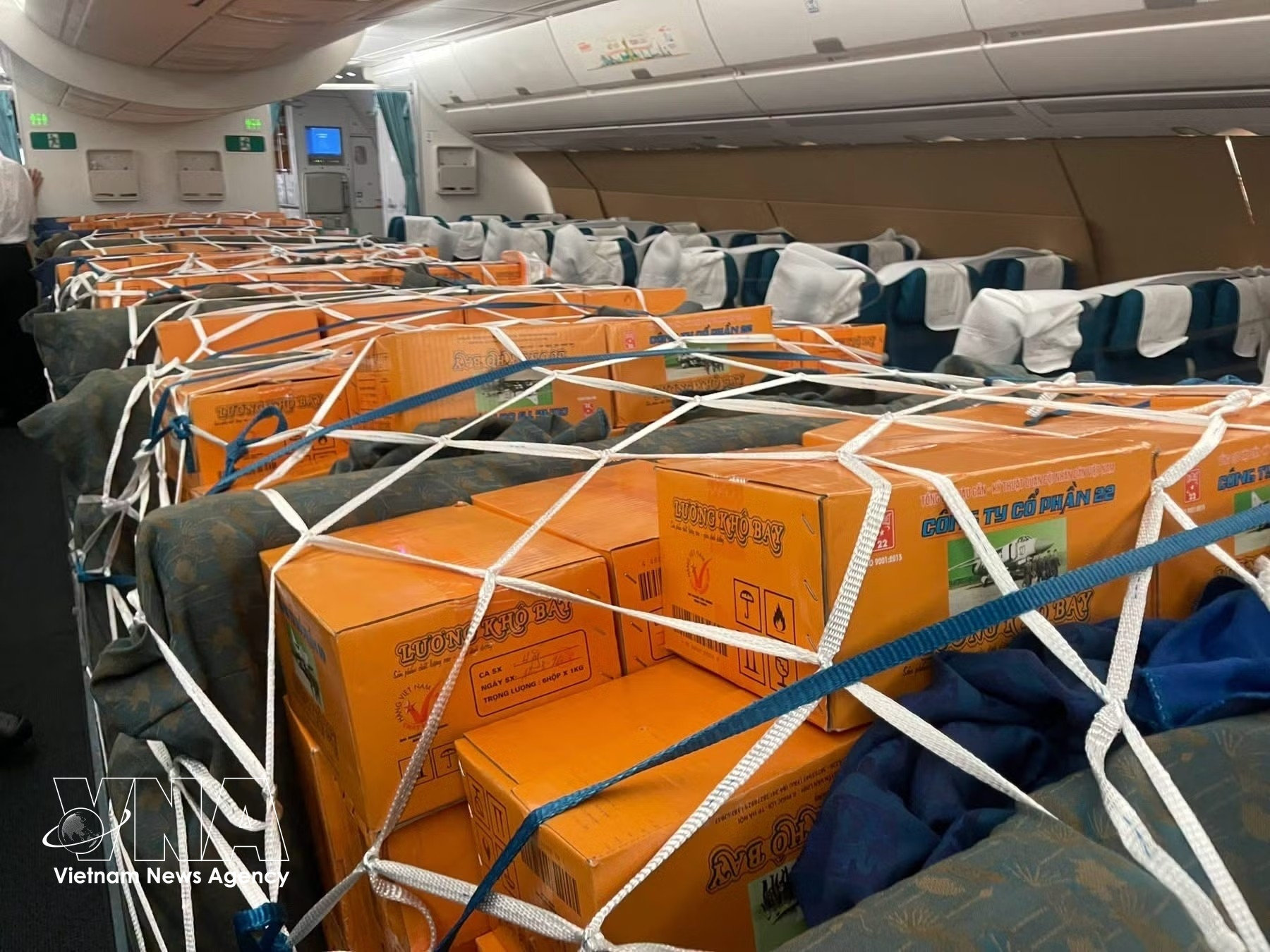
The airline also devised a plan to place relief supplies on passenger seats in accordance with Vietnam Airlines’ safety standards. This created an additional five tonnes of cargo capacity, allowing hundreds more packages of relief supplies, medical equipment and essential goods to be transported to the disaster-hit area.
To guard against a possible shortage of equipment at the destination, the airline also prepared backup supplies of its own. This meant the aircraft would not be entirely dependent on the facilities and equipment available at the destination airport.
“Every option was carefully calculated and reviewed several times before being put into action as quickly as possible. The priority was to get rescue personnel and supplies to the disaster area in Venezuela at the earliest opportunity, in line with the directions of the Party and State,” Tuan said.
Vietnam Airlines’ Operations Control Centre (OCC) also had to assess a number of possible flight routes. After a comprehensive review of operational safety, flying time, refuelling arrangements, technical support and contingency options, the route via Russia, Mongolia and Western Europe was selected as the most feasible. It offered a shorter flying time and, therefore, greater capacity for relief cargo. Every minute saved in the air meant more space for supplies. The airline also secured overflight permits from 29 countries for the two flights to Venezuela.
A frantic effort to get the flights airborne
At 7pm on June 28, while having dinner with his family, Nguyen Thanh Tung, Deputy Team Leader of the Apron Coordination and Supervision Team at the Operations Centre of Vietnam Airport Ground Services Co., Ltd. (VIAGS), received an urgent call ordering him to report to Noi Bai International Airport. The first special flight to Venezuela was due to leave at 11:30pm that night.
Tung had taken part in several previous Vietnam Airlines relief flights, but he said this was the most challenging mission in his 12 years in the profession.
“The journey from Hanoi to South America is a long one. Refuelling and maximising the aircraft’s payload were important, but so was loading the search-and-rescue equipment. Much of the equipment was specialised, so we had to carefully determine what should be loaded first and where it should be placed in the cargo hold. We made use of every available space in the cargo hold and passenger cabin, in overhead compartments, under seats and in other suitable areas while ensuring that all operational requirements were met,” Tung said.
The 10 service dogs involved in the rescue mission also presented a special challenge. They could not be transported in the cargo hold and therefore had to travel in the passenger cabin with their handlers. A designated resting area was prepared by covering the floor and wrapping the seats in plastic to keep the dogs safe and comfortable throughout the journey.
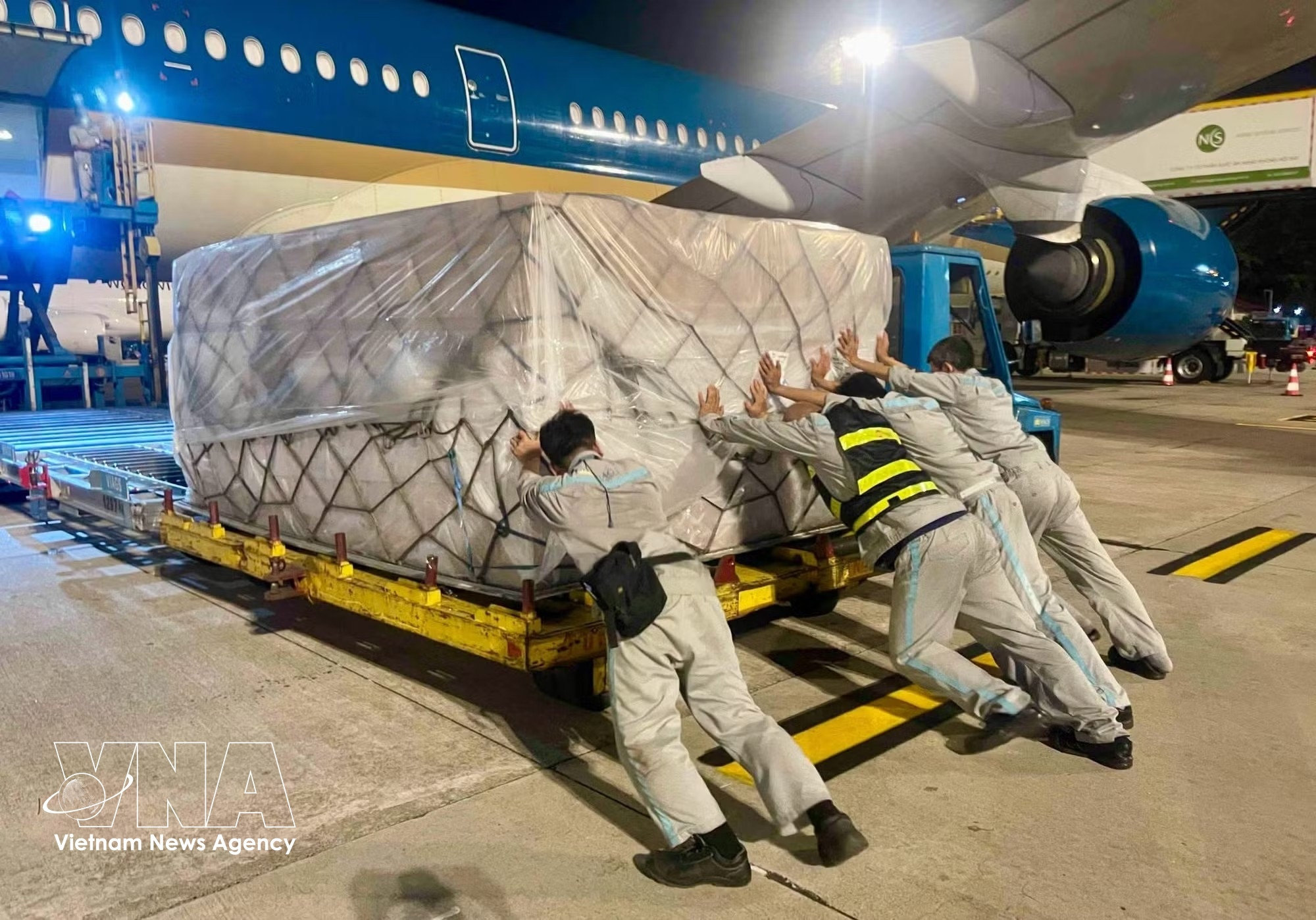
“The round trip took more than 50 hours. Being part of a humanitarian relief mission to Venezuela was a great honour and a source of pride, but it also came with enormous pressure. We had to work against the clock to prepare the flight and make sure the cargo could be loaded and unloaded safely and efficiently,” Tung said.
As soon as he was notified about the special flight, Le Xuan Lenh, Duty Manager at the VIAGS Operations Centre, immediately mobilised ground teams to prepare for its arrival and departure. They drew up the ground-handling plan and coordinated everything from the handling of special and dangerous goods and operational procedures to weight-and-balance calculations. They also closely monitored the loading process to maximise the aircraft’s cargo capacity without damaging its interior or equipment or compromising operational standards.
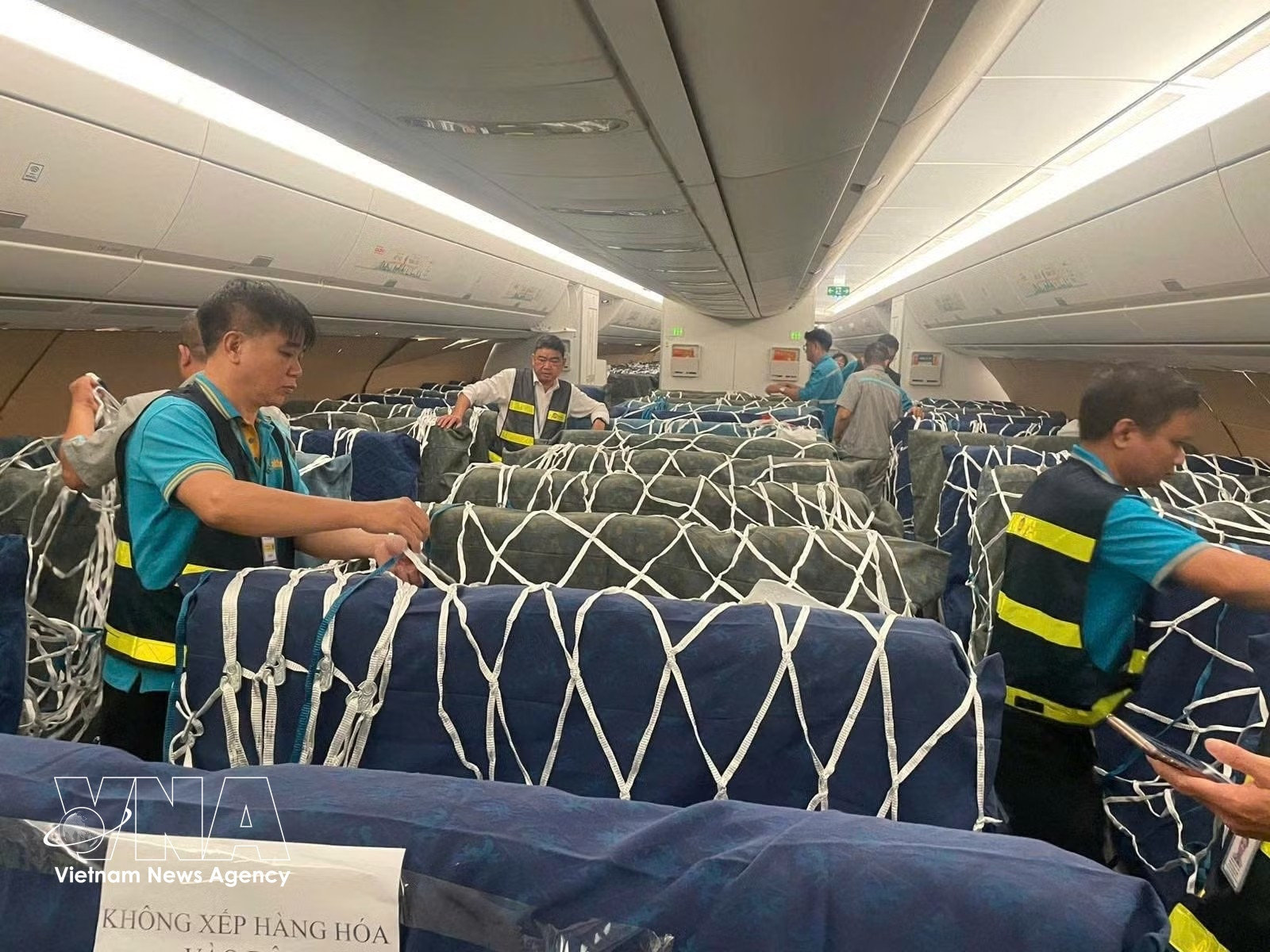
That night, Noi Bai was hit by heavy rain and frequent thunderstorms. Despite the difficult weather, Vietnam Airlines managers and staff remained at the airport, overseeing operations and dealing with problems as they arose to ensure that the flight could depart on time.
“Phones were ringing constantly as the operations and logistics teams discussed different options. Decisions had to be made quickly to keep everything moving. Each unit had its own responsibilities, but everyone was working against the clock towards the same goal: getting Vietnam’s rescue personnel and relief supplies to Venezuela as quickly, safely and effectively as possible,” Lenh said.
But the take-off was not the end of the operation.
For the teams responsible for monitoring the flights, it marked the beginning of the most demanding phase.
On the nights of June 29 and 30, Vietnam Airlines maintained round-the-clock operational monitoring, keeping track of the aircraft-handling process in Venezuela and coordinating with local ground-service providers to deal with any problems. Teams also ensured the supply of fuel, clean water and ground equipment, as well as the loading and unloading of cargo.
With Venezuela around 11 hours behind Vietnam, many staff members worked through the night for several consecutive days. Information about the flights was monitored and updated in real time, with teams remaining on standby around the clock to deal with any unexpected developments. Despite the distance of more than 16,000km, the operation continued as a single, closely connected chain.
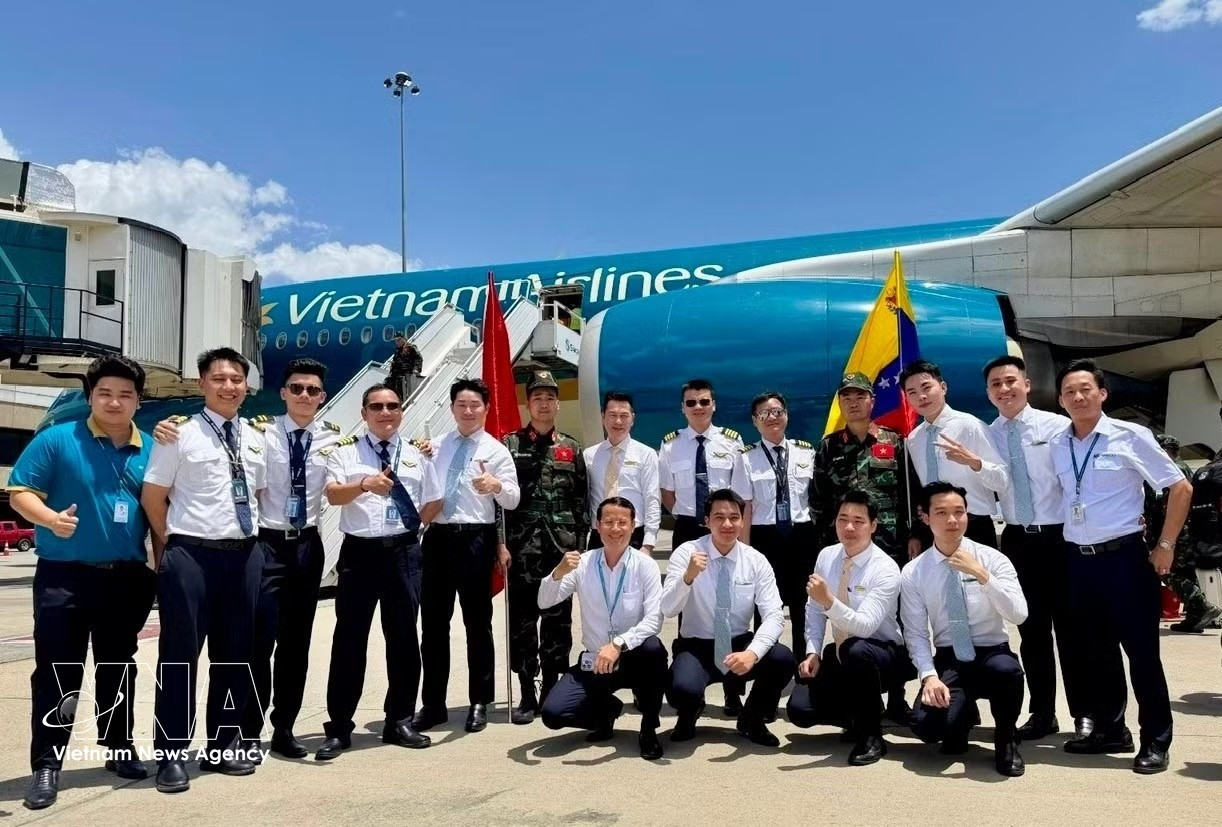
Even after the flights had completed their missions, the teams continued to follow up on service confirmations and negotiate with international partners over various charges, helping the airline save thousands of US dollars.
“When the aircraft continued on its journey and the mission had been completed safely, that was when we could finally breathe a sigh of relief,” said Nguyen Anh Tuan, Head of the Operations Division at Vietnam Airlines.
Ready to take on special missions
In Venezuela, several countries were carrying out humanitarian missions at the same time, while resources at the airport remained limited. This placed considerable pressure on local ground-handling operations. Vietnam Airlines staff travelling with the flights also rolled up their sleeves and helped load and unload the cargo so that relief supplies could reach those in need as quickly as possible.
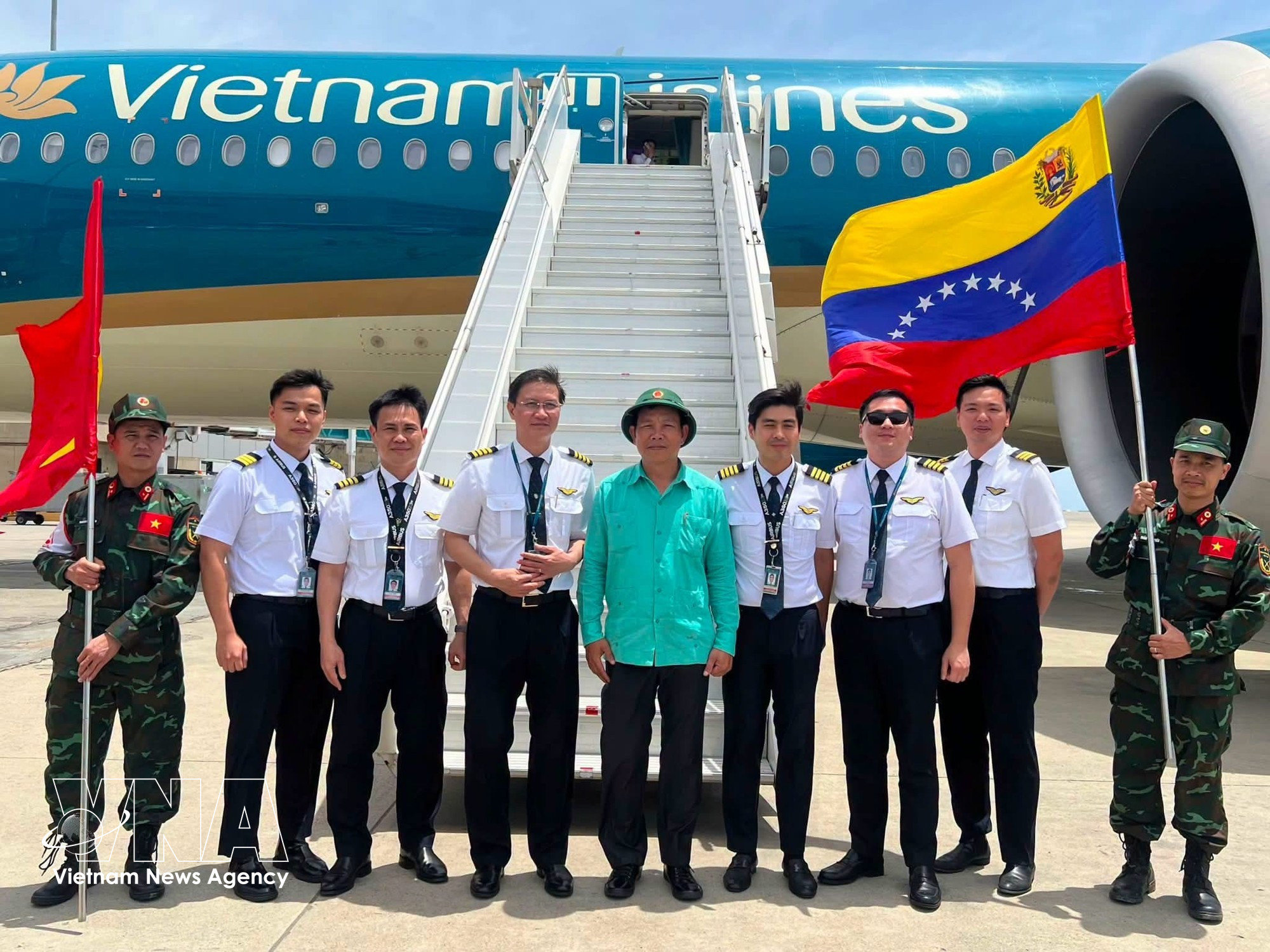
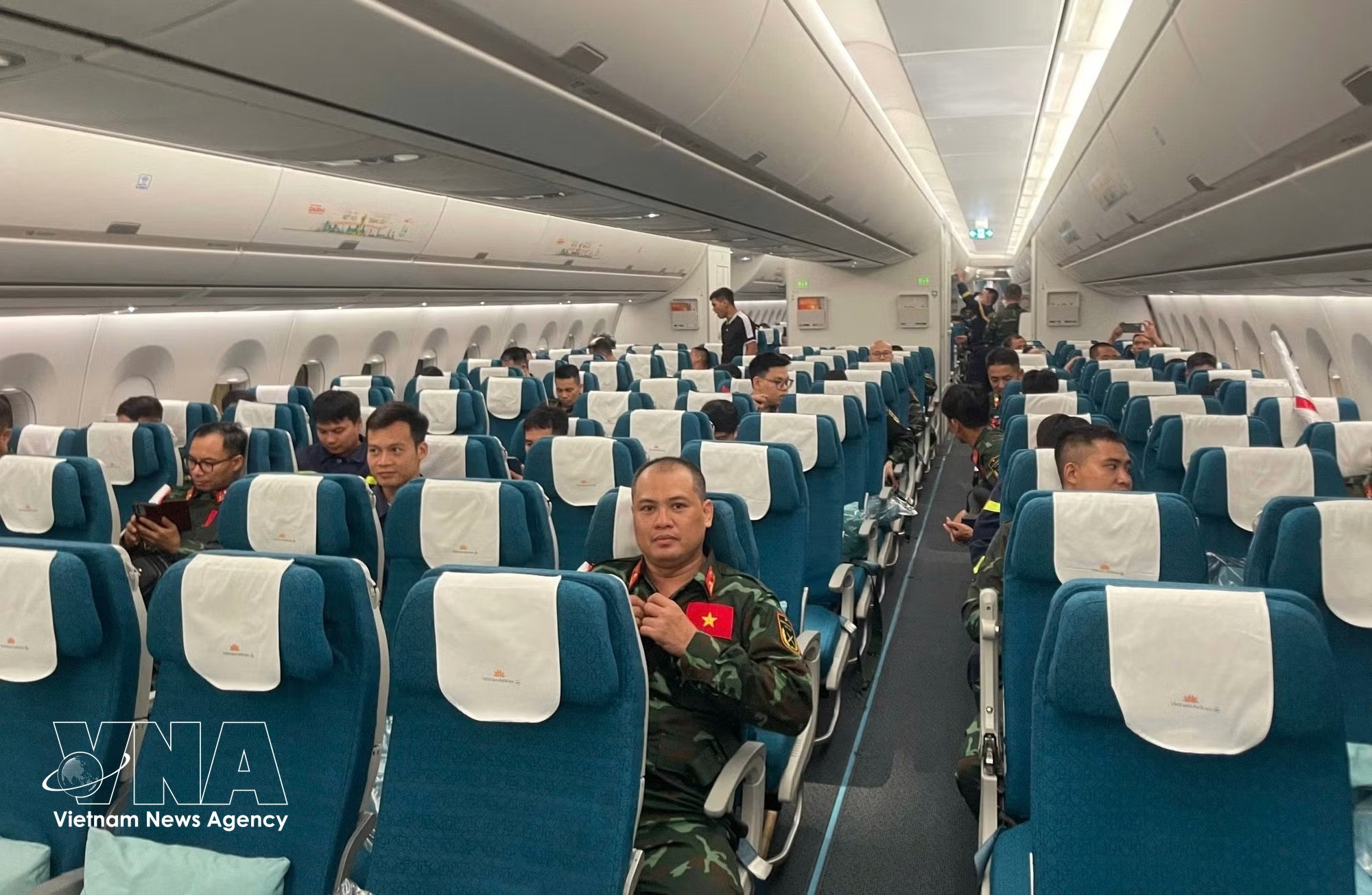
When the aircraft bearing the Golden Lotus emblem of Vietnam’s national flag carrier touched down safely at Caracas Airport, the flags of Vietnam and Venezuela flew side by side. Vietnamese military personnel raised the national flag as they stepped off the aircraft and began their humanitarian mission.
“It was a moment of overwhelming happiness, pride and relief after so many tense days and nights. The flight was not just carrying people and relief supplies. It was also carrying Vietnam’s image, sense of responsibility and goodwill to international friends at a time of great difficulty,” Tung said.
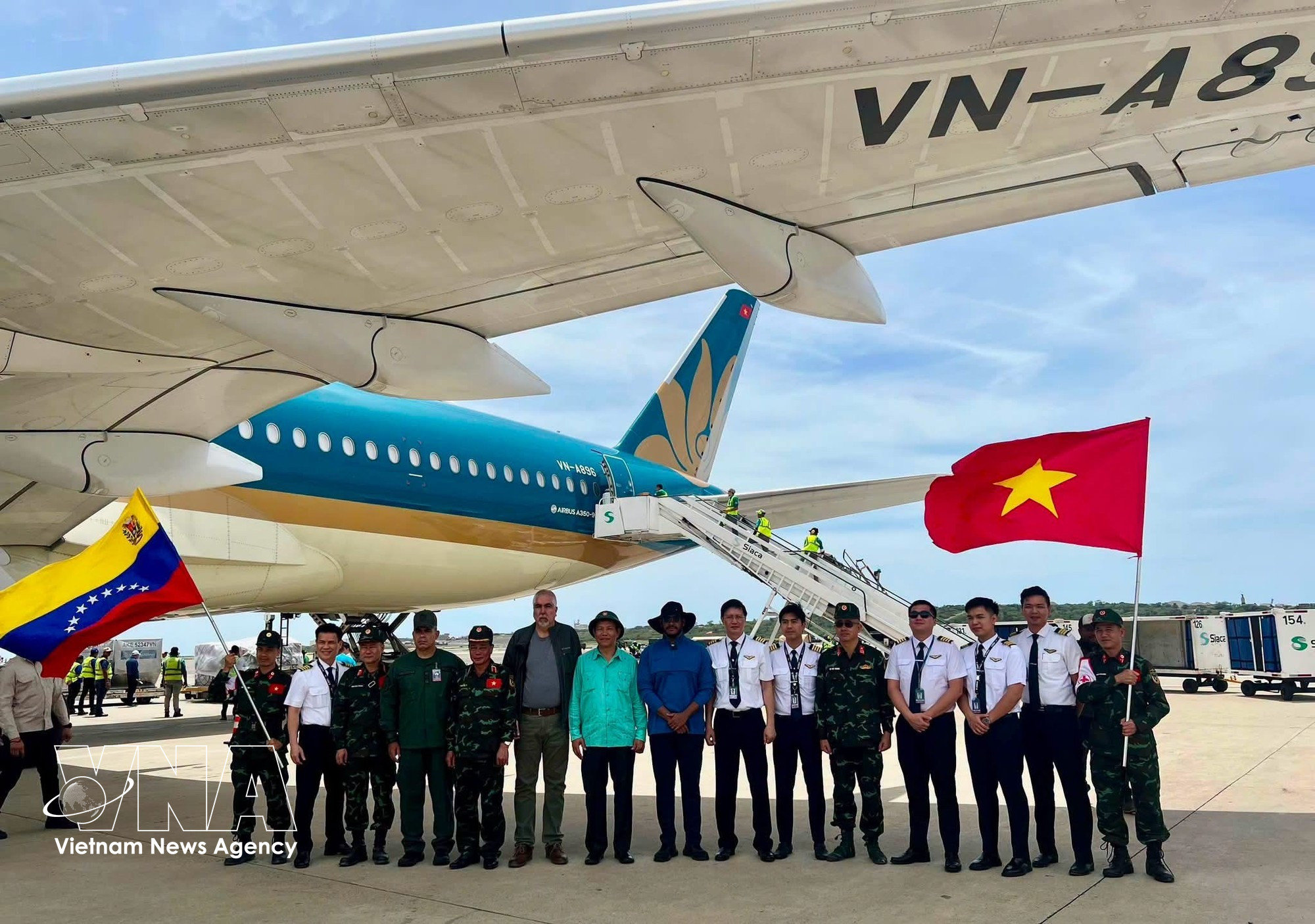
Vietnam Airlines leaders stressed that the success of the two flights was the result of a collective effort rather than the work of any single unit. It reflected close direction from the airline’s leadership and staff, as well as coordination among specialist departments, flight crews, technical teams, Vietnam Airlines representatives overseas, the Vietnamese Embassy in Venezuela and international partners.
The flights carried more than people and relief
supplies. They also carried Vietnam’s sense of responsibility and goodwill to an international community facing a difficult moment.
“These flights did not simply carry people and relief supplies. They also carried our sense of responsibility, our humanitarian spirit and the image of Vietnam to international friends. That is a source of pride for all Vietnam Airlines employees, including those of us working in operations,” a Vietnam Airlines leader said.
As Vietnam’s national flag carrier, Vietnam Airlines is ready to mobilise its resources for special missions at the request of the Party, State and Government. Over the years, the airline has undertaken numerous special missions in emergencies and as part of Vietnam’s international responsibilities.
In 2025, it transported relief supplies to Myanmar and brought Vietnamese officials and military personnel home after they completed search, rescue and relief operations following the devastating earthquake there. The airline also operated evacuation flights for Vietnamese citizens from Ukraine in 2022, transported Vietnamese workers home from Libya in 2011 and 2014, and assisted Vietnamese citizens in Japan following the earthquake and tsunami in 2011.
Every special flight is a testament to Vietnam Airlines’ organisational capacity, sense of responsibility and unwavering commitment to serving the country and its people and to undertaking international missions, whether in times of peace or in extraordinary circumstances that demand exceptional effort./.