Private sector: From a key driver to a leading force for growth
{VNA}•02/11/2026 17:07
The private sector, which contributes over 51% of GDP and employs 82% of the workforce, is undergoing a significant shift from serving as a key growth driver to becoming a leading force in economic development. This transformation aims to achieve the double-digit growth target and set the stage for Vietnam’s development through 2045. As growth driven by capital and low-cost labour reaches its limits, unlocking resources, strengthening technological capabilities and improving corporate governance will become increasingly vital.
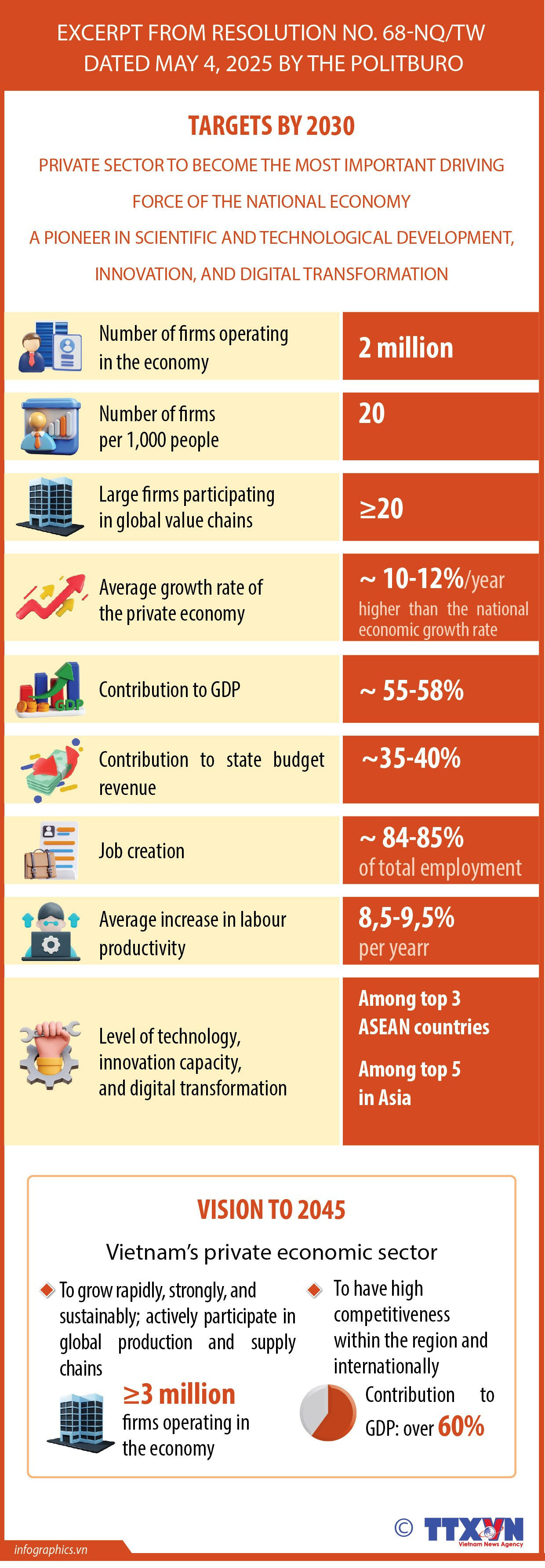
The Politburo's Resolution No. 68-NQ/TW on private sector development has opened up a new direction for this sector. However, turning policy into a genuine growth driver requires close cooperation between the State and businesses, from institutional reform and the removal of bottlenecks to technological innovation, productivity improvement and the development of competitive value chains.
Affirming a leading role in the new growth model
From 2021 to 2025, Vietnam’s economy maintained average annual growth of 6.23%, with growth reaching 8.02% in 2025 and GDP standing at 514 billion USD. By mid-2026, Vietnam had more than 1.06 million active enterprises. The private sector accounted for 96% of the total number of enterprises and nearly 78% of their combined registered capital.
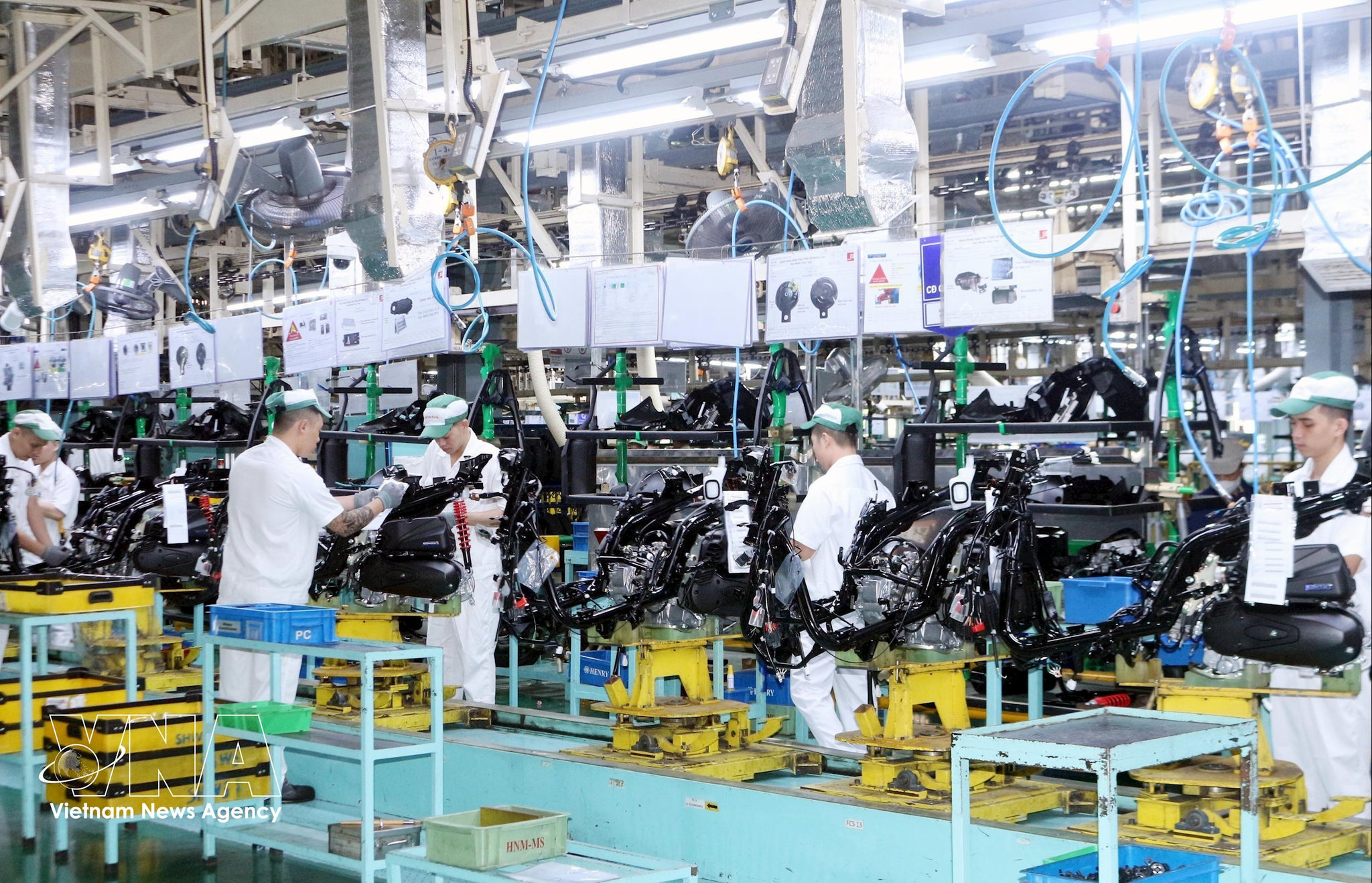
The private economic sector is emerging as a driving force behind Vietnam's economic growth. (Photo: VNA)
“
In 2025, private investment reached 3.84 quadrillion VND, accounting for 74.6% of the total 5.14 quadrillion VND invested in 564 projects and facilities inaugurated that year.
Beyond expanding in scale, many private enterprises have increased investment in high technology, the digital and green economies, industry and infrastructure. In 2025, private investment reached 3.84 quadrillion VND, accounting for 74.6% of the total 5.14 quadrillion VND invested in 564 projects and facilities inaugurated that year. These figures highlight the private sector’s growing capacity to mobilise resources.
However, the target of average annual growth of at least 10% requires a qualitative shift. The economy needs to move away from relying mainly on increased inputs towards higher productivity, wider application of science and technology, and innovation.
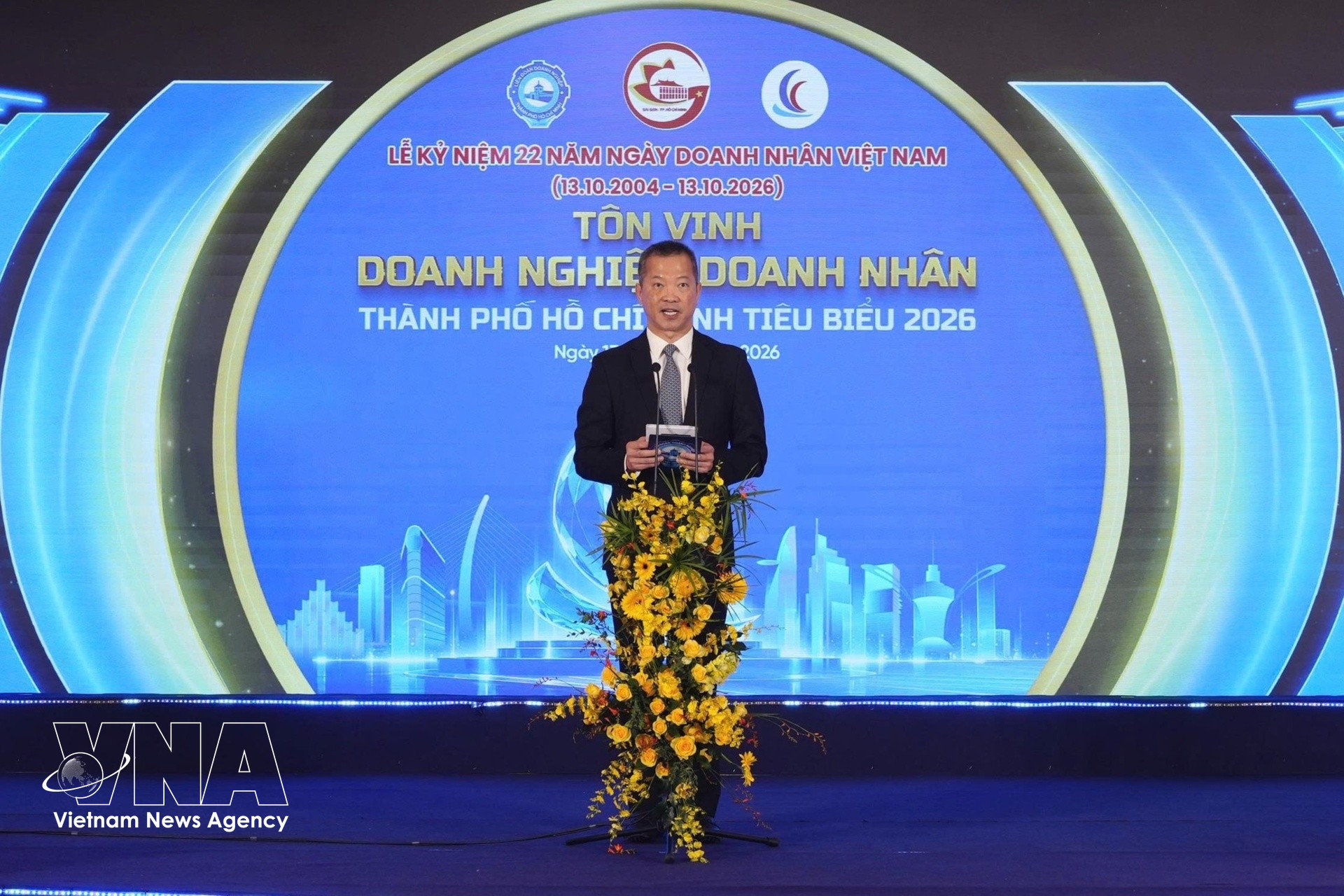
Nguyen Quoc Anh, Deputy Director of the National Institute for Economics and Finance.
“
The double-digit growth target requires a change in how economic growth is generated, with greater emphasis on productivity, technology and efficient resource use.
Nguyen Quoc Anh, Deputy Director of the National Institute for Economics and Finance
Therefore, the private sector needs not only more enterprises but also stronger competitiveness, greater technological autonomy and deeper participation in value chains. These factors will enable it to play a leading role in the new growth model.
Removing institutional bottlenecks and unlocking resources
An open institutional framework and a transparent, stable business environment are essential for encouraging enterprises to make long-term investments. In recent years, the Party, National Assembly and Government have continued to promote administrative reform, address obstacles to investment and business activities, and support new growth drivers.
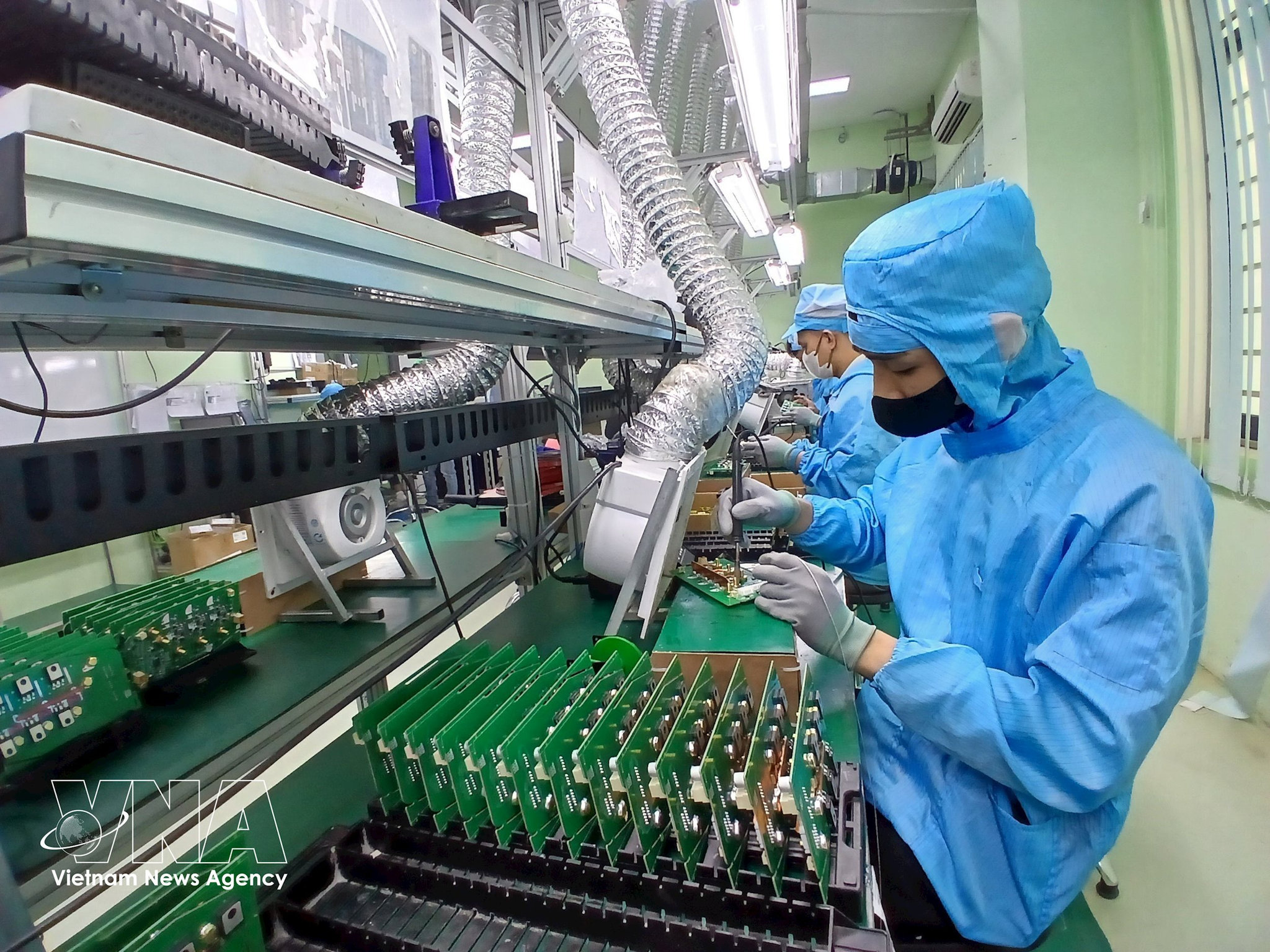
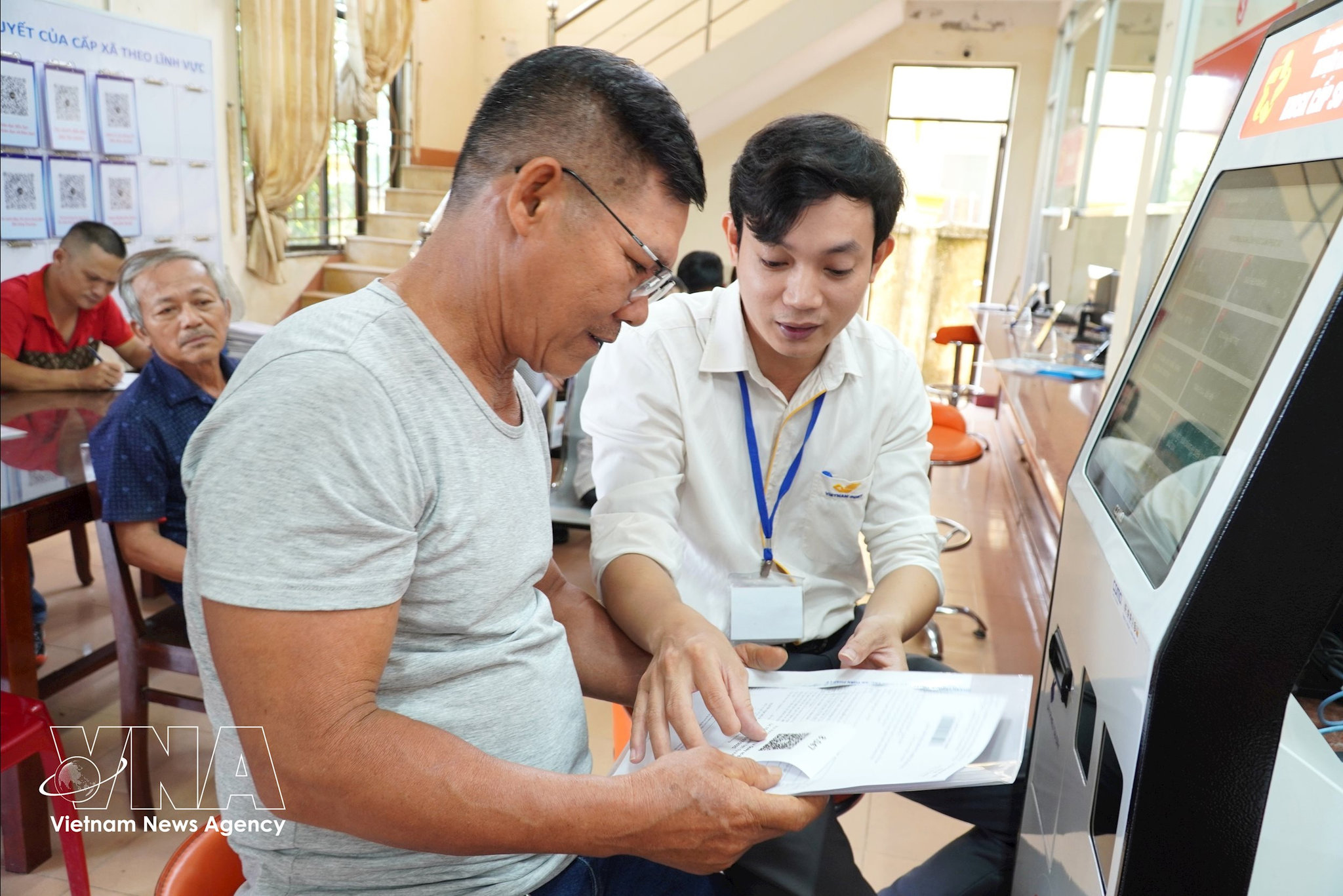
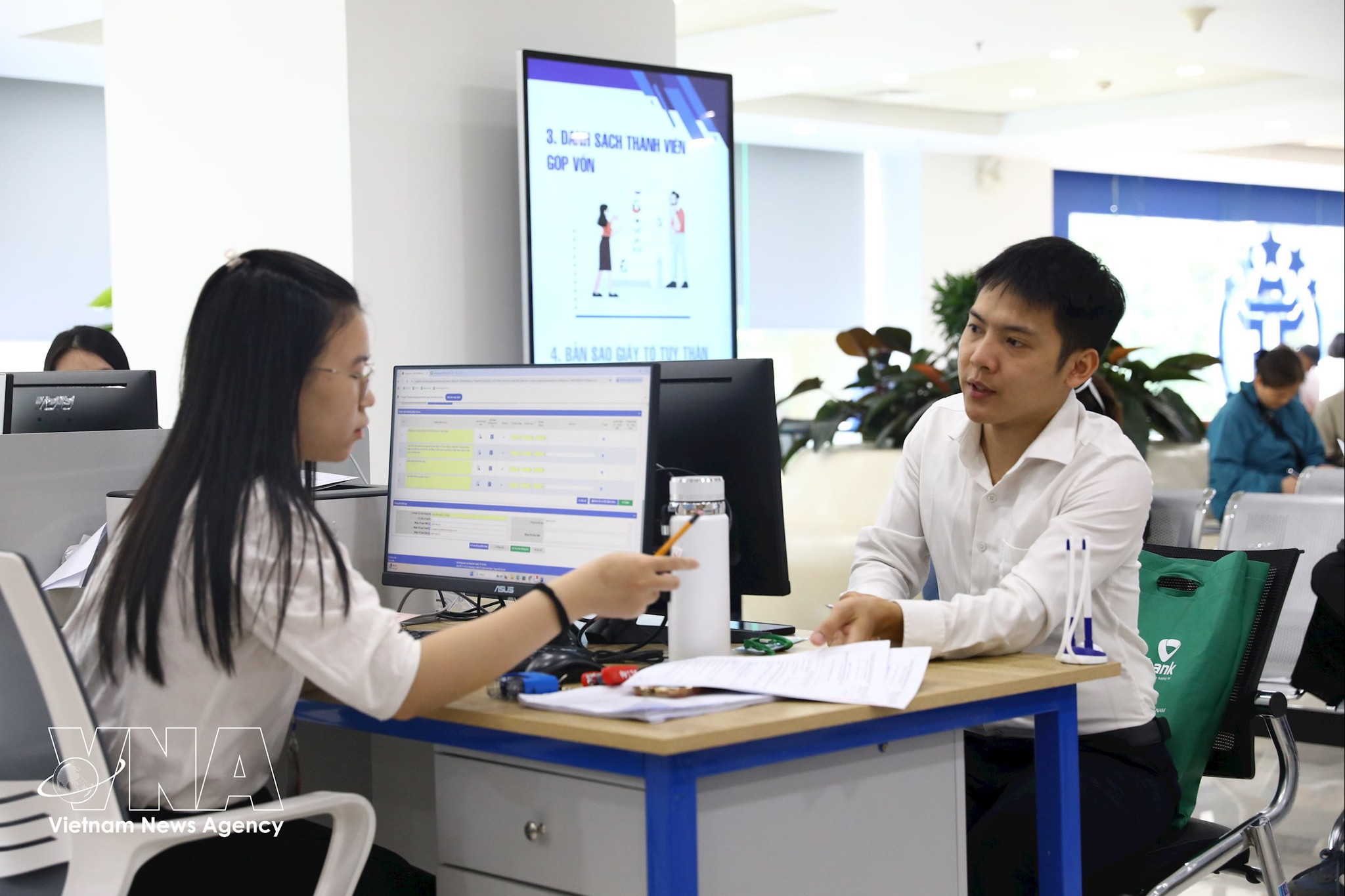
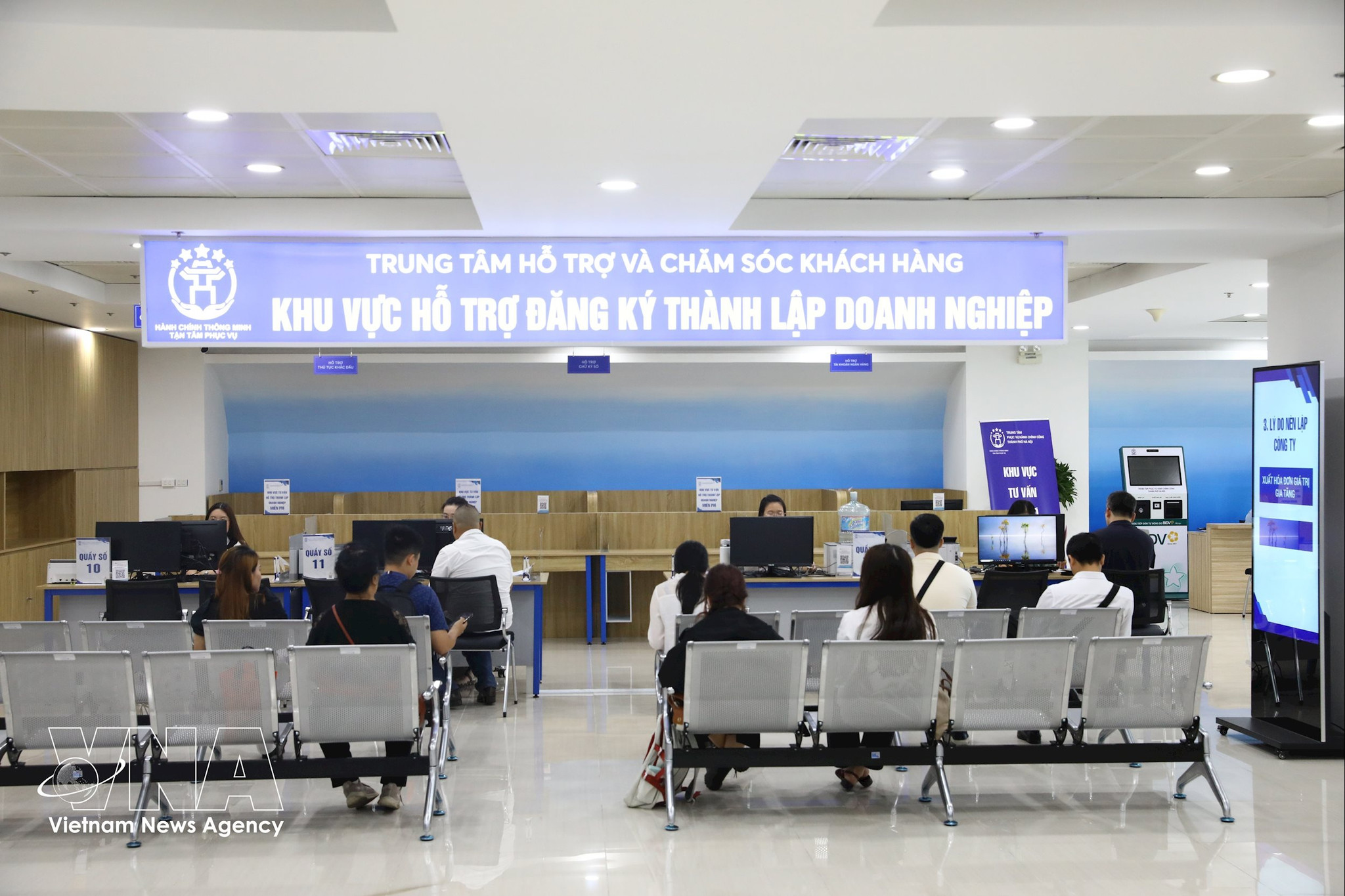
The Party, National Assembly and Government are promoting administrative reforms and removing obstacles to investment and business activities. (Photo: VNA)
However, a gap remains between policy and implementation. Many small and medium-sized enterprises face difficulties in accessing capital and markets, dealing with rising input costs and recruiting skilled workers. Access to credit remains limited, while demand for investment in technology and digital transformation continues to grow.
Pham Van Viet, Chairman of Viet Thang Jean Co., Ltd. and Vice Chairman of the Vietnam Private Business Association.
“
Most private businesses are relatively small, have limited capacity for cooperation and lack access to capital for production expansion and technological innovation. The priority is not only to introduce policies but also to improve their implementation, ensure consistent application of regulations, shorten administrative processing times and reduce compliance costs.
Pham Van Viet, Chairman of Viet Thang Jean Co., Ltd. and Vice Chairman of the Vietnam Private Business Association
The priority is not only to introduce policies but also to improve their implementation, ensure consistent application of regulations, shorten administrative processing times and reduce compliance costs.
Mai Huu Tin, Chairman of the Ho Chi Minh City Union of Business Associations.
“
Policy effectiveness depends heavily on how authorities interpret and implement regulations in practice. Inconsistent application can leave businesses waiting for guidance, increasing both time and costs.
Mai Huu Tin, Chairman of the Ho Chi Minh City Union of Business Associations
Beyond administrative reform, business support must address practical needs related to capital, technology and markets. Policy effectiveness should be measured through tangible results, including lower compliance costs, better access to credit and improved conditions for business expansion.
Leading enterprises to strengthen Vietnam’s business ecosystem
For the private sector to become a genuine leading force, Vietnam needs strong enterprises capable of connecting with and supporting smaller businesses in supply chains. The role of leading companies lies not only in their capital and revenue but also in their ability to share technology, management experience and market access.
Pham Dinh Doan, Chairman of Phu Thai Group.
“
Large enterprises should support smaller businesses in management, technology, finance, market access and international standards. Such cooperation will help build a Vietnamese business ecosystem in which enterprises grow together rather than operate in isolation.
Pham Dinh Doan, Chairman of Phu Thai Group
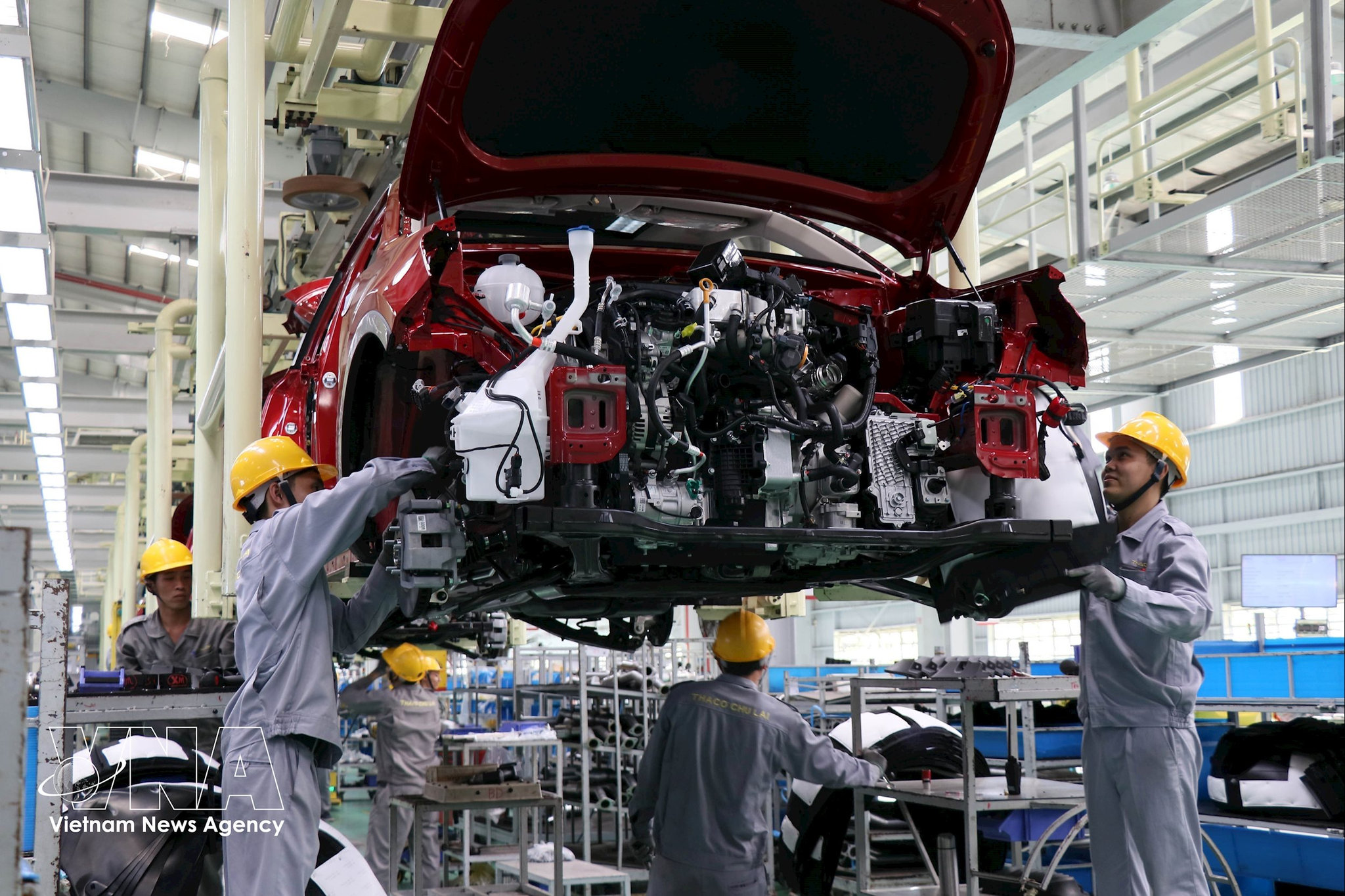
Several private groups are already stepping up long-term investment. Truong Hai Group Corporation (THACO Group) is pursuing a multi-sector industrial model built on industrial development and digitalisation, targeting consolidated revenue of around 180 trillion VND in 2027. Meanwhile, Hoa Phat Group is developing the Hoa Phat Dung Quat Rail and Special Steel JSC, with an annual capacity of 700,000 tonnes. The plant is expected to begin supplying rail products in the second quarter of 2027.
In transport infrastructure, Deo Ca Group's leader highlighted the role of public-private partnerships (PPPs) in mobilising social resources and easing pressure on the State budget. For this mechanism to work effectively, responsibilities and risk-sharing principles must be clearly defined, while a transparent legal framework is needed to help businesses and banks plan long-term investments.
An automobile manufacturing plant of Truong Hai Group. (Photo: VNA)Hoa Phat's iron and steel production complex in the Dung Quat Economic Zone. (Photo: VNA)The Ho Chi Minh City–Long Thanh Expressway expansion project, invested in by Deo Ca Group. (Photo: VNA)
Alongside financial resources, management quality is another decisive factor. A programme to train and develop 10,000 chief executive officers (CEOs) by 2030, under Decision No. 525/QD-TTg, aims to build a management workforce with strategic vision, modern operational skills and the ability to lead sustainable business growth.
Green transition, strengthened competitiveness
As market standards become increasingly demanding, businesses can no longer rely solely on expanding production. They need to accelerate technological innovation and digital transformation while meeting environmental, social and governance (ESG) standards.
Bao Minh Confectionery JSC General Director Ngo Thi Tinh. (Photo: VNA)
The experience of Bao Minh Confectionery JSC shows how technology can help traditional businesses improve quality and expand markets. The company’s General Director Ngo Thi Tinh said the company has invested in automated machinery while retaining its traditional recipes and flavours. Technology has helped standardise product quality, ensure food safety and improve competitiveness.
However, green transition and digitalisation require substantial investment, placing considerable pressure on small and medium-sized enterprises. Support measures should therefore improve access to capital, technology, skilled workers and markets while encouraging innovation and productivity gains.
Vietnam’s private sector has an opportunity to shift from extensive growth towards higher-quality development and a stronger position in the economy. Resolution No. 68-NQ/TW provides strategic direction, but achieving its objectives requires coordinated institutional reform and sustained innovation by businesses.
A transparent and stable business environment will provide a foundation for long-term investment. At the same time, enterprises must strengthen governance, master technologies, build stronger partnerships and meet sustainable development standards.
By unlocking private resources and strengthening the business ecosystem, Vietnam can enable the private sector to make a greater contribution to the double-digit growth target and the country’s development towards 2045./.
Many private enterprises are investing in the service and real estate sectors in Da Nang City. (Photo: VNA)
Bình luận của bạn đã được gửi và sẽ hiển thị sau khi được duyệt bởi ban biên tập.
Ban biên tập giữ quyền biên tập nội dung bình luận để phù hợp với qui định nội dung của Báo.