
Gửi bình luận
LongForm
A strategic Party decision opens new chapter for education in border areas
Just nine months after simultaneous construction began, 108 schools under the first phase of a major programme to develop inter-level boarding schools in border communes are set to open for the 2026–2027 academic year, ushering in a new chapter for education.
Across Vietnam’s mainland border regions, hundreds of thousands of students, parents and teachers are eagerly awaiting a special opening ceremony on September 5. On this occasion, more than 100 primary and secondary boarding schools in over 100 border communes will be inaugurated.
Meanwhile, construction of another 121 inter-level boarding schools under the second phase, covering 17 provinces and cities, is being accelerated, with completion targeted before August 30, 2027, in time for the 2027–2028 academic year.
This remarkable progress stems from the strategic vision and direction of the Politburo at Conclusion No. 81-TB/TW dated July 18, 2025, which endorsed investment in primary and secondary boarding schools across 248 mainland border communes.
The policy identifies school construction in border areas as a key task in socio-economic development and ethnic affairs, aimed at improving educational standards, developing human resources, nurturing local ethnic minority officials and strengthening national defence and security.
The Politburo further reaffirmed this commitment in Resolution No. 71-NQ/TW dated August 22, 2025, on breakthroughs in education and training, setting the target of completing the boarding school network in ethnic minority, disadvantaged and border areas before 2030.
The initiative reflects the Party’s consistent position that education is a top national priority and holds the key to the country's future.
Education in border and remote areas is not only about improving knowledge and training human resources, but also a fundamental, long-term solution to safeguarding national sovereignty through local people and communities.
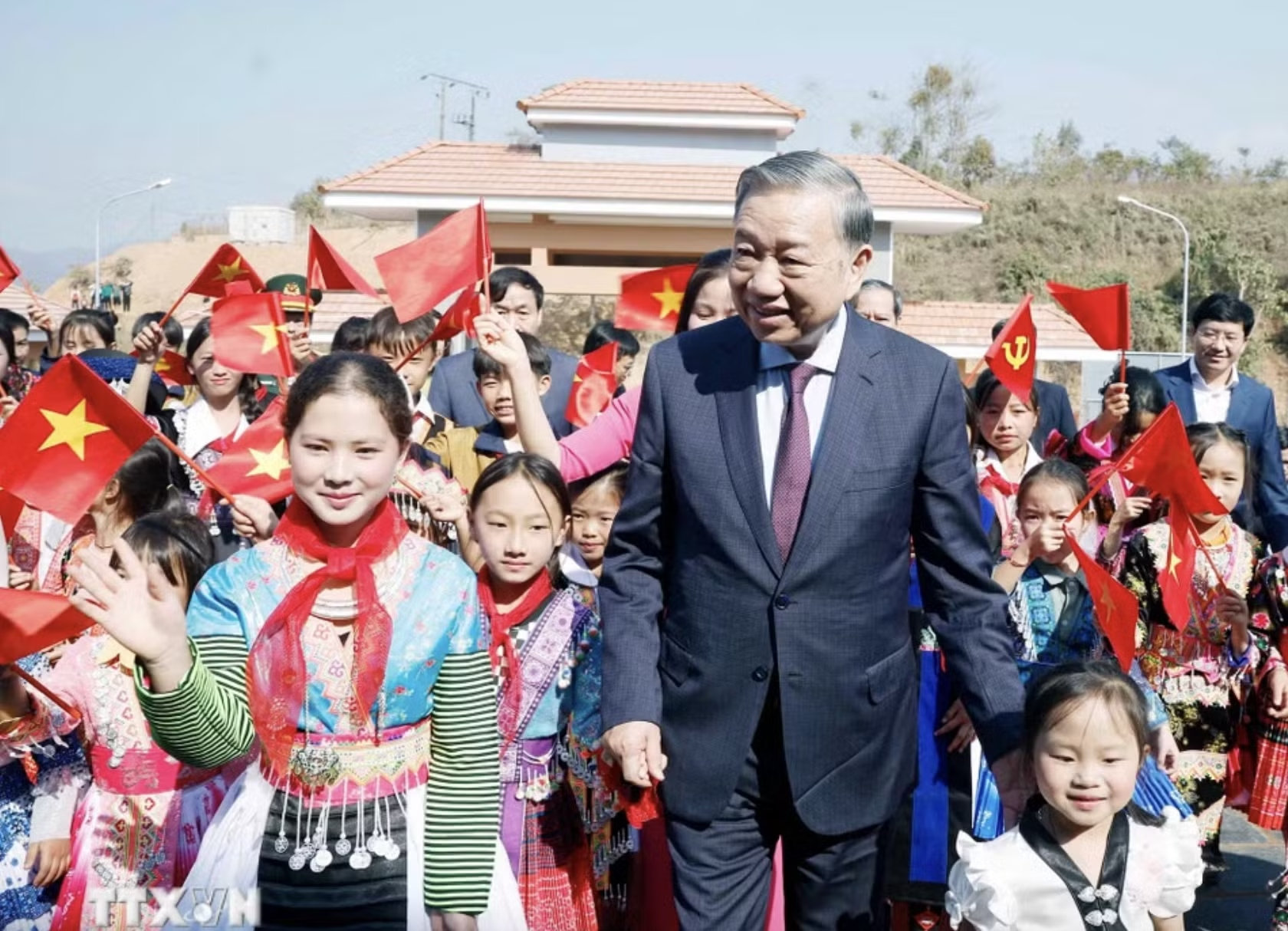
Party General Secretary To Lam speaks at the inauguration of the Si Pa Phin Primary and Secondary Boarding School on January 31, 2026
From the 2026–2027 academic year, this strategic decision will begin opening a new chapter for education in Vietnam’s border regions.
New school year brings dreams come true for teachers and students in border areas
On September 3 morning, the Sam Mun Primary and Secondary Boarding School in Dien Bien province was bustling with excitement as hundreds of students and parents arrived for the new school year. Surprise, amazement and happiness were written all over the face of ninth-grader Ly Thi La as she entered the school. “I never imagined I would have the chance to study at such a beautiful school,” she said.
A dream school
Recently completed to welcome its first students, the school has enrolled 1,010 students, including 392 primary and 618 in secondary school. Of these, 414 are boarders from the Mong, Thai and Kinh groups. The school brings together students and teachers from three former schools in the area.
With 26 years of experience working in schools in remote mountainous areas of Dien Bien, Principal Nguyen Trong Son recalled the severe shortage of facilities in the past, when teachers and local residents had to cut bamboo to build classrooms and gradually improve school infrastructure.
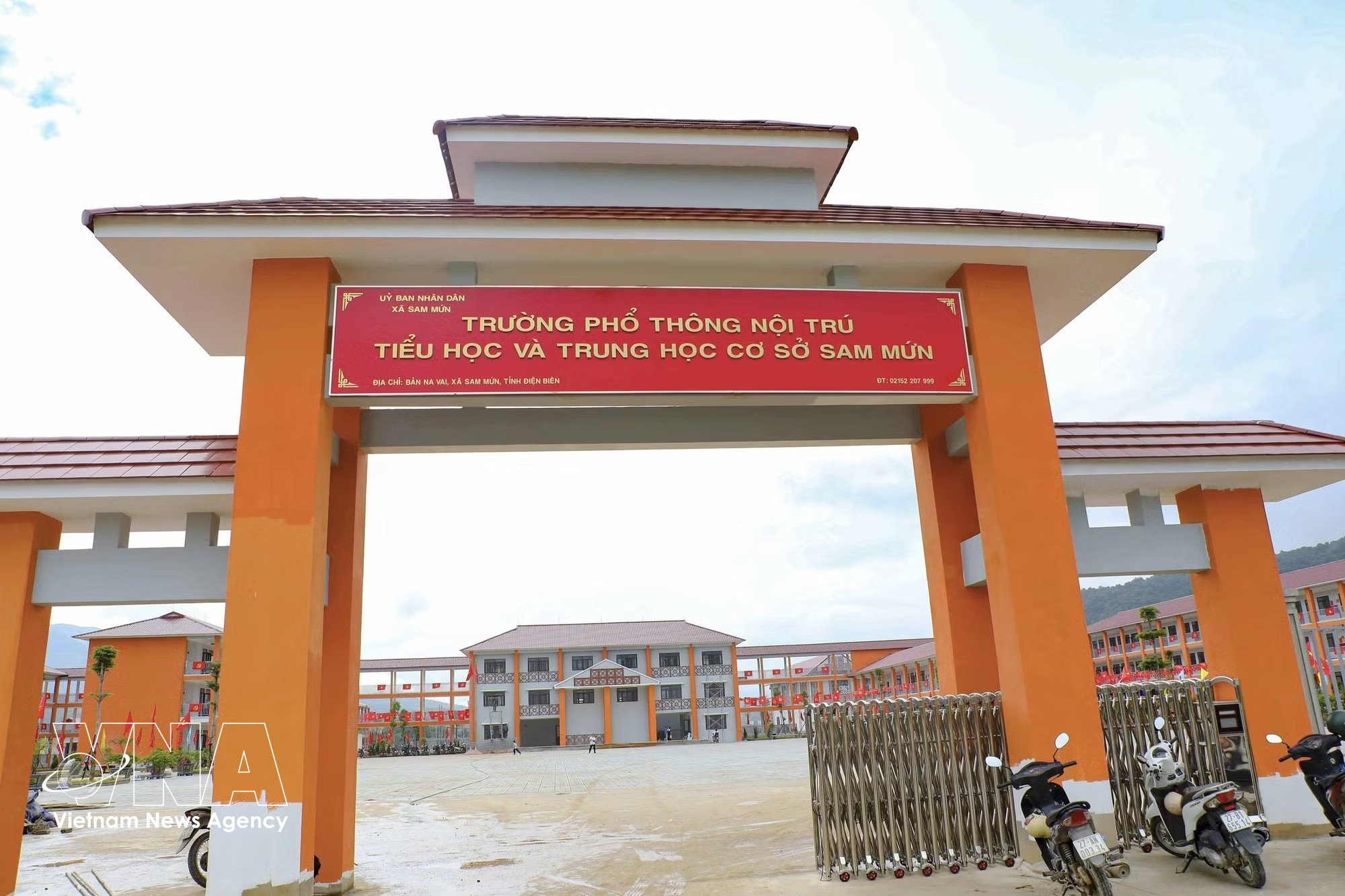
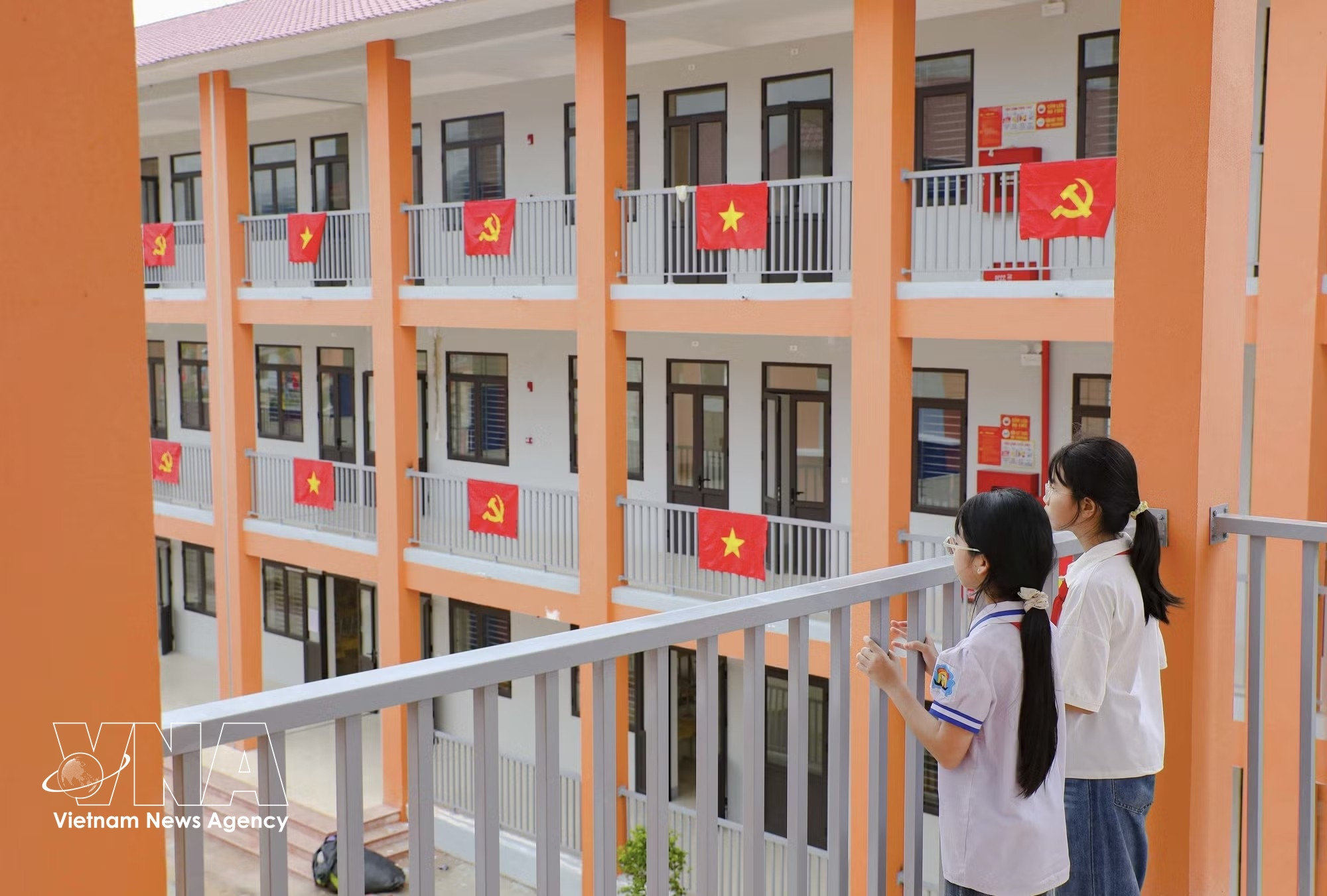
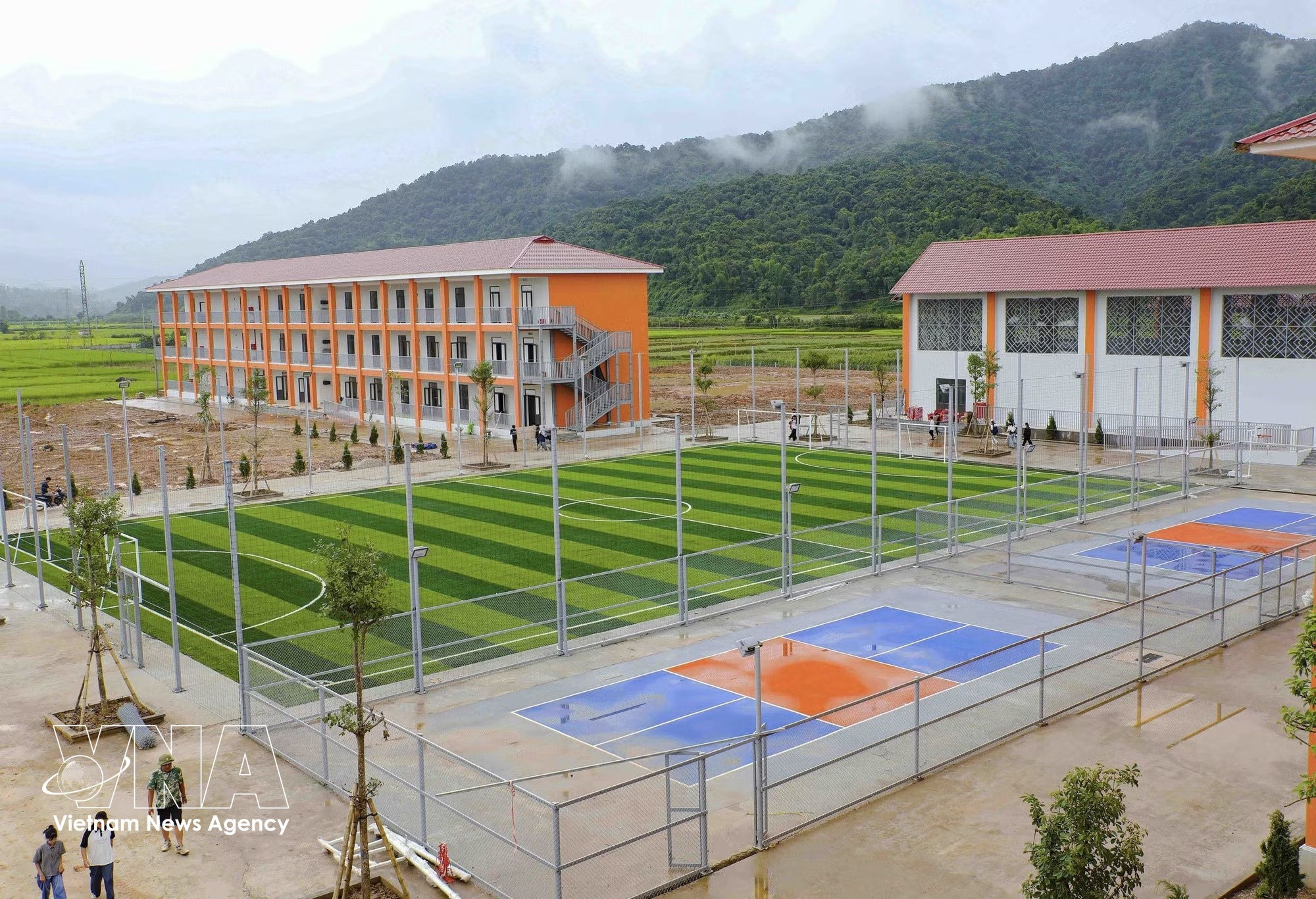
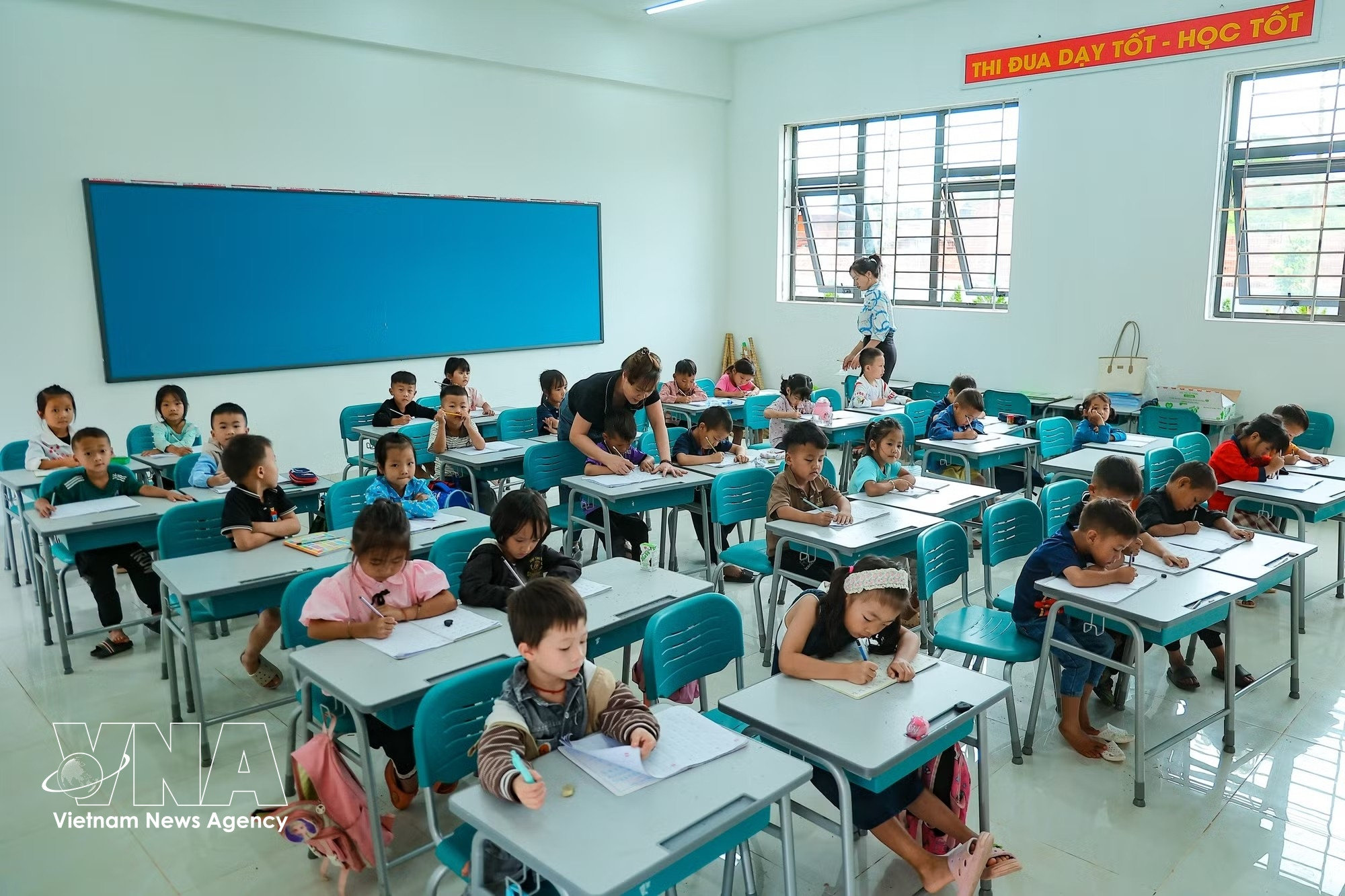
Students of Sam Mun Primary and Secondary Boarding School rejoice at studying in their new school. (Photo: VNA)
La, who comes from Pung Bua hamlet, about 40 kilometres from the school, previously studied at Na U semi-boarding school. Her journey to the new school takes around 90 minutes, but she is delighted with the improved facilities. Previously, 14 students had to share just eight beds in a cramped dormitory. Now, each student has an individual bed in a clean, spacious room.
“This is truly a dream school for generations of students and teachers in border areas.”
Principal Nguyen Trong Son of Sam Mun Primary and Secondary Boarding School
Nearly 100 kilometres away, the Si Pa Phin Primary and Secondary Boarding School, the country's first inter-level boarding school in a mainland border commune, inaugurated in January 2026, is also transforming education in the region.
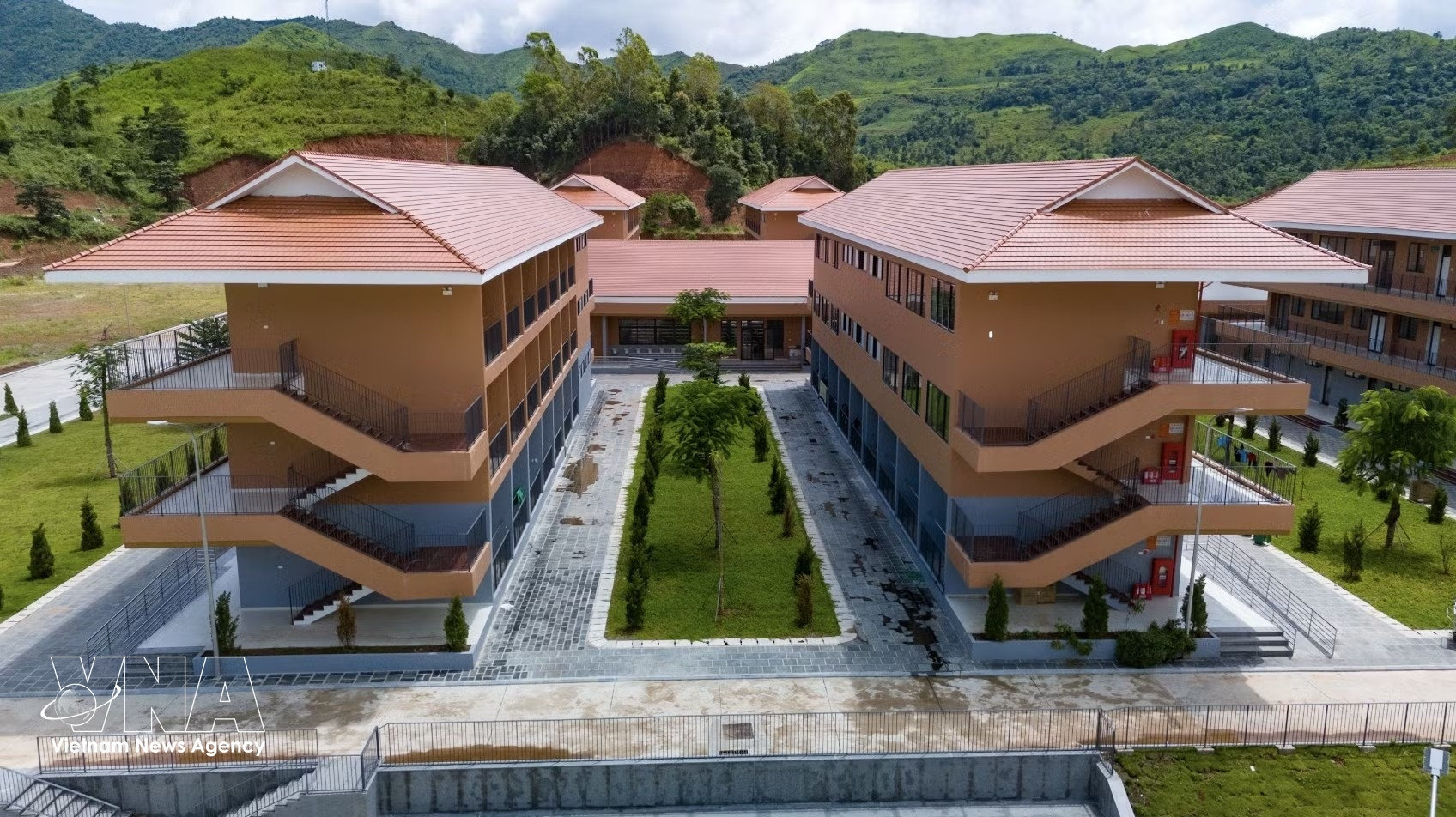
Vice Principal Bui Thi Luong said she still felt as if she were dreaming whenever she looked at the nearly seven-hectare campus. Previously, students lived in cramped, temporary accommodation, with 15–20 sharing a room. Teachers lacked official housing and adequate teaching equipment, while playgrounds and sports facilities were virtually out of reach.
Si Pa Phin is a mountainous commune in the northwest of Dien Bien province, about 85 km from the provincial administrative centre, with nine hamlets bordering Laos. More than 50% of local households are poor or near-poor, reflecting the difficult living conditions of residents and the limited budget available for investment in education.
“I never imagined that teachers and students here would one day have such a spacious, modern, and well-equipped school,” she said.
The new facilities provide students with comfortable accommodation, nutritious meals, sports facilities and better conditions for physical development. Teachers from distant areas can now live in housing within the campus.
Modern classrooms have also created opportunities for digital transformation. Teacher Nguyen Thi Thom now integrates artificial intelligence (AI) tools into almost every lesson, using applications such as ChatGPT, Canva, Veo 3 and Gemini. Her history classes feature 3D videos, AI-generated animations and interactive online exercises. Modern facilities have inspired teachers to innovate and improve teaching quality, she said.
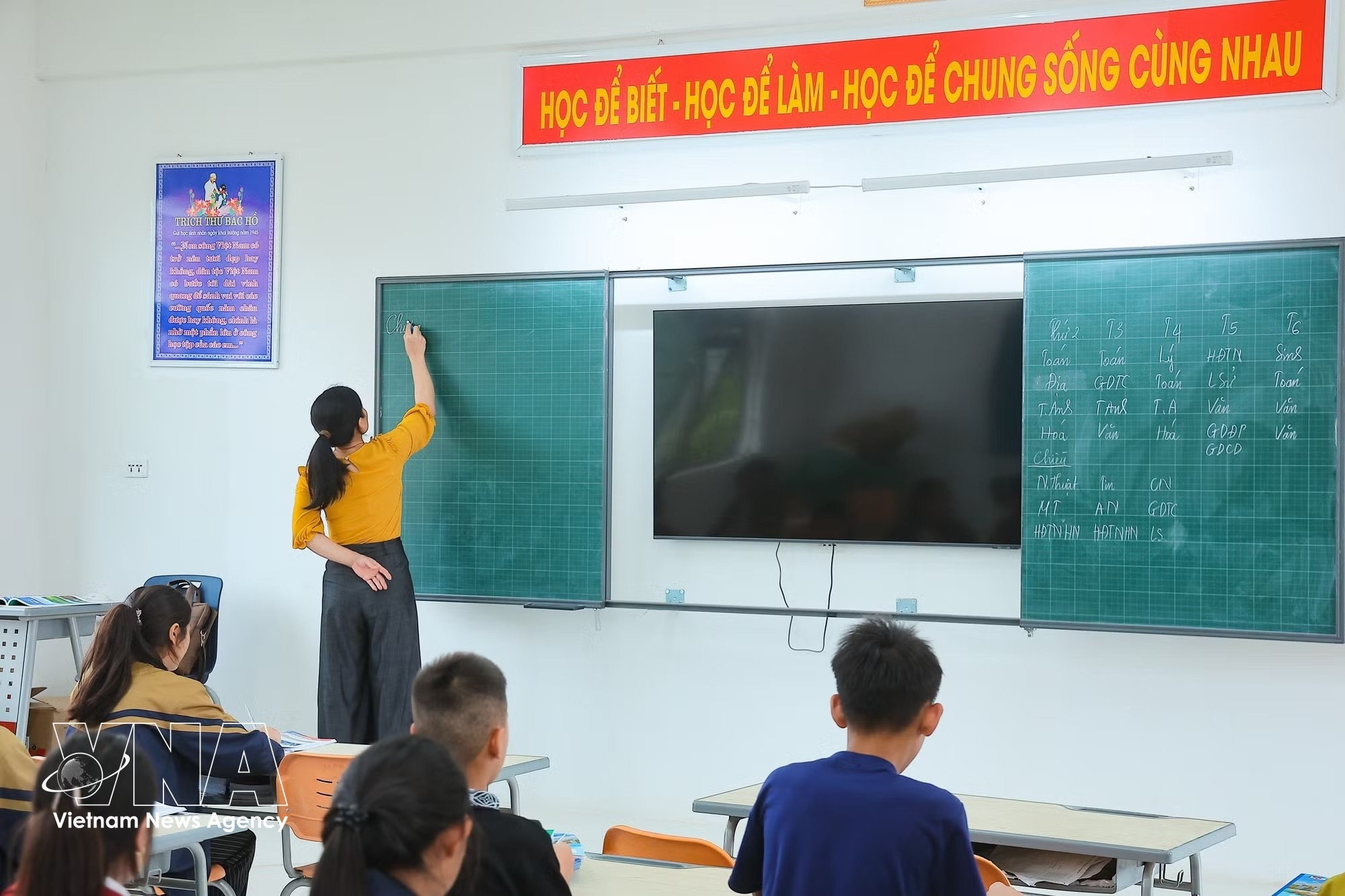
For ninth-grader Lo Thi Long Nhi, the new school has opened up new learning experiences, from practising music on real instruments to computer programming and STEM activities.
“My classmates and I enjoy going to school more and feel that we are making better progress,” she said.
Building a solid foundation for education in border areas
Sam Mun and Si Pa Phin are among 248 such schools already built or under construction across 22 provinces and cities under the Politburo’s Conclusion No. 81-TB/TW dated July 18, 2025.
According to the Ministry of Education and Training, as of July 2025, the 248 mainland border communes had 956 schools, including only 22 high boarding schools and 160 primary and secondary semi-boarding schools.
Demand for boarding and semi-boarding education was substantial, with 332,019 students, or 53% of the total 625,255, needing such arrangements. However, only around 59,000 were able to access these schools, leaving more than 273,000 without the necessary accommodation and support.
School infrastructure was also seriously inadequate. The ministry estimated that schools in border areas needed more than 6,000 additional classrooms, nearly 8,000 student dormitory rooms, almost 4,000 kitchens, dining halls and communal facilities, and over 3,400 rooms for teachers.
The ministry proposed building at least one primary and secondary boarding or semi-boarding school in each mainland border commune, with estimated investment of 37.2 trillion VND, including 90% from the central budget and 10% from local budgets and other sources.
The Politburo’s Conclusion No. 81 and Resolution No. 71-NQ/TW established the strategic direction for the programme. The Government subsequently issued Resolution No. 298/NQ-CP on September 26, 2025, describing the initiative as a major decision of profound political, social and humanitarian significance, and a key and urgent political task in socio-economic development and the implementation of the policy of great national unity.
Each school is designed to cover five to 10 hectares and accommodate around 1,000 students. Facilities include modern classrooms, boarding accommodation, teacher housing, sports grounds, cultural and multipurpose halls, dining facilities and areas for practical activities, supported by adequate electricity, clean water, transport and telecommunications infrastructure.
On January 31, 2025, the Si Pa Phin Primary and Secondary Boarding School, the first of 248 inter-level boarding schools, was inaugurated and officially put into operation after just six months of accelerated construction. On March 19, 2026, construction of another 121 boarding schools under the second phase was simultaneously kicked off nationwide, with completion targeted before August 30, 2027.
To accelerate implementation, the Government introduced special mechanisms, including flexible contractor selection and urgent public investment procedures, while assigning responsibilities to relevant ministries and local authorities.
Accelerating construction progress
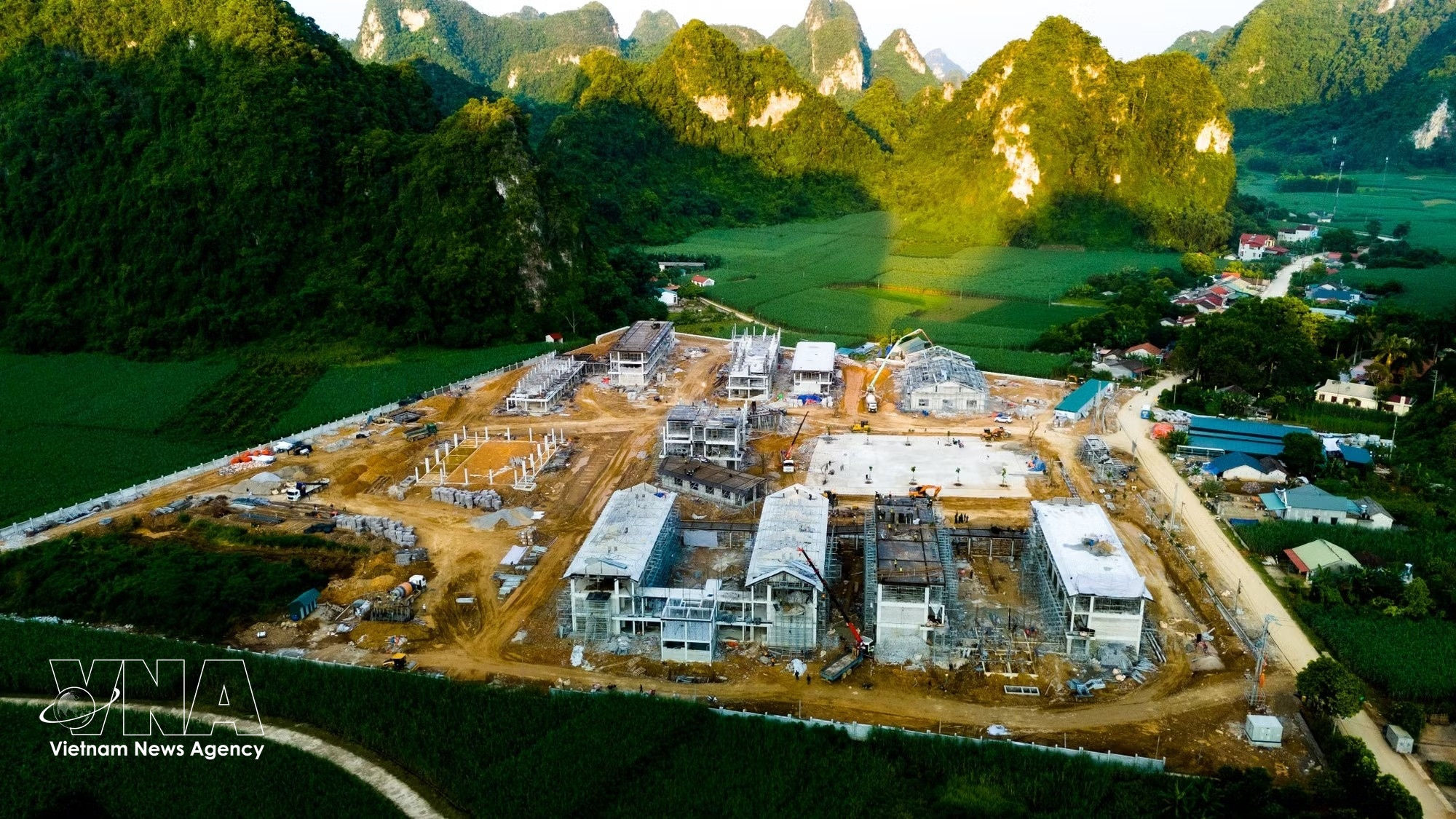
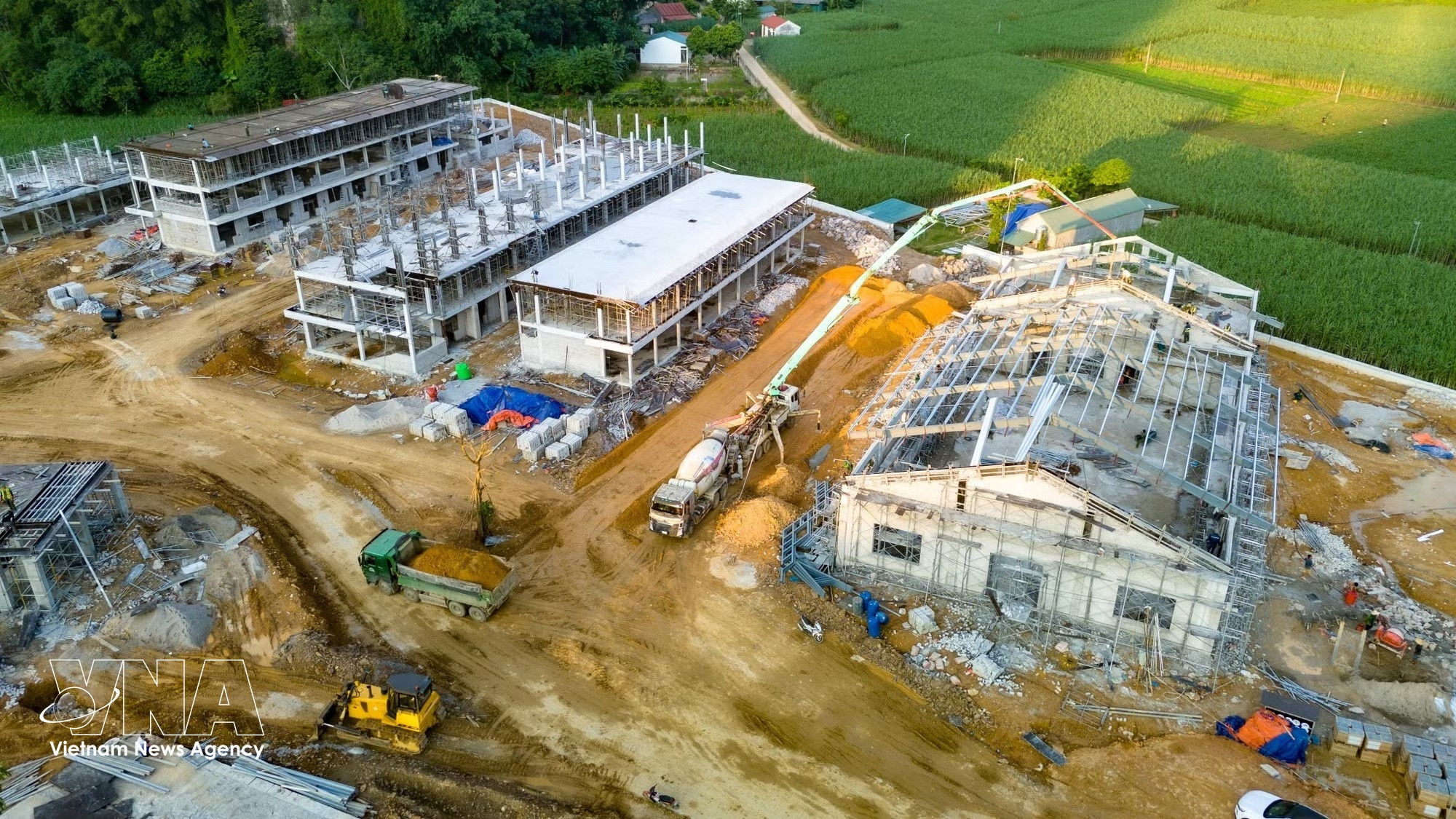
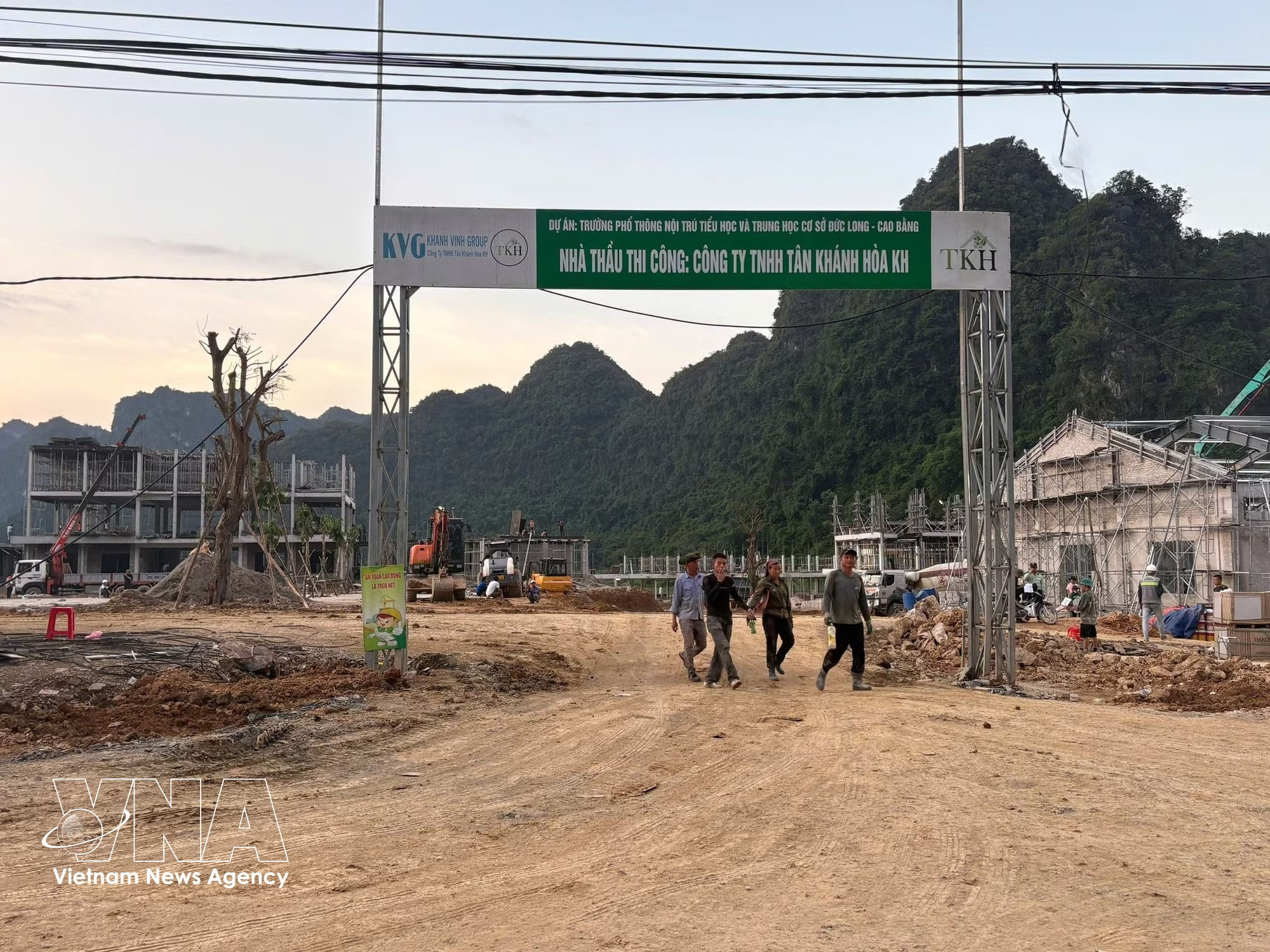
At the Duc Long Primary and Secondary Boarding School construction site in Cao Bang province, more than 500 workers have been working in three shifts around the clock. Local authorities have also mobilised over 170 soldiers and local residents to support construction.
Construction has faced considerable challenges, including difficult terrain, heavy rains, rising material costs, labour shortages and transportation constraints.
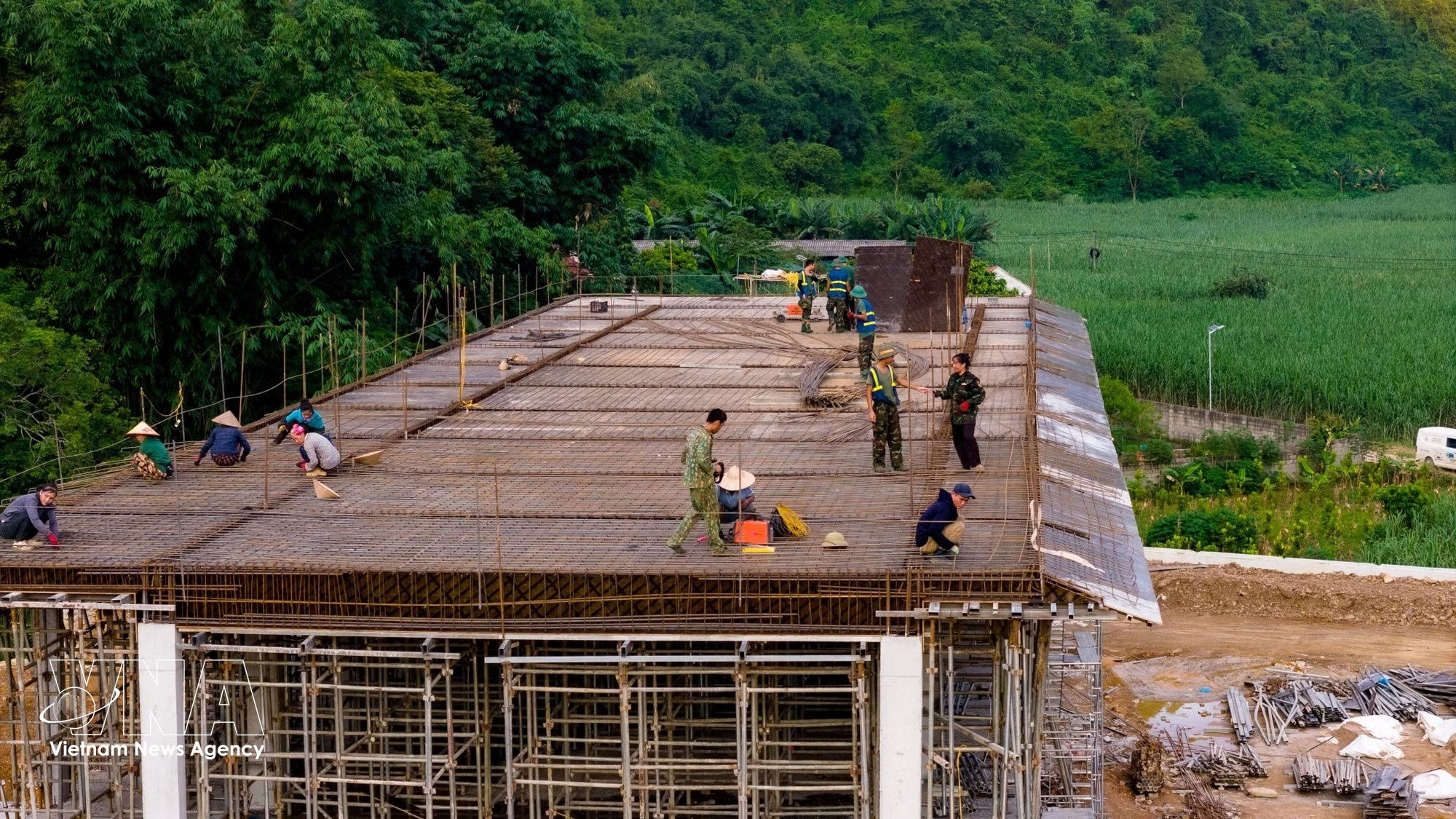
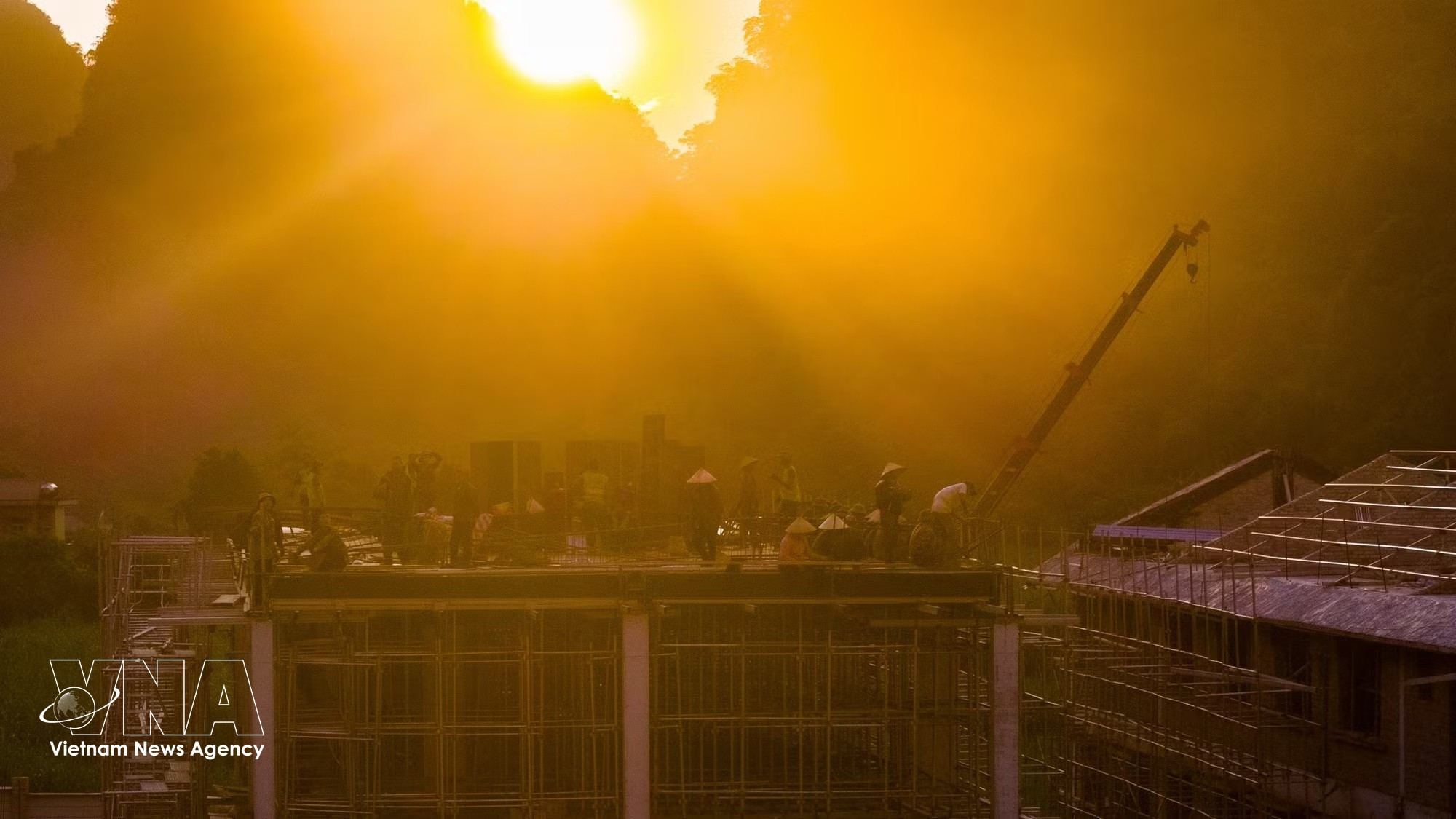
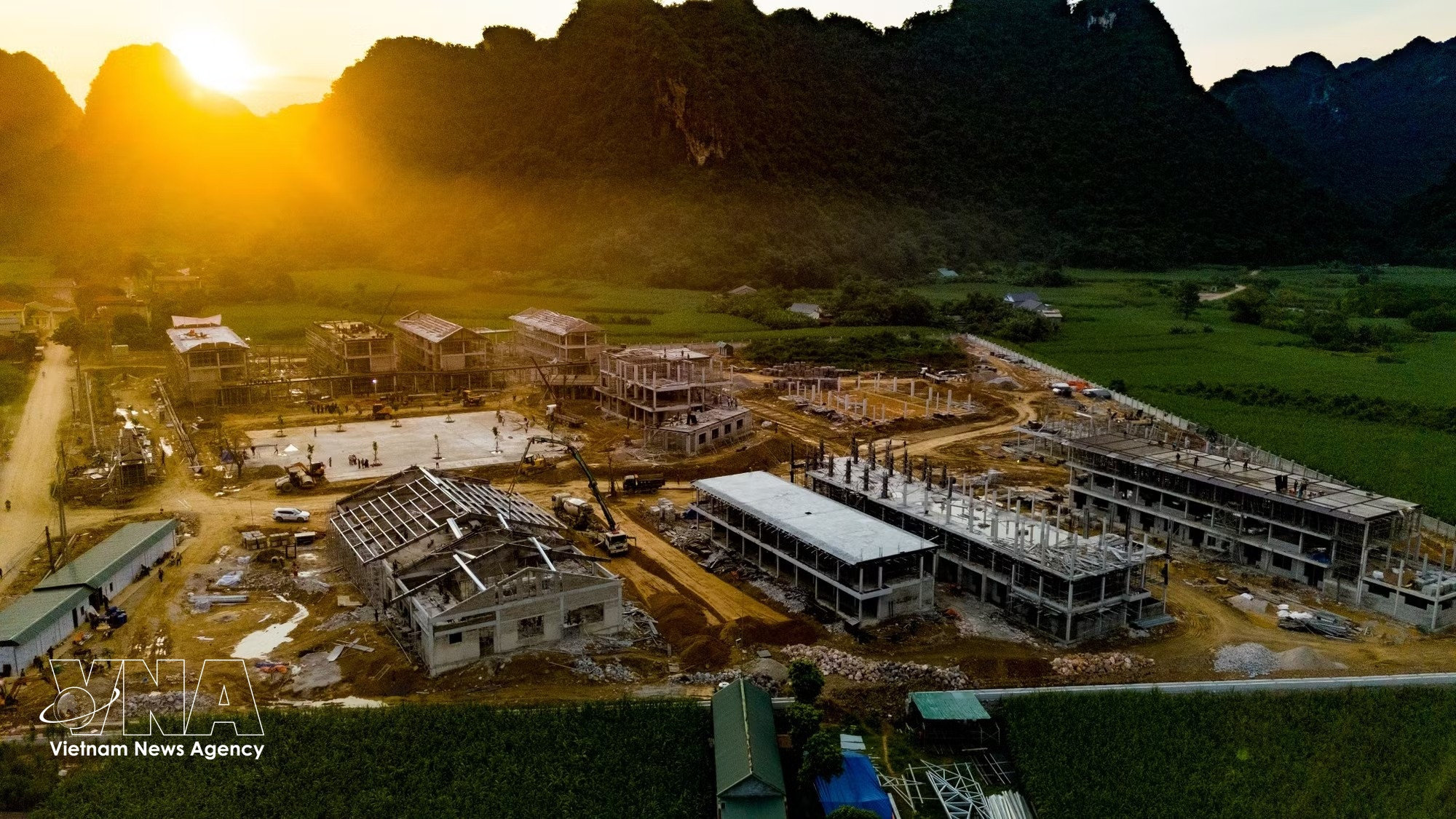
Workers rush to carry out construction work day and night at the Duc Long Primary and Secondary Boarding School in Cao Bang province. (Photos: VietnamPlus)
According to the Ministry of Education and Training, by September 1, 15 of the 108 first-phase schools had been fully completed, while most of the remaining projects had reached substantial completion and were ready to welcome students.
The programme reflects the Party and State’s strategic commitment to ensuring equal access to quality education, improving human resources in ethnic minority communities and strengthening the country’s border areas./.