New school year in border areas: where schools become homes and teachers become family
LongForm - Ngày đăng : 11:24, 17/11/2026
NEW SCHOOL YEAR IN BORDER AREAS: WHERE SCHOOLS BECOME HOMES AND TEACHERS BECOME FAMILY
Teachers have been working tirelessly to complete arrangements, upgrade school grounds, enrol students, design operational plans and educational programmes.
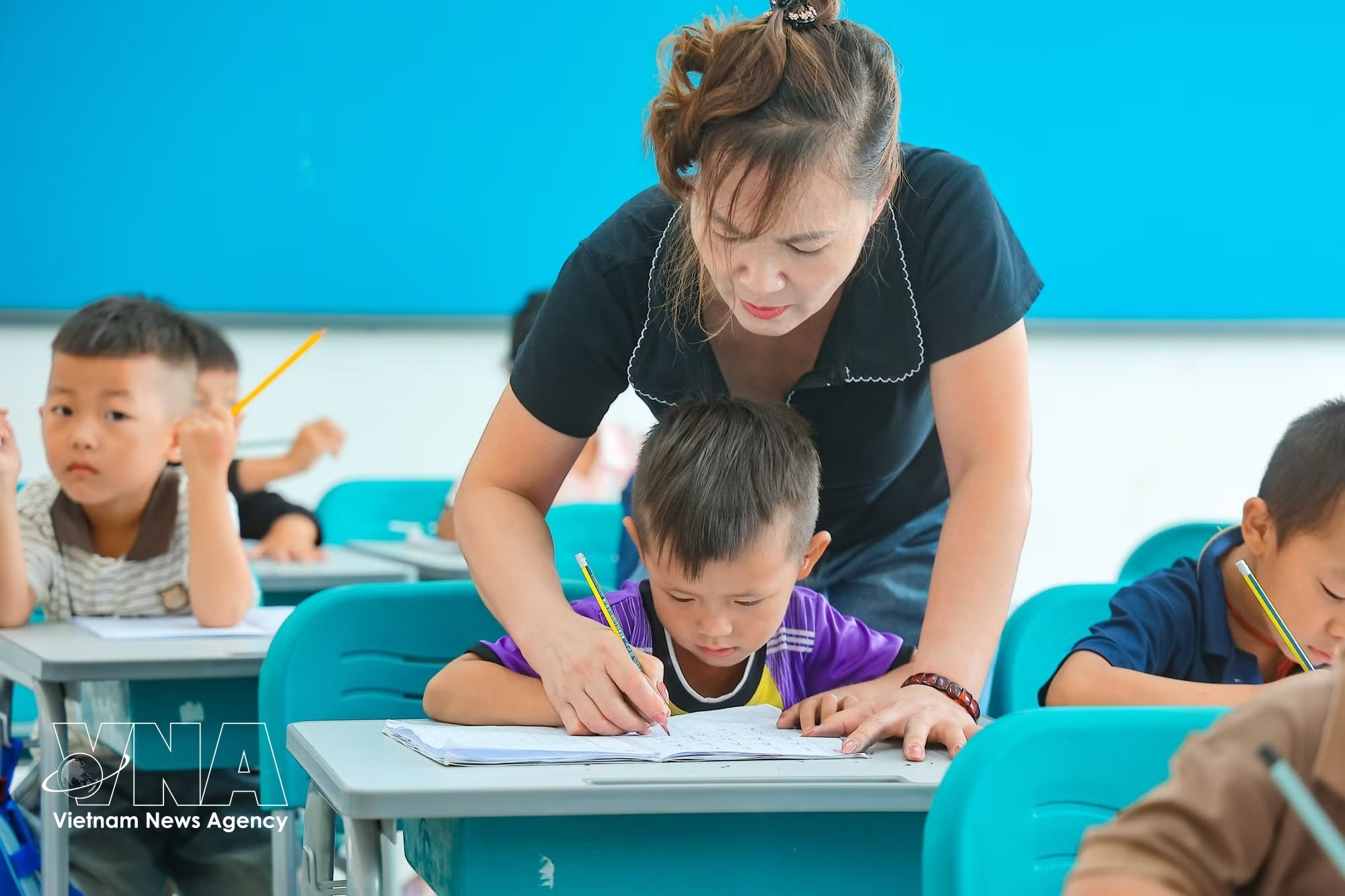
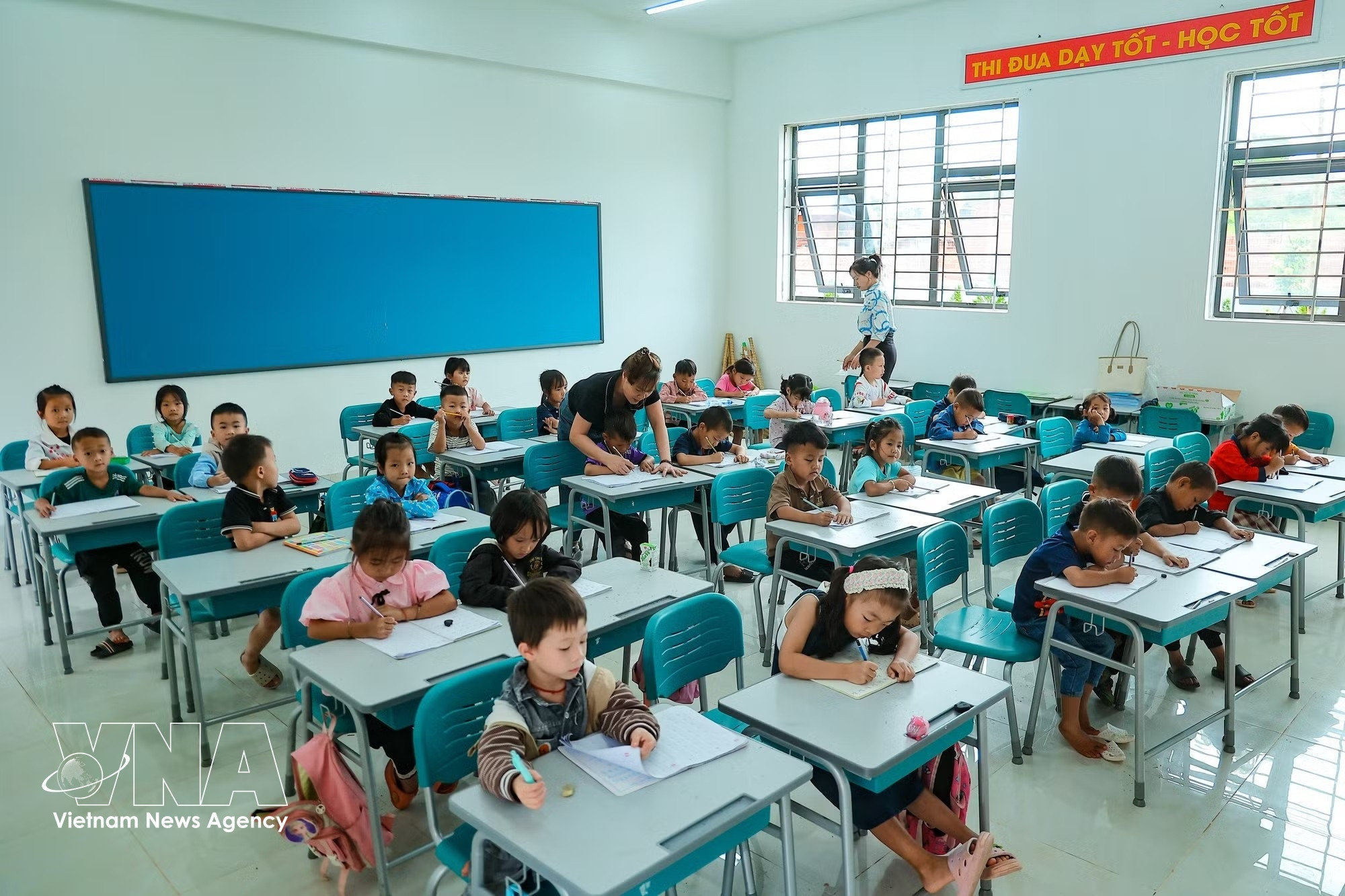
Teachers and students of the Si Pa Phin Boarding School during a Vietnamese language lesson in preparation for the new school year. (Photo: VietnamPlus)
Amid a demanding workload, principals of several newly established boarding schools in border areas said they had lost 4-5 kg in just one month while preparing their schools for the new academic year.
Teachers have been working tirelessly to complete arrangements, upgrade school grounds, enrol students, design operational plans and educational programmes.
“We are delighted that teachers and students will be studying in new, modern and well-equipped schools. However, this also comes with many concerns,” said Nong Thi Thuy, Principal of Tra Linh Ethnic Minority Boarding Primary and Junior Secondary School in Cao Bang province.
“We must ensure that the schools operate as effectively as possible, live up to the investment and attention of the Party and State, and genuinely improve the quality of education.”
Completing facilities, strengthening staff
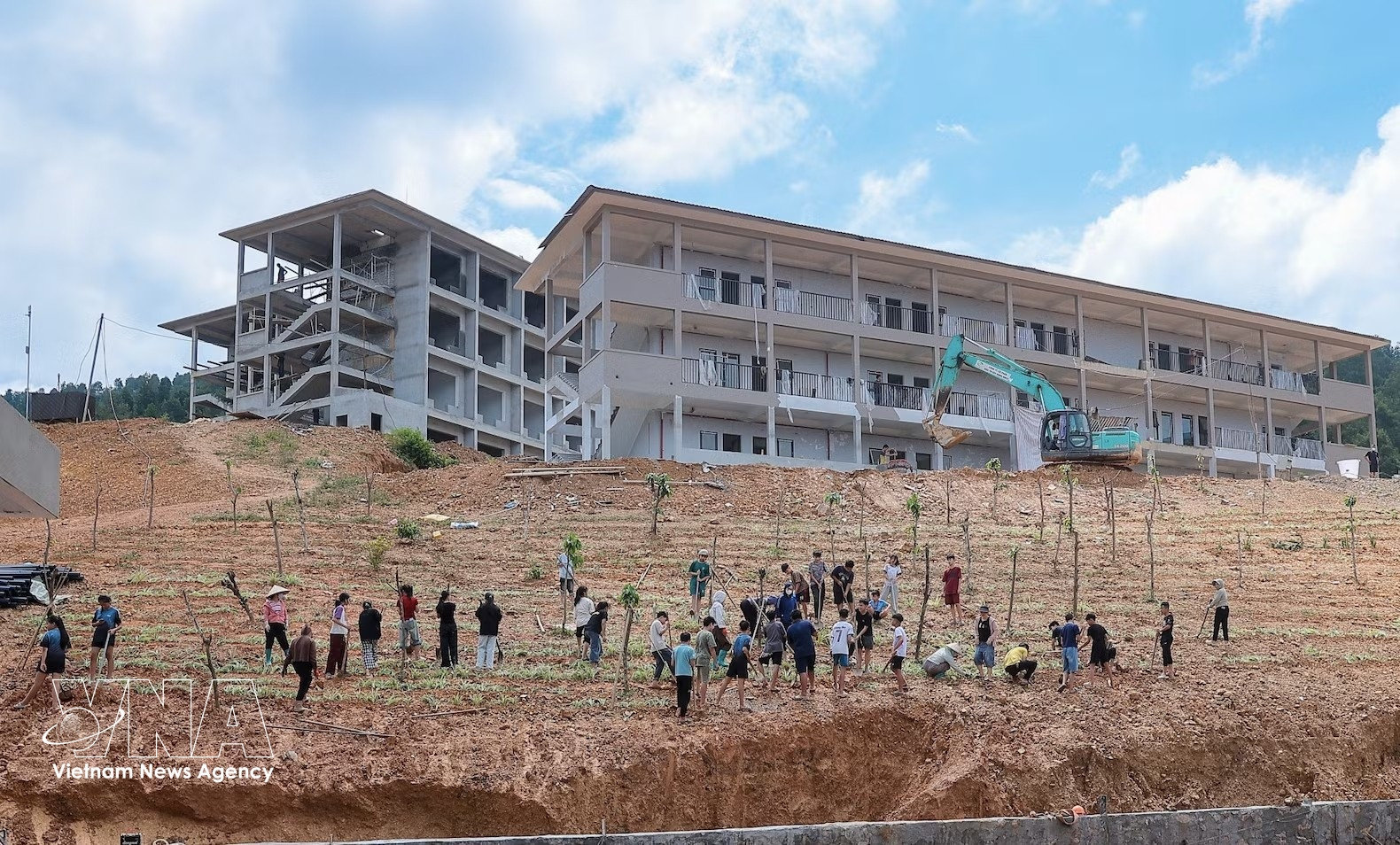
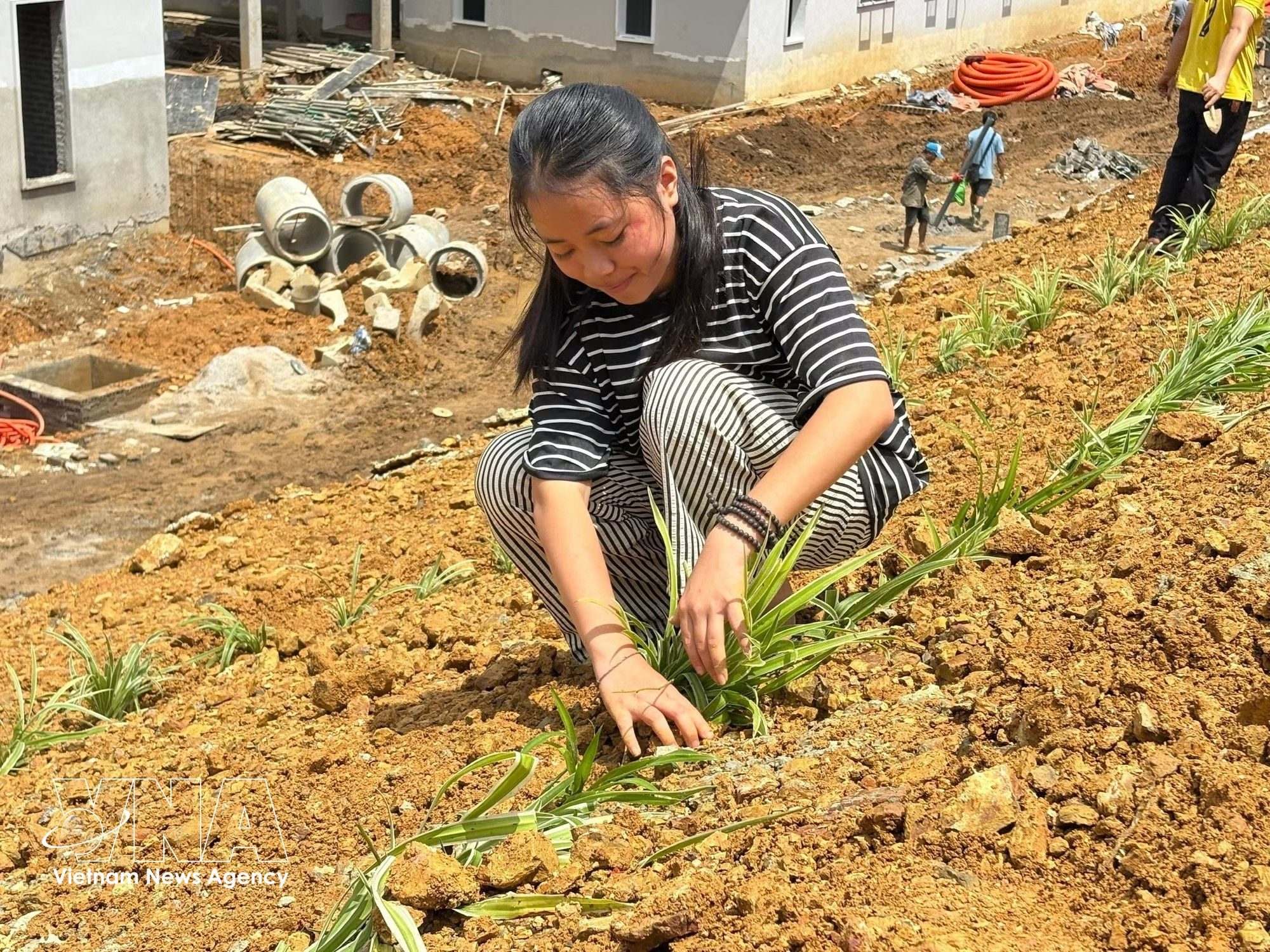
Under the intense late-morning sunshine, teachers and students at Tra Linh School continued planting rows of spider plants to decorate the grounds behind the school.
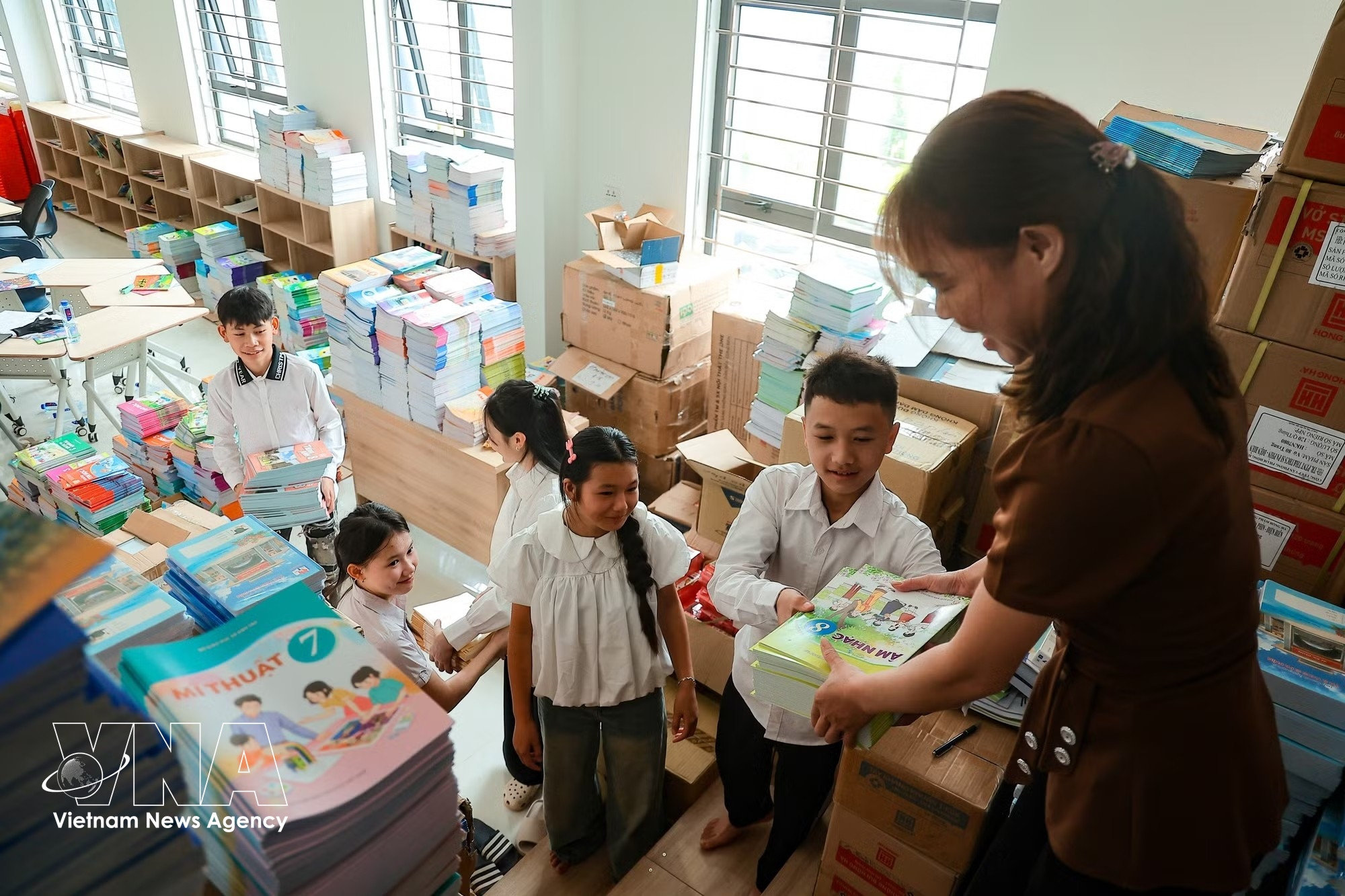
The school is among the fastest-progressing border-area boarding school projects in Cao Bang. Established through the merger of four institutions, it is racing to complete its facilities and consolidate its workforce. More than 500 trees have been planted, while essential items such as tables, chairs, dining equipment and bedding have been delivered.
Students and teachers of the Tra Linh Boarding School plant trees on a hillside connecting the boarding area and the school. (Photo: VietnamPlus)
Following the merger, the school has a surplus of primary teachers but lacks English teachers at the lower secondary level. Thuy said surplus teachers would be assigned additional responsibilities in student care, while the school had requested more English teachers.
With her face flushed and covered in sweat, Hoang Kim Dung says she is still happy and excited about studying at the new school. (Photo: VietnamPlus)
At A Luoi 4 Commune Boarding Primary and Junior Secondary School in Hue, teachers, staff and local forces have worked to clean and improve the campus, arrange classroom furniture and prepare for teaching and learning.
Meanwhile, at Sam Mun Ethnic Minority Boarding Primary and Junior Secondary School in Dien Bien province, Principal Nguyen Trong Son and his colleagues have been arriving early and leaving late for more than a month.
The teachers have planted peanut grass to cover nearly 10,000 square meters of lawns on the school grounds, cleaned the classrooms, planted 400 trees, and will continue to plant another 1,000 trees.
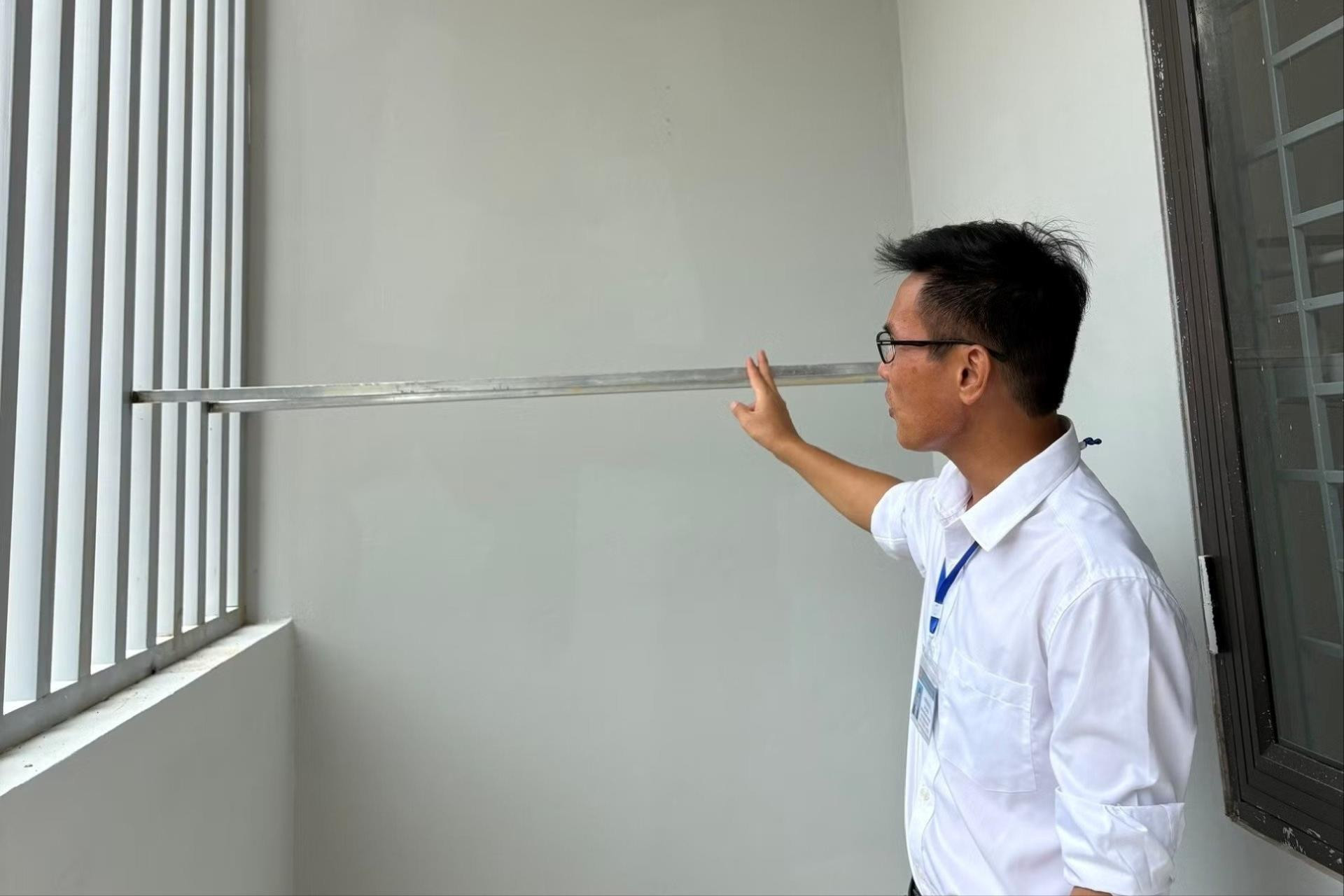
Teacher Nguyen Trong Son checks the installation of clothes-drying rails at the students' boarding area. (Photo: VietnamPlus)
“
We plan to assign each student a tree to look after, with a nameplate bearing their name. This will teach them responsibility for the shared environment while also giving them a lasting memory of their school years.
Principal Nguyen Trong Son of Sam Mun Ethnic Minority Boarding Primary and Junior Secondary School
Attention has also been paid to practical details. Son has asked contractors to add clothes-hanging bars to dormitory balconies and plans to install washing machines with spin-dry functions on each floor.
With 26 years of experience working with students in border areas, he understands that many come from poor families and have only a few sets of clothes. Having a spin dryer will help the students’ clothes dry faster, he said.
Going door to door
Alongside preparations for facilities and staff, local authorities and schools are focusing on enrolment to ensure no disadvantaged children are left behind.
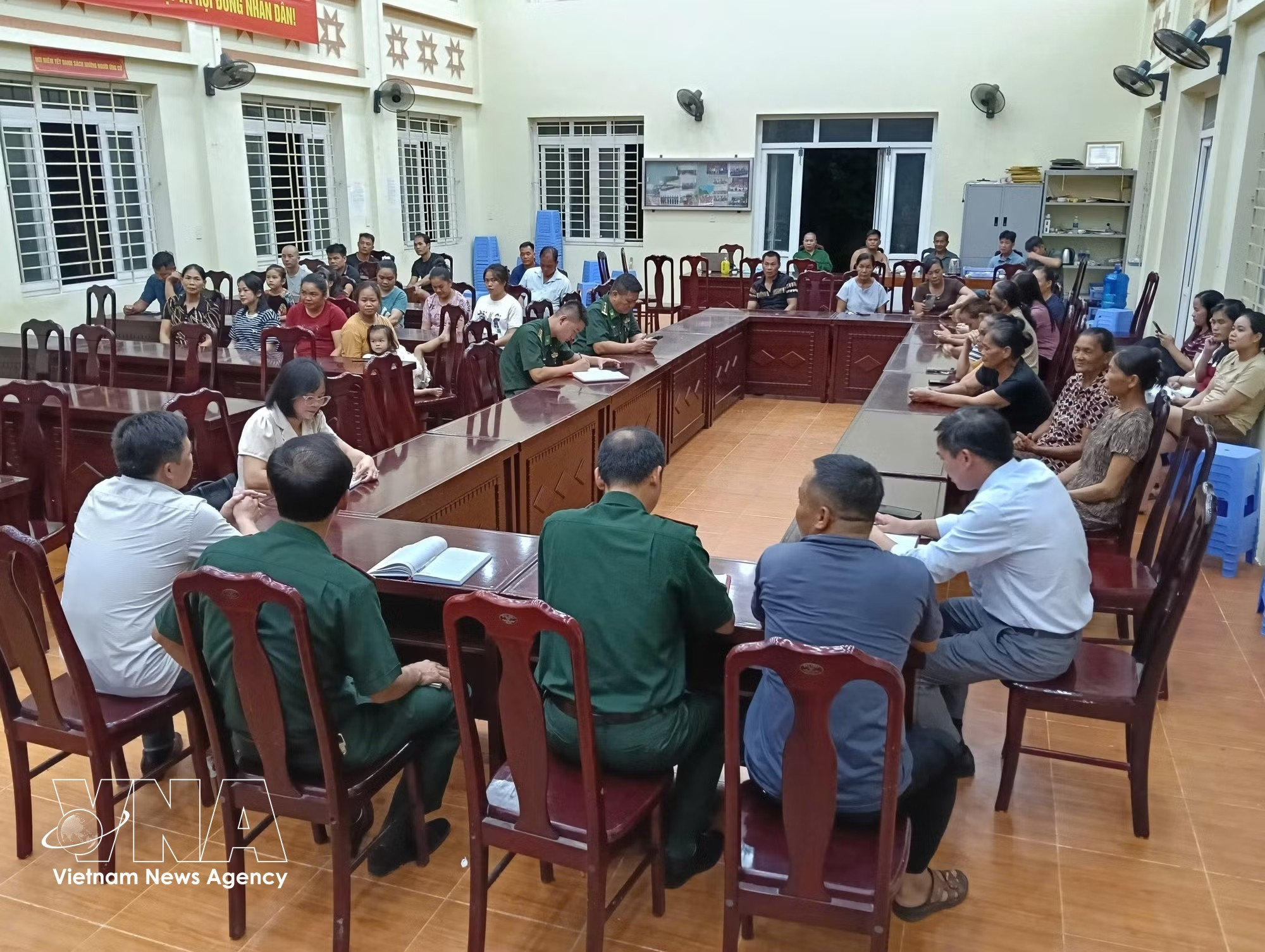
In Tra Linh commune, local authorities, school officials, teachers and border guard officers have reviewed individual student circumstances and visited the homes of children at risk of dropping out. In some remote areas, mobilisation teams have had to walk up to 3 km because households cannot be reached by motorbike.
The school has admitted students from within the commune and neighbouring localities, achieving more than 94% of its enrolment target.
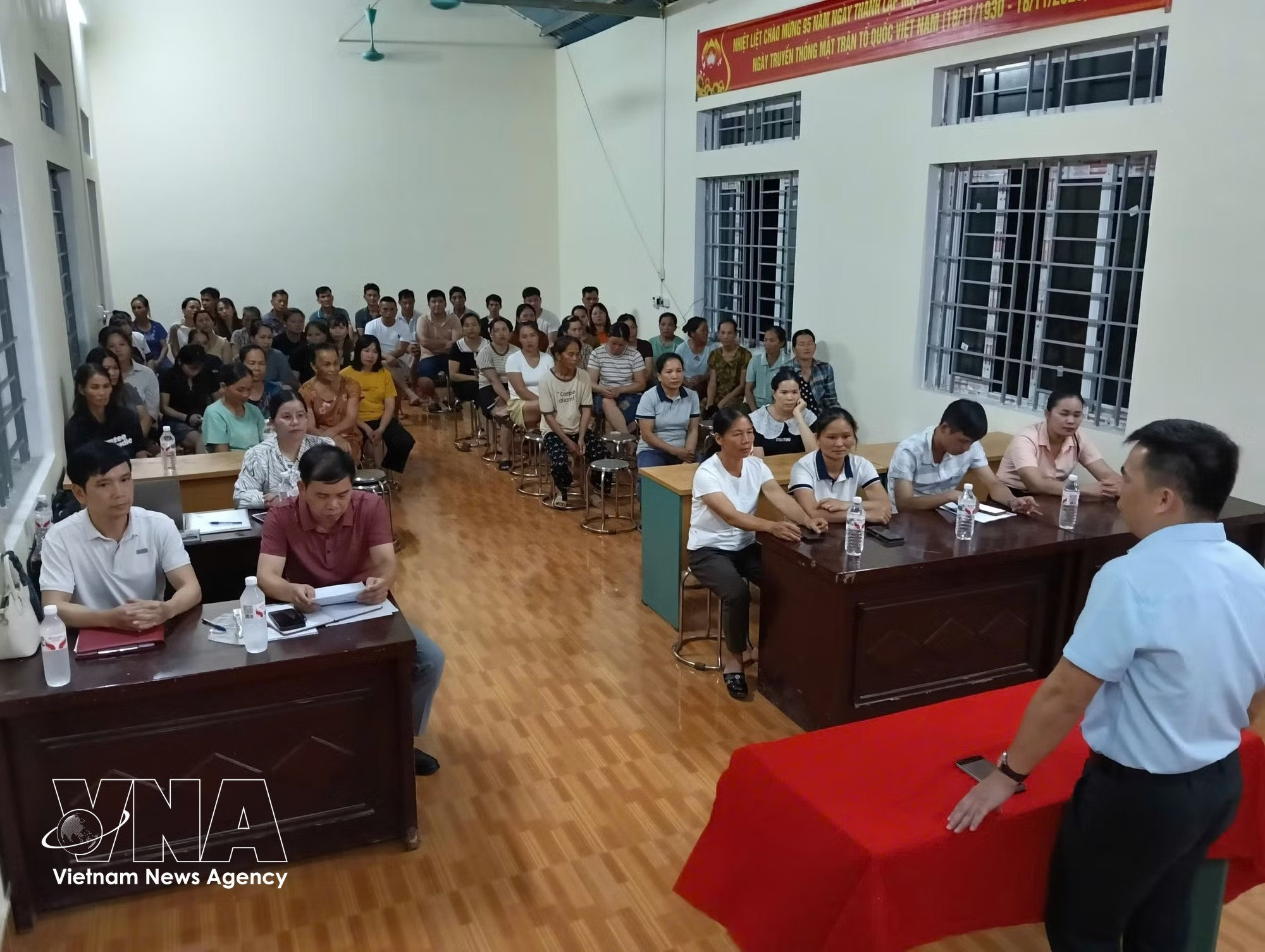
Leaders of Duc Long and Phuc Hoa communes, in coordination with the school and the border guard force, visit villages to offer encouragement to students and their parents. (Photo: VietnamPlus)
Enrolment has been more challenging at Duc Long Ethnic Minority Boarding Primary and Junior Secondary School, which had enrolled 784 students, or 78% of its target of more than 1,000, as of August 20.
The school was formed through the merger of three institutions whose combined enrolment was only 649 students. As some villages are up to 20km from the new school, authorities and teachers began visiting villages in July to encourage parents to enrol their children.
“
We have had to help parents understand the benefits their children will receive, from studying in a modern, well-equipped school to enjoying policies covering meals, accommodation and boarding-related care.
Nong Ngoc Tuan, Principal of Duc Long Ethnic Boarding High School
The school later expanded its recruitment area to neighbouring Phuc Hoa Commune. In August, the two communes established two working groups comprising local officials, school leaders and border guards to visit villages and persuade parents. As many residents work during the day, outreach activities were organised in the evenings.
As of August 20, 135 students from Phuc Hoa had registered to study at the school.
Tackling management challenges
For many school leaders, the greatest concern is managing large boarding schools for the first time.
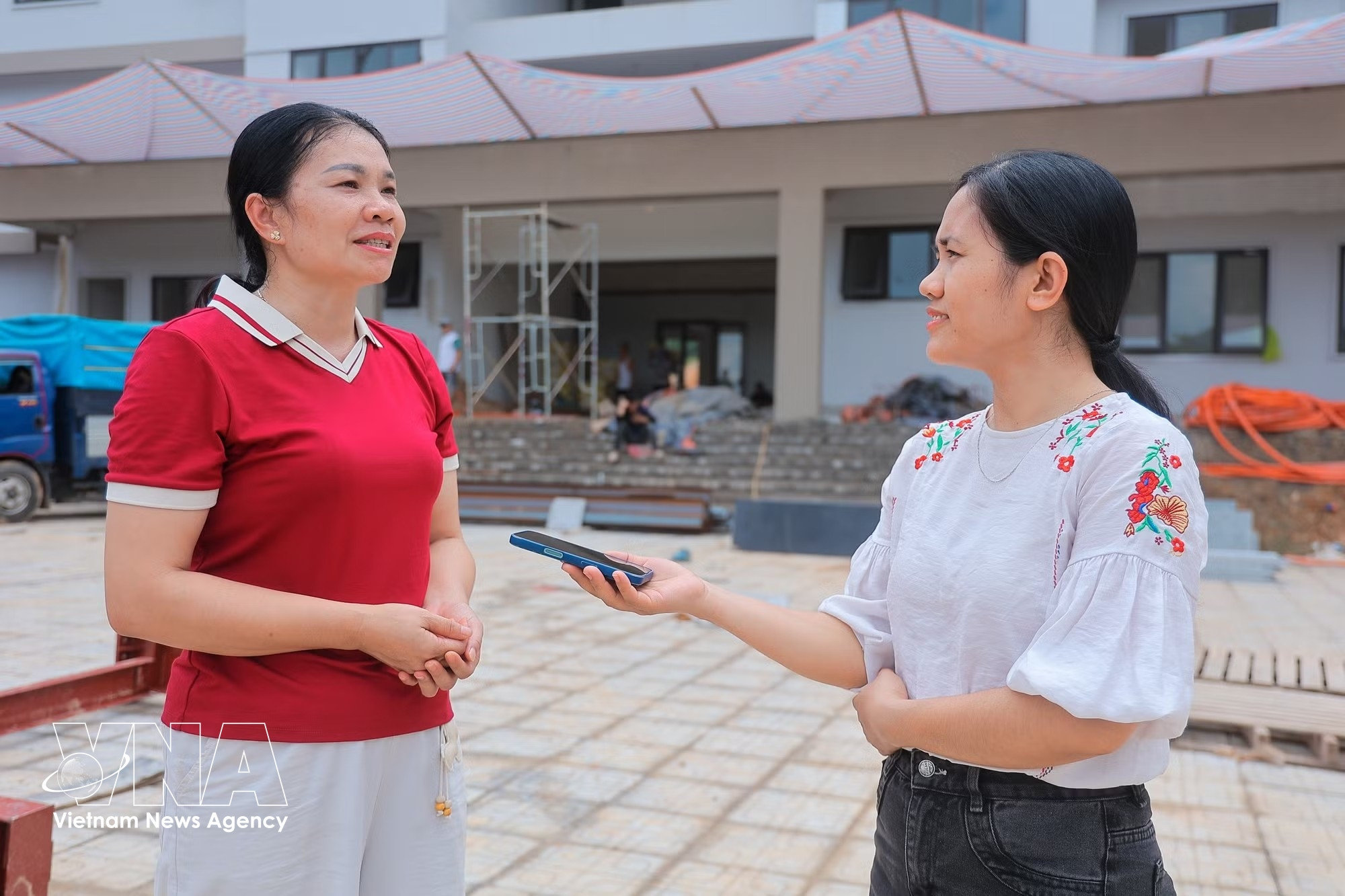
Teacher Nong Thi Thuy talks to a VietnamPlus reporter. (Photo: VietnamPlus)
“
Overseeing more than 1,200 students who eat and sleep together will be a huge challenge. My school has established specialised teams for boarding management, student care, nutrition and counselling, while the boarding team will keep a daily log of student activities.
Nong Thi Thuy, Principal of Tra Linh Ethnic Minority Boarding Primary and Junior Secondary School in Cao Bang province
Primary students will be escorted to the dining hall and safely returned to their accommodation after meals. Boarding supervisors will be assigned to specific dormitory blocks, while each student will receive an identification number and an assigned dining seat to help teachers quickly identify absences.
The school is also preparing for younger children who may struggle with staying away from home for the first time. If necessary, mothers may be allowed to stay overnight during the first few days to help them adjust.
Incomplete facilities remain a concern, particularly unfinished fencing and stairways connecting buildings on the steep campus, Thuy stated.
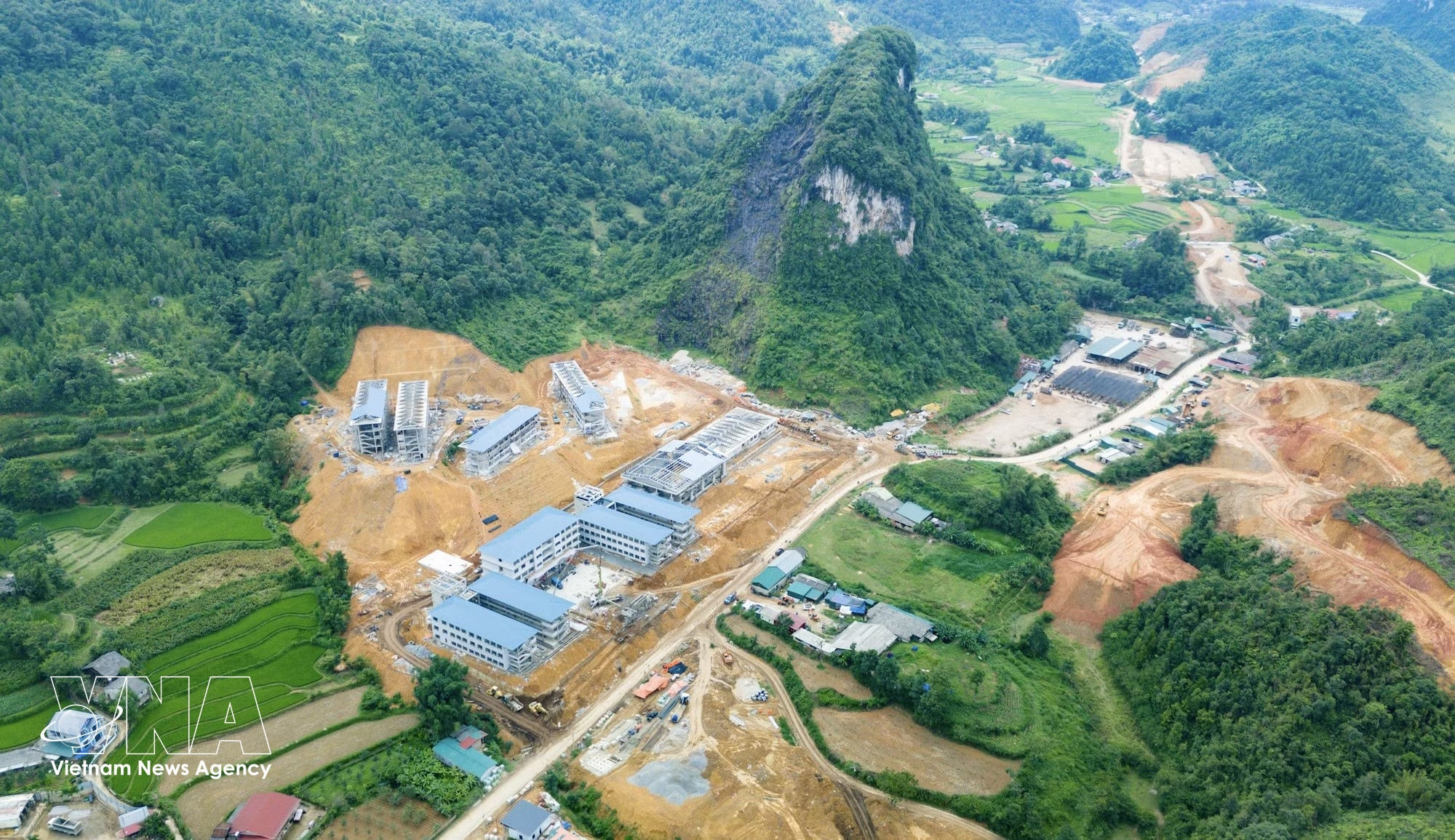
The Tra Linh Boarding School is located on a large hill. (Photo: VietnamPlus)
Ensuring the effective operation of the schools is also a concern for some principals, including Tuan, principal of Duc Long Ethnic Minority Boarding School.
To this end, Cao Bang organised a field trip for school leaders to Si Pa Phin Ethnic Minority Boarding Primary and Junior Secondary School in Dien Bien, which has already completed a semester of operation.
Students of Si Pa Phin Boarding School ahead of the new school year. (Photo: VietnamPlus)
Bui Thi Luong, Vice Principal of Si Pa Phin School, said newly established boarding schools bring together teachers, staff and students from different institutions, making unity and consistent management approaches a priority.
Food safety must be given top priority, while schools need close coordination with local medical facilities, police, military forces and other agencies to ensure student safety, she said.
The Ministry of Education and Training has also established a communication group connecting principals of boarding schools to provide timely support and address operational difficulties.
Schools must become homes
Despite having 10 years of experience leading a semi-boarding school, Son said he still had many concerns when taking charge of Sam Mun School.
Drawing on his experience, he believes teachers must put love and compassion first and genuinely become parental figures to their students.
“Teachers must regard students as their own children. If they see them merely as students, a distance will remain between teachers and pupils. With that distance, the school cannot truly become a family,” he said.
The school's guiding principle is for teachers and students to eat, live and share daily activities together so teachers can better understand the children's thoughts, feelings and aspirations.
According to teacher Son, the school must truly become a second home for its students. (Photo: VietnamPlus)
Son said the first three months would be crucial for establishing discipline and daily routines, from exercise and mealtimes to lessons and recreational activities.
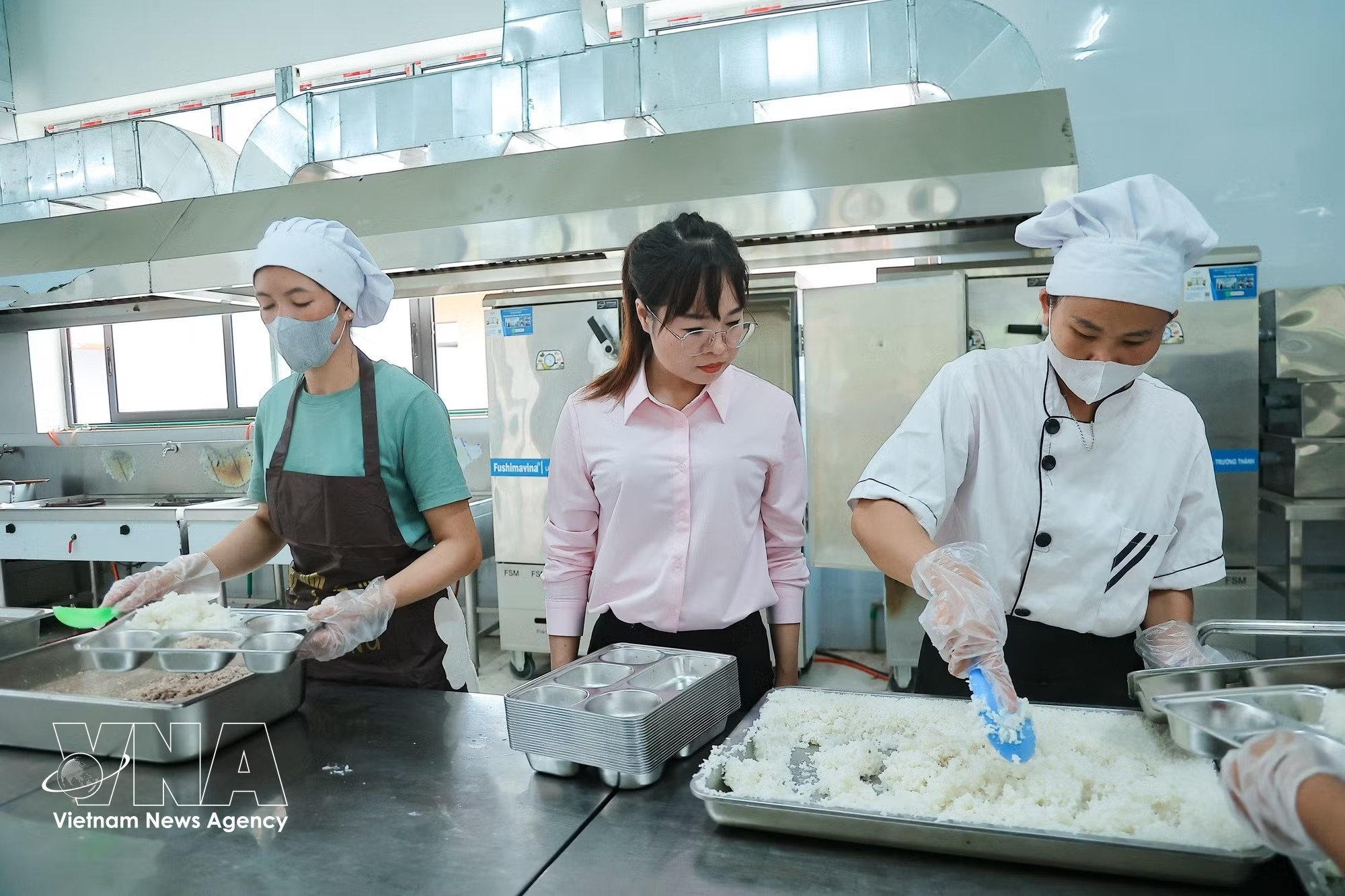
For children from mountainous areas, meal quality and food safety are particularly important. Students must be well-fed and enjoy their meals if schools are to attract and retain them, he said.
Sam Mun School plans to use fresh ingredients rather than frozen food and will invite parent representatives to have meals with students once a month, allowing them to monitor food quality and strengthening trust between the school and local communities.
New approaches to education
Developing educational plans is another major task for school administrators.
Pham Van Phuc, Principal of Thanh Yen Boarding Primary and Junior Secondary School in Dien Bien, said investment in modern facilities was a major source of encouragement but also placed greater responsibility on educators.
Schools need to renew teaching methods, increase experiential learning, strengthen practical skills and pay closer attention to individual students, he said. The goal is not only to provide academic knowledge but also to foster life skills, self-confidence, adaptability and physical fitness.
Spacious boarding schools provide students with space to play, develop their physical fitness and handle academic pressure. (Photo: VietnamPlus)
Son said modern facilities also required teachers to embrace digital transformation and apply artificial intelligence in teaching and learning.
Sam Mun School has identified digital transformation as a priority and plans to establish a digital transformation centre to support teachers in applying technology to education.
With its spacious grounds, Sam Mun school has nearly 5,000 sq.m of unused land which will be turned into a vegetable garden. Each class will be allocated about 150 sq.m, while each school official, teacher and staff member will be responsible for 30 sq.m. The school has purchased 500 bags of rice husks and fertiliser to improve the soil for the initiative.
With its spacious grounds, Sam Mun School has nearly 5,000 sq.m of unused land that will be turned into vegetable gardens. Each class will be allocated about 150 sq.m, while each school official, teacher and staff member will be responsible for 30 sq.m. The school has purchased 500 bags of rice husks and fertiliser to improve the soil for the initiative
According to Son, this is an effective educational activity with multiple benefits. It will help students develop life skills, appreciate the value of labour and understand the importance of hard work. The activity will also strengthen their bonds and foster a spirit of solidarity. The school kitchen will purchase the vegetables, ensuring food quality while generating funds for class activities and helping reduce parents’ financial contributions, he added.
At Tra Linh School, two computer rooms will support extracurricular classes, including online English and mathematics activities. The school also plans to organise clubs based on students' talents and interests, such as badminton, mini football and Then singing, a singing genre of the Tay, Nung and Thai ethnic people in Vietnam.
“Both students and teachers are excited about studying and working in a new, spacious school equipped with modern facilities,” Thuy said. “We will do our utmost to deliver the best possible education and help students develop into contributing citizens.”
After more than a month of intensive preparations, Thuy said she had lost 3 kg, while Son and Tuan had each lost 4 kg. Despite their exhaustion, the principals said they felt happy and fulfilled as the first opening ceremony of the new academic year approached.
Under the Ministry of Education and Training's plan, the opening ceremony for the 2026–2027 school year and inauguration ceremony for over 100 boarding schools in border communes will be held simultaneously nationwide on September 5./.
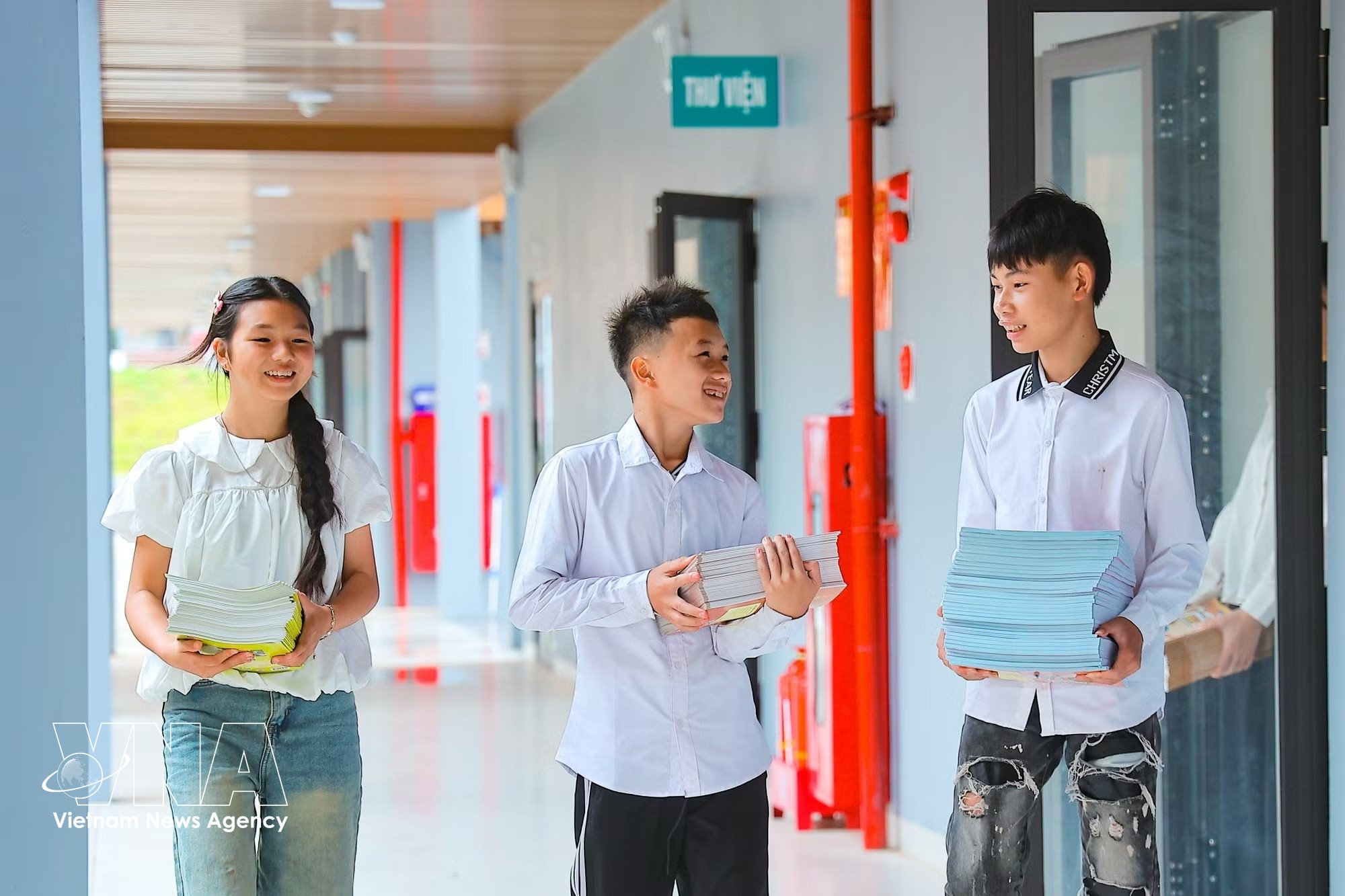
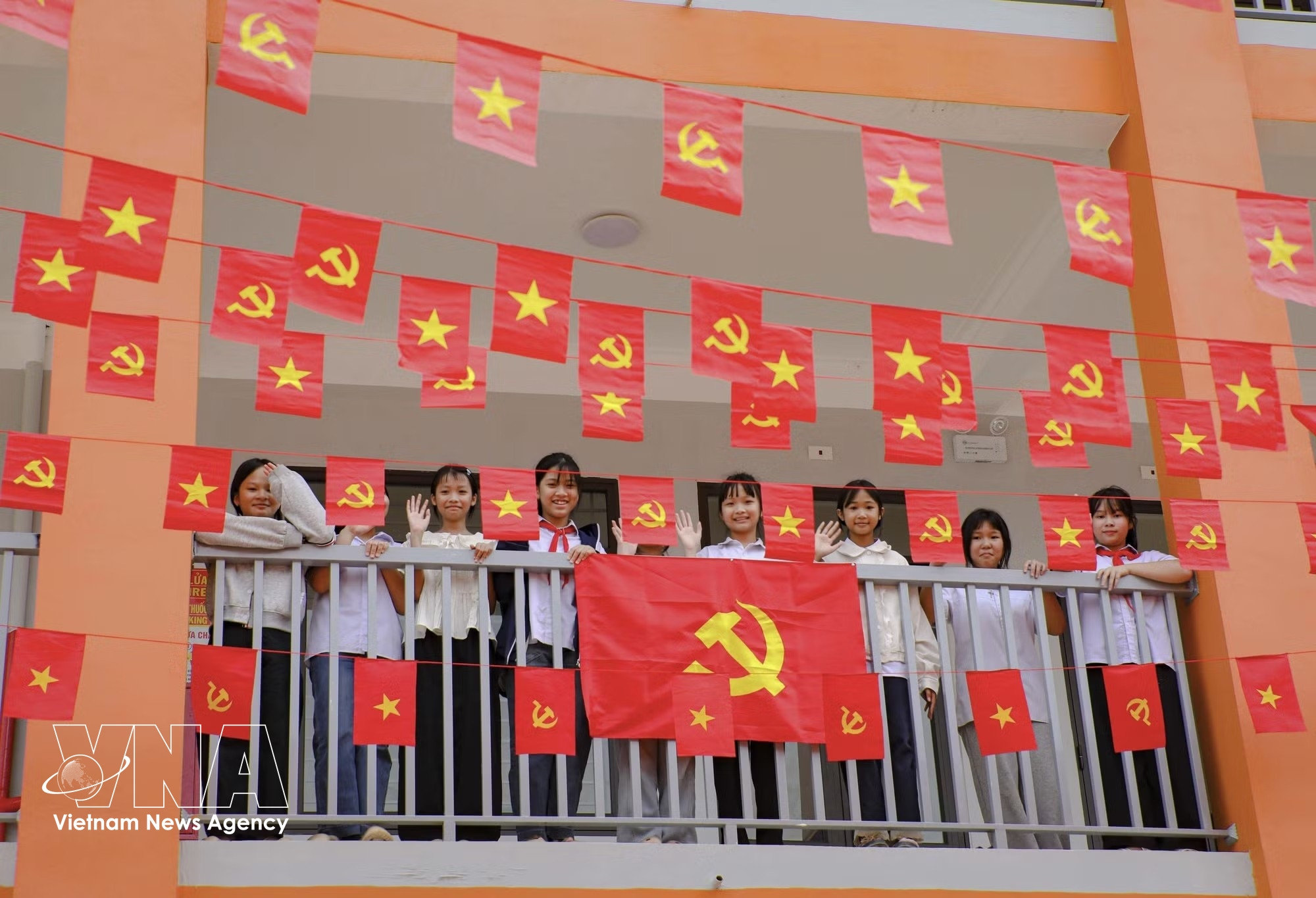
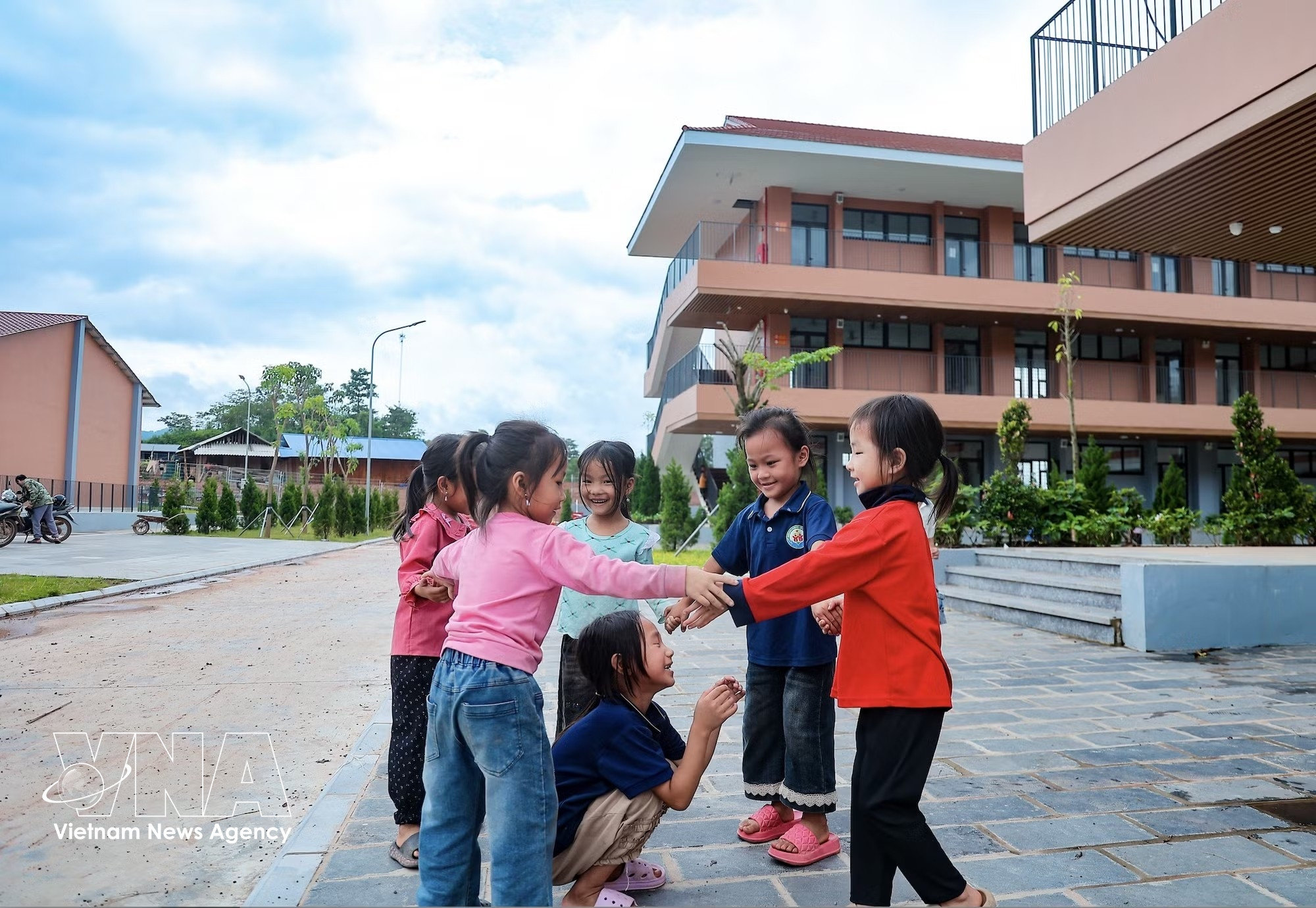
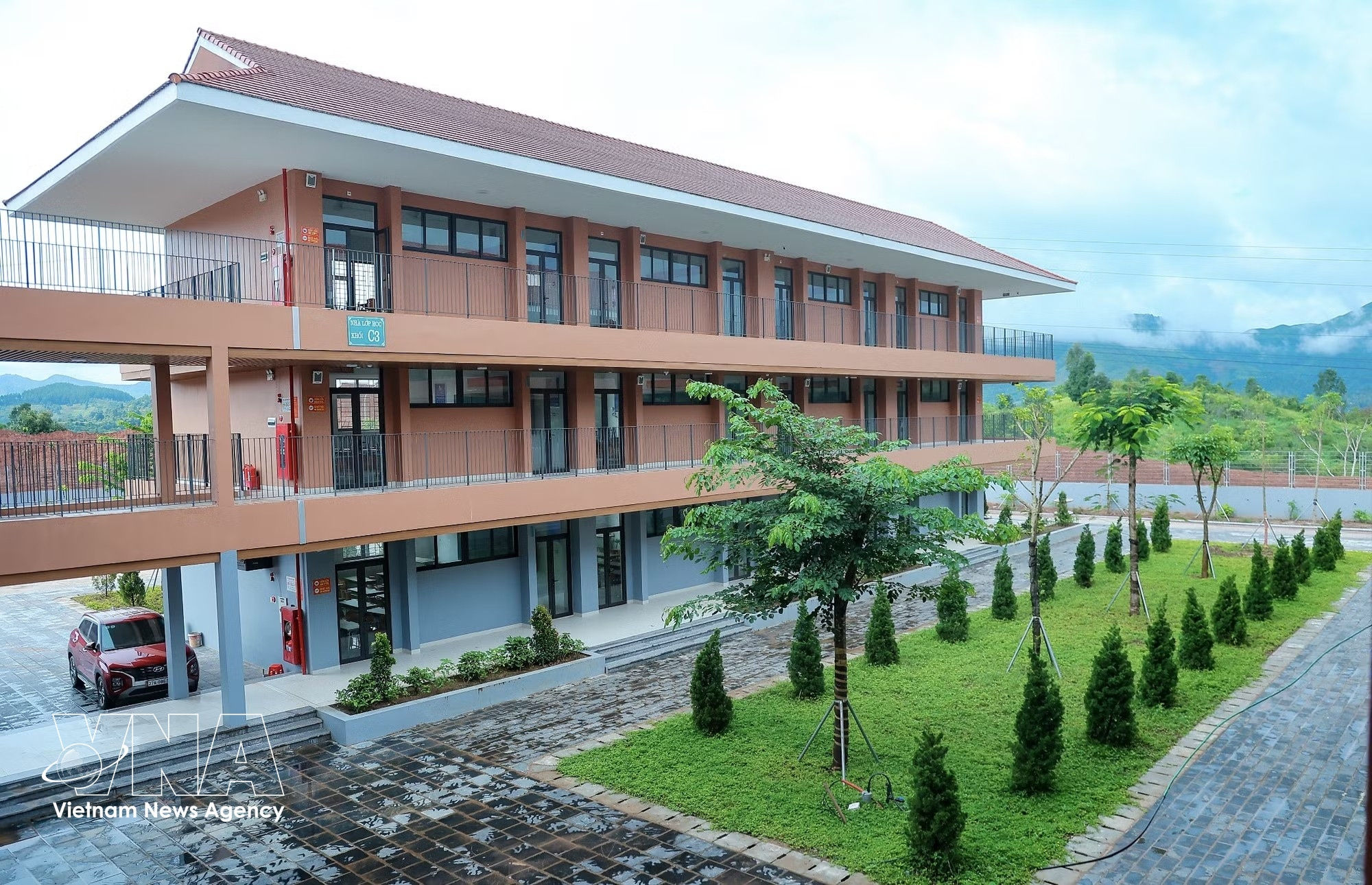
New schools in border areas are ready for the opening of their first academic year. (Photo: VietnamPlus)