INVESTMENT CAPITAL NEEDED FOR FINAL PUSH TO BREAKTHROUGH GROWTH
LongForm - Ngày đăng : 17:00, 23/07/2026
Vietnam enters the era of national rise with double-digit growth target, prompting an urgent need to unlock capital for development
LongForm
INVESTMENT CAPITAL NEEDED FOR FINAL PUSH TO BREAKTHROUGH GROWTH
VNA•{Ngày xuất bản}
Vietnam enters the era of national rise with double-digit growth target, prompting an urgent need to unlock capital for development
To hit double-digit growth for 2026-2030, Vietnam needs to clear obstacles to steer capital into production and trade. (Photo: VietnamPlus)
Vietnam's economy stands at the threshold of a new era defined by a national aspiration to achieve a developed and high-income status by 2045. The 14th Party Central Committee’s second plenum has shifted the goal from stable expansion to sustained double-digit growth in the 2026–2030 period.
Hitting at least 10% annual growth will demand enormous financing. The Ministry of Finance and strategic advisory body estimates put total social investment over 2026–2030 at nearly 38.5 quadrillion VND (1.48 trillion USD), more than double the 2021–2025 total. That implies lifting the investment-to-GDP ratio from the current 33% to at least 40%, straining the financial system and requiring every economic sector to contribute.
Conclusion 18-KL/TW from the Party Central Committee makes clear that future growth cannot be fuelled simply by pouring in more money. Capital must be deployed more efficiently. The Party wants to cut Vietnam’s incremental capital-output ratio (ICOR), a key gauge of investment efficiency, from the current 6.3 to around 4.5–4.8 in the coming years. The challenge is therefore twofold: mobilising far more capital while ensuring every Vietnamese dong generates greater economic value.
At a May 20, 2026 meeting on national development resources, Party General Secretary and State President To Lam warned that Vietnam cannot expect extraordinary results by leaning on outdated growth drivers. Double-digit expansion, he stressed, cannot be achieved by merely stretching the old economic model. Capital must instead be directed toward sustainable engines like science – technology, innovation, and digital transformation.
Yet, headwinds persist. Public investment disbursement is crawling despite a record allocation of more than 1 quadrillion VND for 2026. By mid-April, only 12.6% of the assigned capital had been spent. Administrative bottlenecks, cumbersome land and procurement rules, and risk-averse execution at the local level continue to choke the economy’s financial lifeblood. The situation underscores the need for a fundamental governance shift from administrative control to development facilitation.
Without removing legal logans and restoring market confidence, landmark national projects, including the North–South high-speed railway, nuclear power development, and the semiconductor industry, may struggle to secure the financing needed for a successful rollout.
The series, “Command from a Nation's Aspiration: Building a New Runway for Vietnam's Economic Takeoff”, maps the structure of capital flows, identifies bottlenecks in the financial system, and explores comprehensive policy solutions to unlock investment, carve out new development space, and release all available resources for Vietnam’s double-digit growth ambitions.
Vietnam's economy is at the threshold of a new era, a pivotal historical juncture in its journey toward realising the 2045 goal of becoming a developed and high-income country. (Photo: VietnamPlus)
Part 1: Investment lifeblood – Solving capital conundrum
If Vietnam wants to grow its economy by double digits through 2030, it’s going to take more than big ambitions. The country first has to clear out the bottlenecks that have been slowing its financial system for years
The price tag for that kind of growth is staggering. Total social investment needed for the five years is estimated at around 38.5 quadrillion VND, more than twice the level recorded in the previous cycle. The real headache is figuring out where it’s trapped and how to get it flowing where it’s needed most.
Liquidity abundant, firms starved
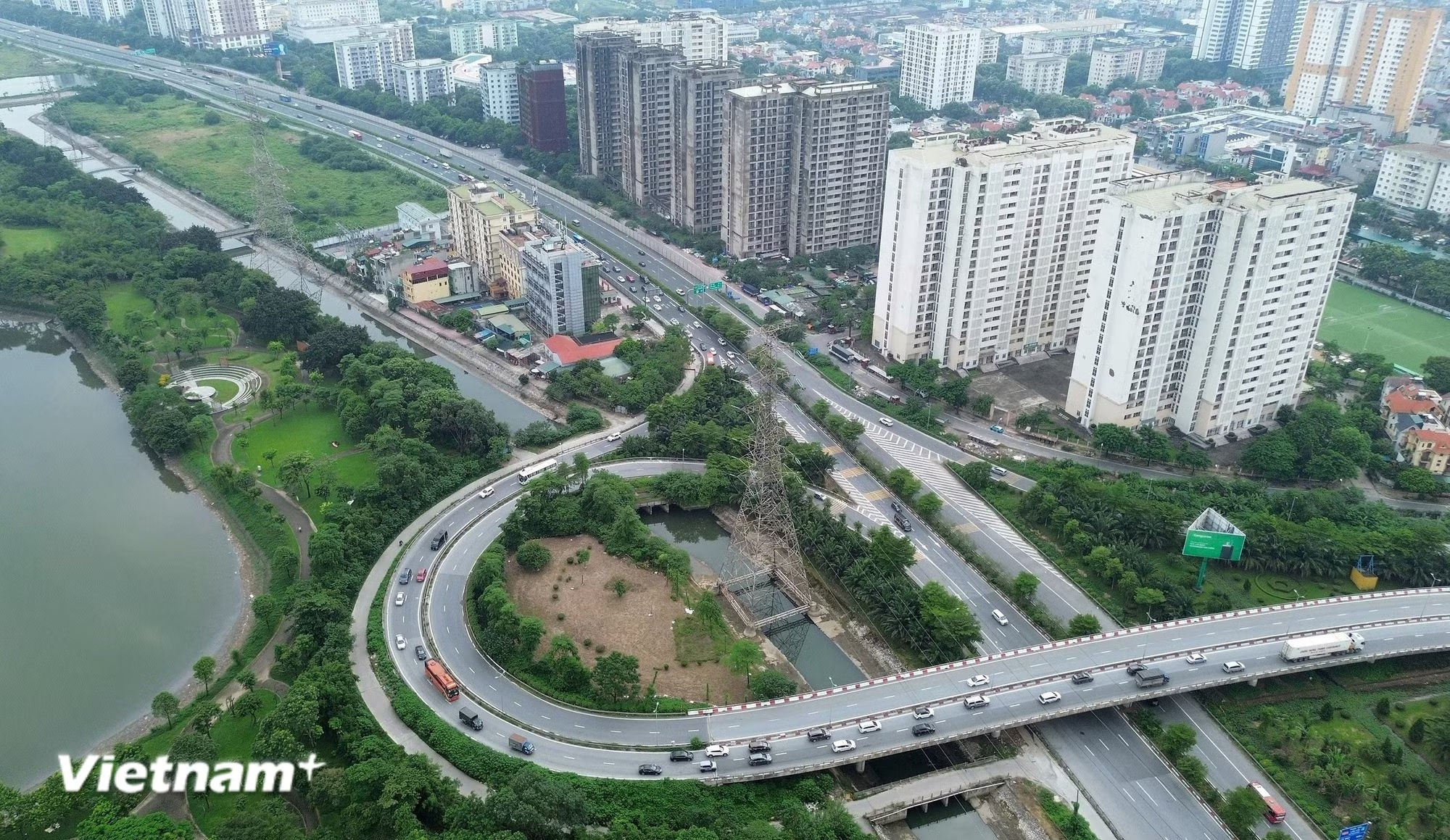
Vietnamese banks are practically drowning in cash, but many of the firms that need it can’t get a loan. Bank credit still fuels more than half of all social investment in the country. By early 2026, outstanding loans had climbed to nearly 19 quadrillion VND, up 1.5% from the end of 2025. Lenders have been pushing money into the system, but a lot of firms simply can’t absorb it.
Since early 2026, outstanding loans have neared 19 quadrillion VND, up 1.5% from the end of 2025. (Photo: VietnamPlus)
“
Bank lending has long been the economy's main source of financing, accounting for more than half of total social investment.
Nguyen Quoc Viet, Deputy Director of the Vietnam Institute for Economic and Policy Research, said the banking system has plenty of liquidity, but too many companies are in rough financial shape after a run of geopolitical shocks and natural disasters. A growth model overly dependent on traditional investment has run out of road. The public sector’s ICOR remains high, signalling inefficient capital use. Capital has to start moving toward industries that actually add value.
During an April 29 working session with the State Bank of Vietnam, Prime Minister Le Minh Hung told regulators to put a leash on speculative investing and stop capital from pouring into unproductive assets. His argument was simple: businesses and households won’t start putting money into factories and trade until they feel the macro-economy is steady, the rules are transparent, and confidence is back.
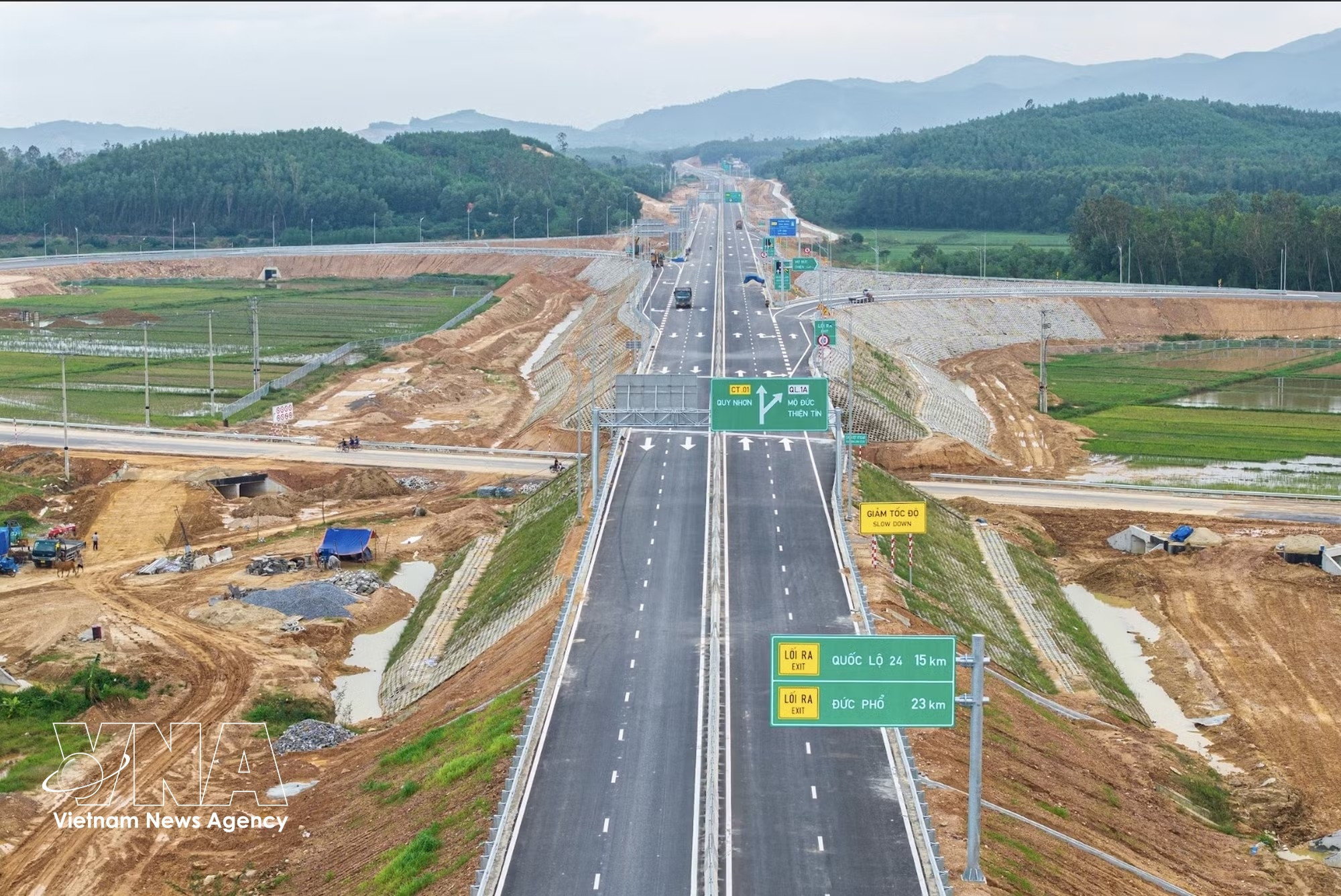
The 88km Quang Ngai - Hoai Nhon expressway (Photo: VietnamPlus)
Public investment is supposed to lead the charge. The 2026 plan sets aside a record-smashing 1 quadrillion VND to fast-track strategic infrastructure. But the rollout has been painfully slow. By mid-April, only 12.6% of the cash the PM allocated had actually been spent. Dozens of ministries and localities were trailing far behind, and some hadn’t spent a single dollar.
The consequences extend well beyond delayed infrastructure. Slow public investment disbursement weakens demand across key supporting industries, including steel, cement, and logistics, while dampening broader economic momentum.
Le Anh Son, CEO of the Vietnam Maritime Corporation, warned that if port and transport projects keep crawling along, Vietnam’s logistics costs will stay sky-high, and exports will lose their edge. Pouring cash into public works isn’t just about building things, but about carving out new room for the country to grow, he said.
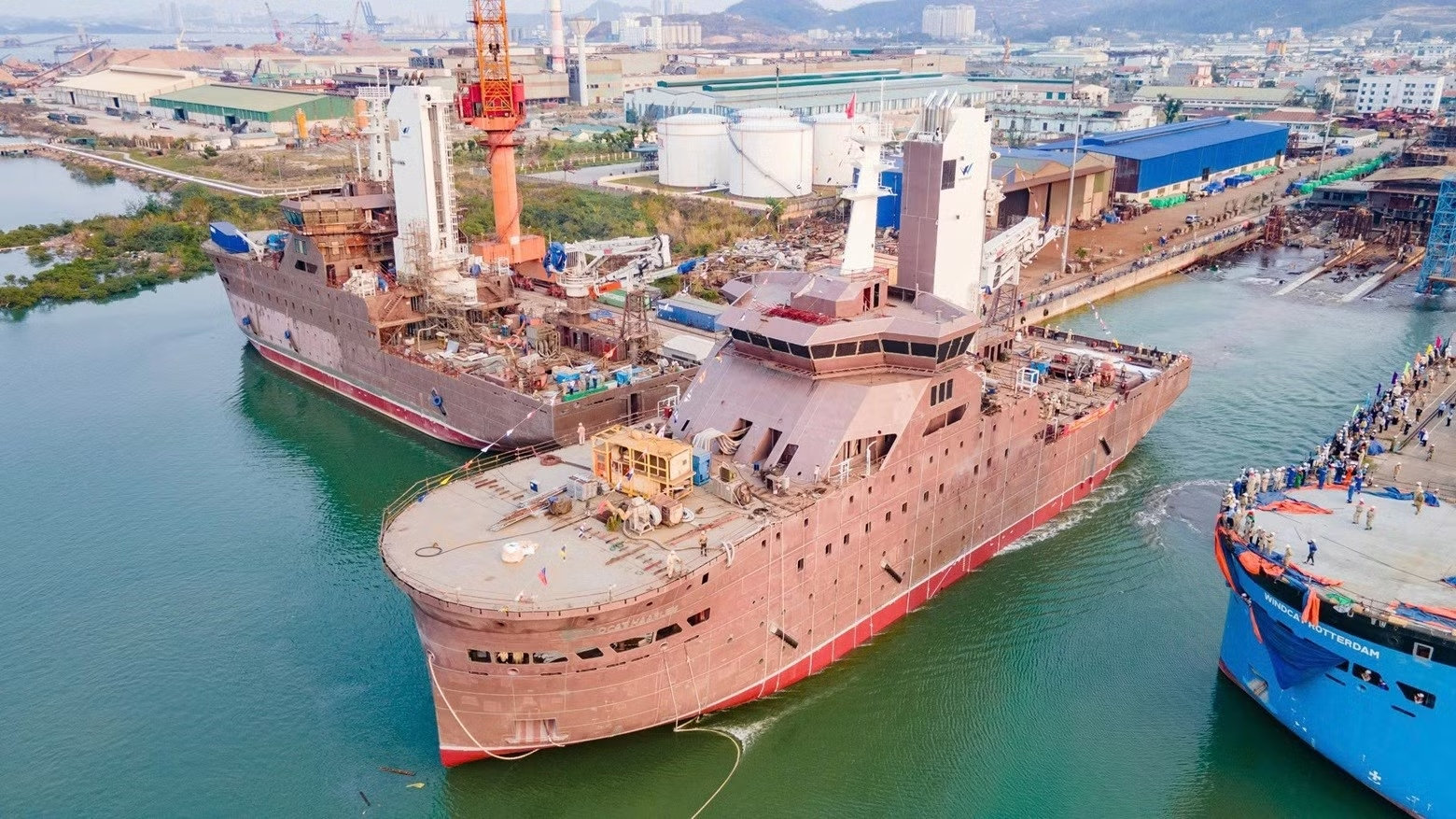
Delays in public investment disbursement not only waste financial resources but also directly hamper growth in supporting industries such as steel, cement and logistics services. (Photo: VietnamPlus)
Pivoting to quality-led growth
Vietnam cannot deliver double-digit growth by clinging to low-cost labour and burning through natural resources.
Economist Nguyen Minh Phong said financing the country’s next growth phase will become increasingly complex. Vietnam must pool public resources, private investment, and foreign direct investment all at once while making sure growth isn’t just bigger, but better. The cash needs to chase core technologies, digital transformation, and green transition.
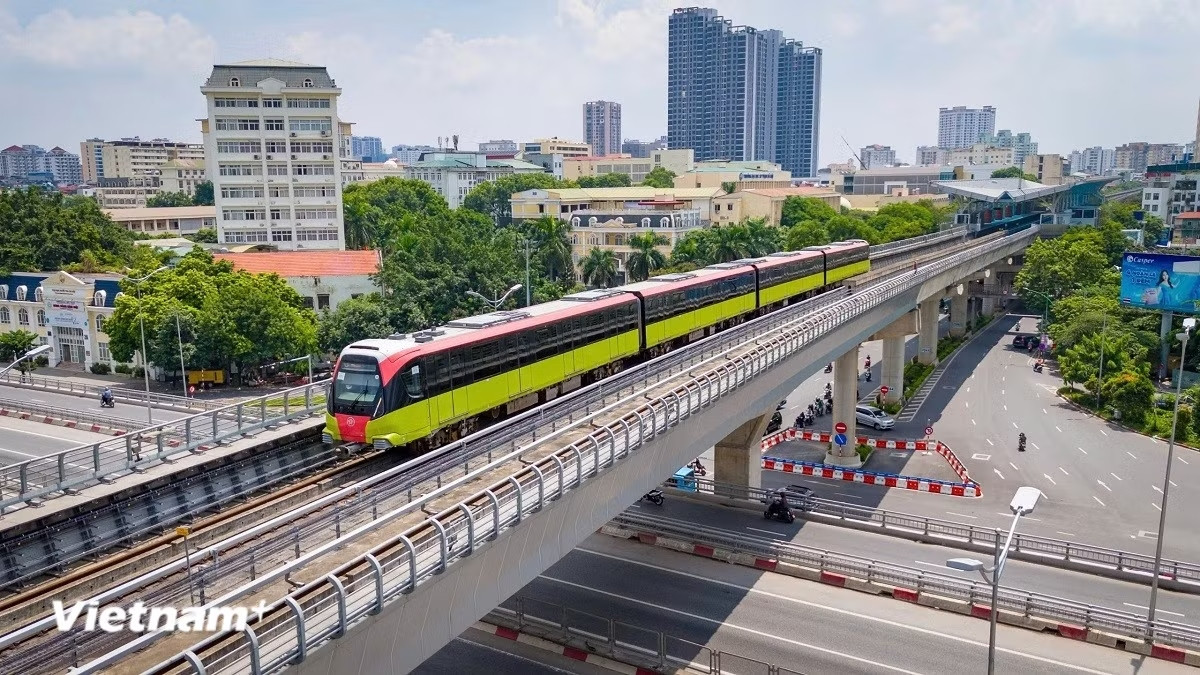
There’s reason for optimism. Its digital economy has been growing at about 20% a year for the past three years, meaning there’s plenty of runway left. The trick now is steering loans and investment toward the companies that can pull the rest of the economy along like Viettel, FPT, Petrovietnam, and TH Group. These heavyweights have the tech chops and supply-chain muscle to spark real industrial change.
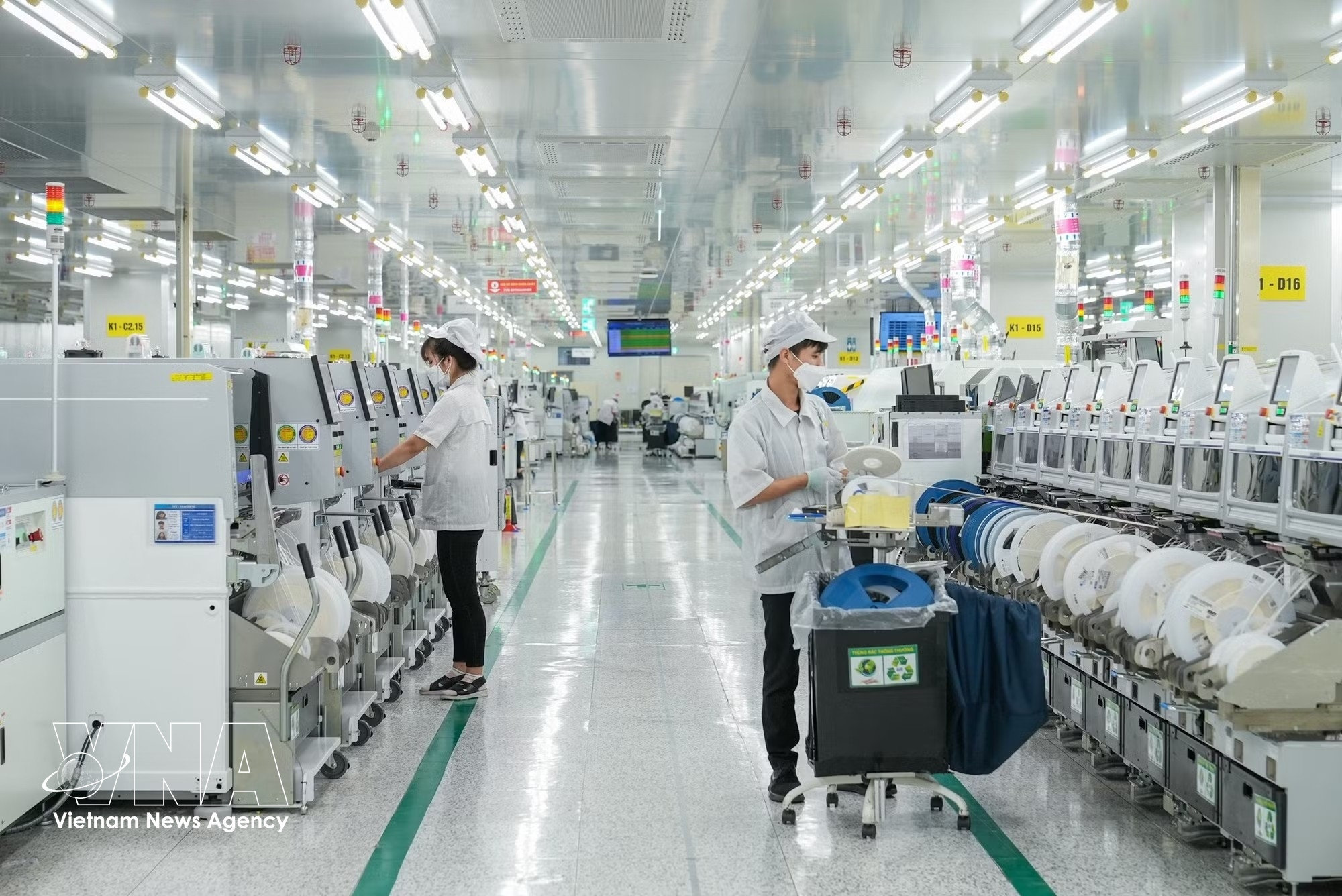
Capital must pour into core technologies, digital transformation and green transition. (Photo: VietnamPlus)
“
Achieving double-digit growth is an enormous challenge, but it also presents an opportunity to transform the country.
Foundational industries are trying to keep up. The steel sector, for example, requires long-term, high-quality financing to go green. Tran Minh Xuan, Deputy General Director of the Vietnam Steel Corporation, noted that steel projects can take seven to ten years just to pay for themselves. As a result, long-term financing is essential for those seeking to modernise production. Sustainable growth in the industry, he said, depends on investments in advanced technologies such as electric arc furnaces that slash both energy bills and carbon emissions.
According to Xuan, access to green finance and sustainable credit has evolved beyond a compliance requirement to become a strategic necessity. A green steel project not only lowers operating costs but also serves as a passport to international markets. The more long-term cash that flows into environmental, social, and governance (ESG)-ready projects, the stronger Vietnam’s industrial backbone becomes, and the closer it gets to hitting those ambitious growth targets.
Double-digit growth might be Vietnam’s biggest economic test in decades, but it’s also the biggest opportunity. Only by stripping away the red tape, opening up regulatory sandboxes for companies to experiment, and creating an environment where investors take calculated risks can capital flow into places that can launch Vietnam into a new era. /.
Unlocking capital must begin with mechanisms and trust. (Photo: VietnamPlus)


.jpg)