Hanoi Convention: Historic Milestone and Global Cooperation Vision
LongForm - Ngày đăng : 10:32, 06/07/2026
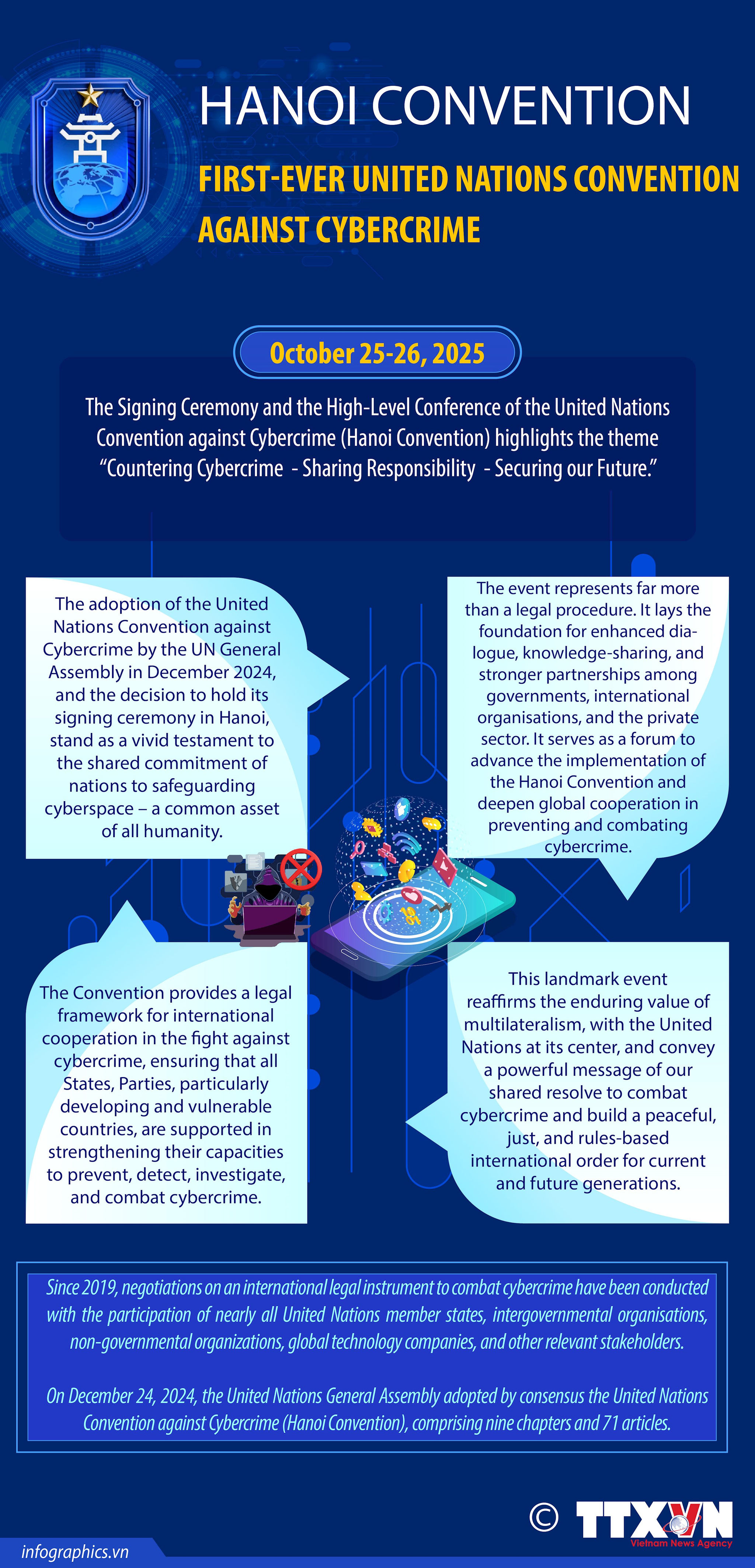
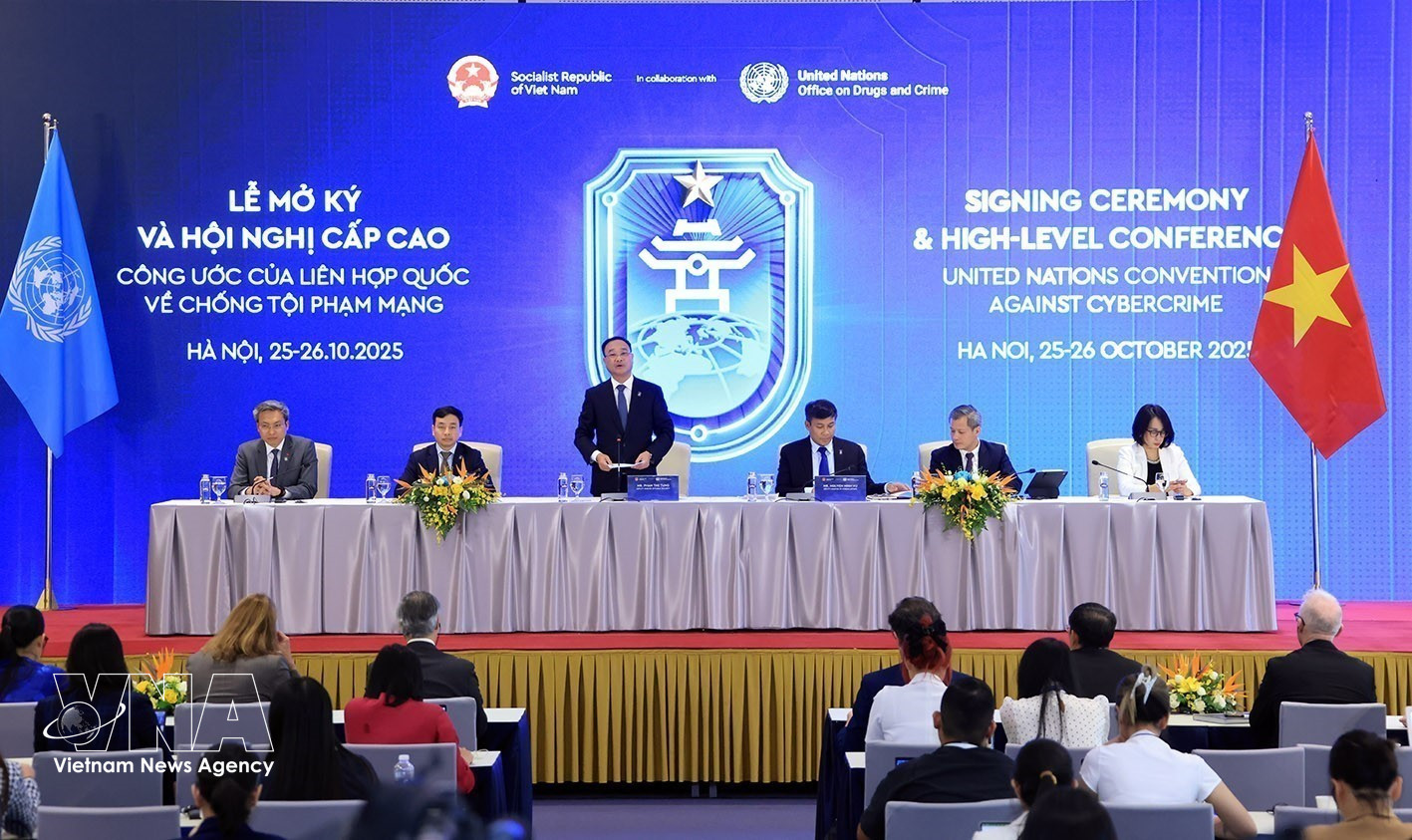
After two days of dynamic and productive sessions on October 25-26, the Signing Ceremony and High-Level Conference of the United Nations Convention against Cybercrime (Hanoi Convention) has concluded in Hanoi, marking a historical milestone and ushering into a new era of global cooperation in the digital era.
LongForm
Hanoi Convention: Historic Milestone and Global Cooperation Vision
VNA•{Ngày xuất bản}
After two days of dynamic and productive sessions on October 25-26, the Signing Ceremony and High-Level Conference of the United Nations Convention against Cybercrime (Hanoi Convention) has concluded in Hanoi, marking a historical milestone and ushering into a new era of global cooperation in the digital era.
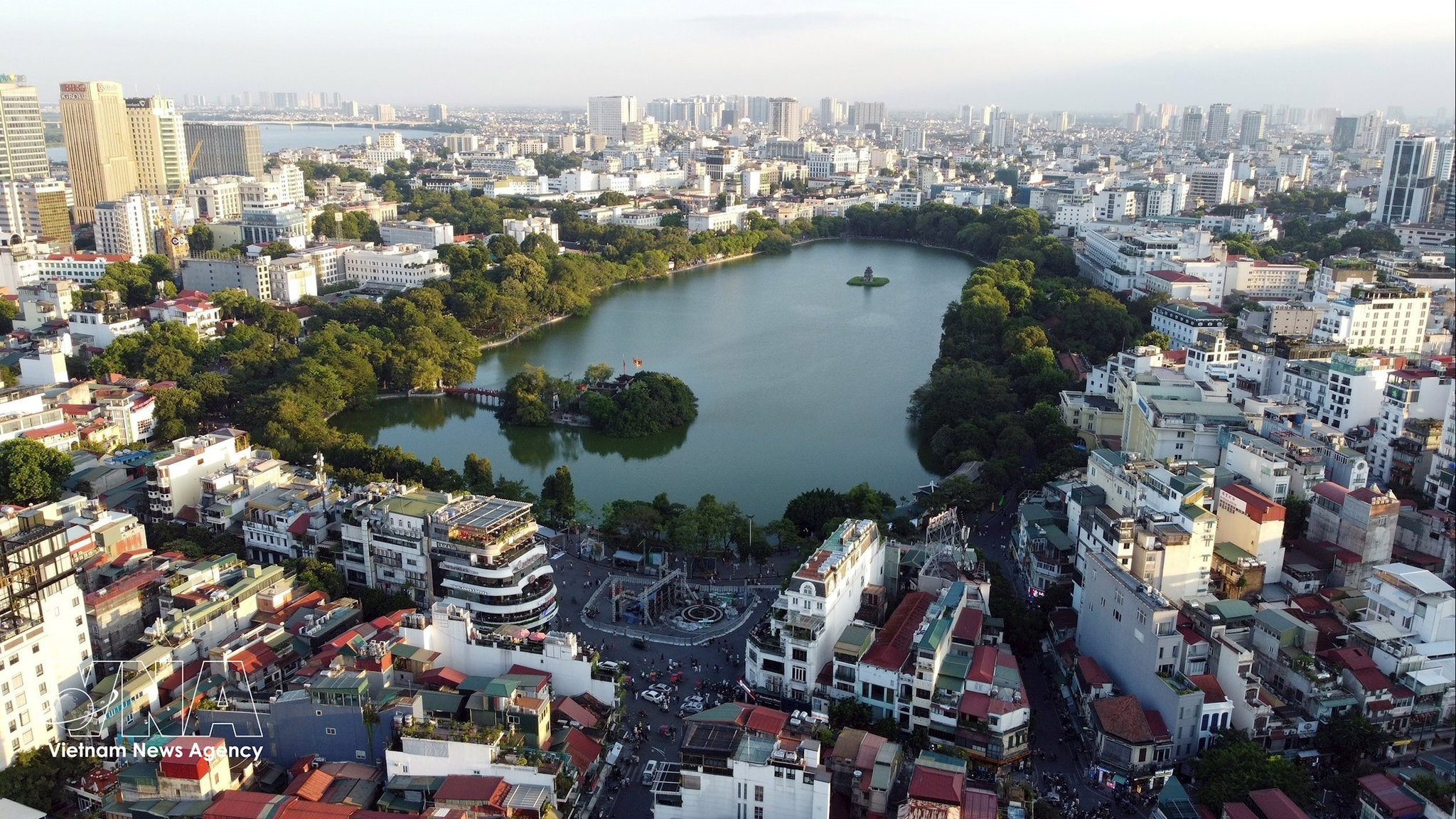
Hoan Kiem Lake at heart of Hanoi capital (Photo: VNA)
“
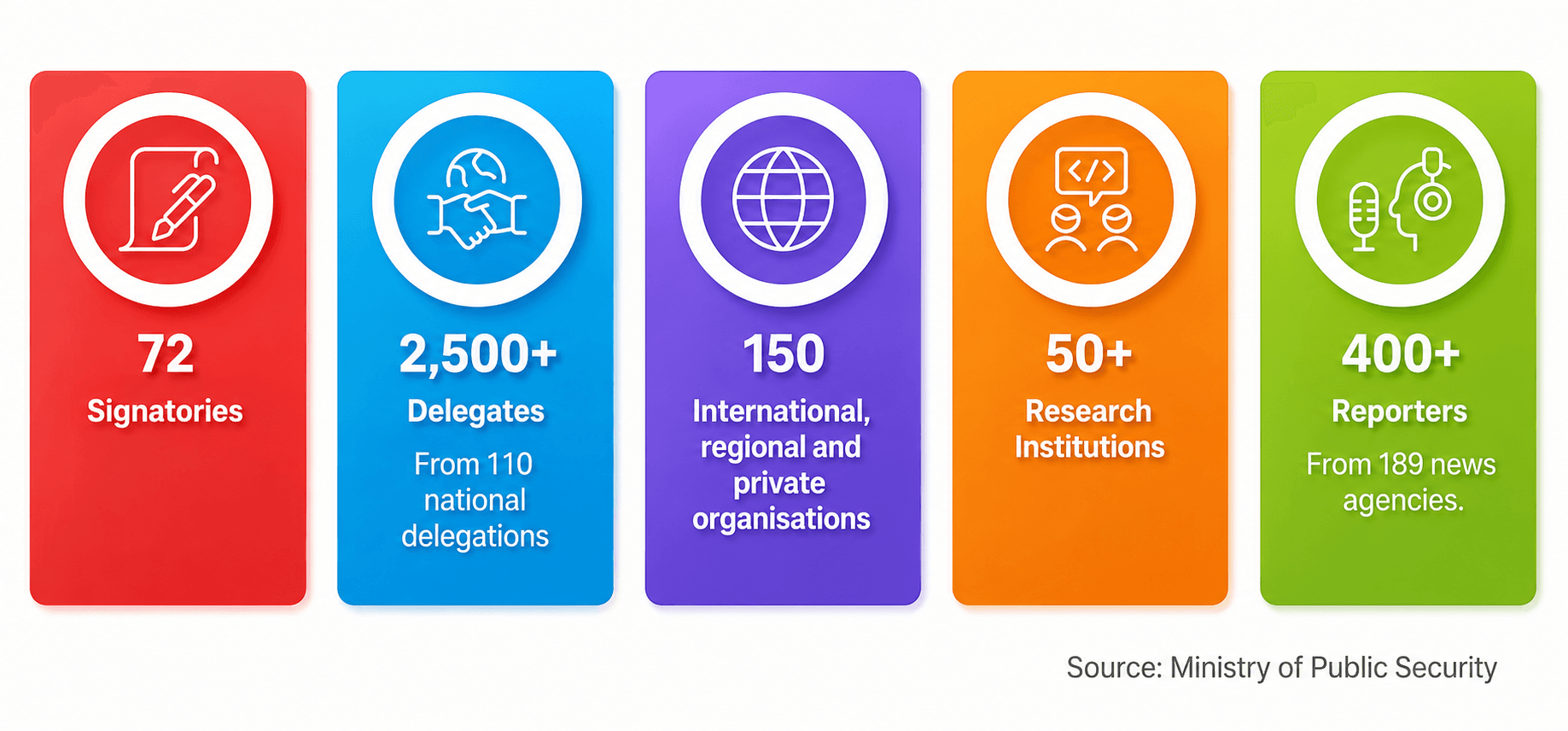
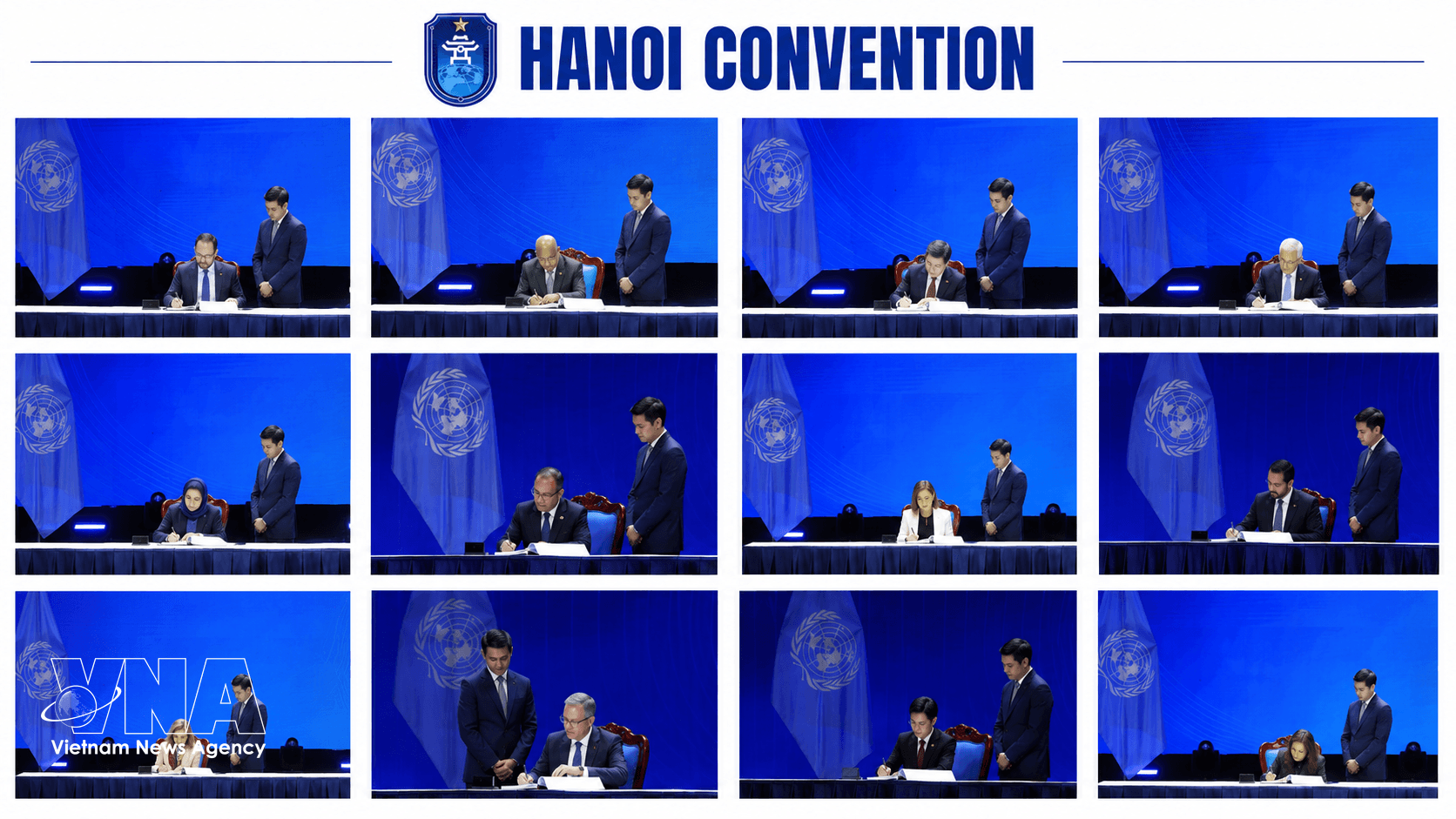
The most significant outcome of the event was the official signing of the Hanoi Convention by 72 countries. Geographically, 19 are from the Asia-Pacific region, 21 from Africa, 19 from Europe plus the European Union, and 12 from Latin America, showing the Convention’s global reach and balanced geographical representation. This makes the event one of the largest convention signing ceremonies in the past 10 years, according to the United Nations.
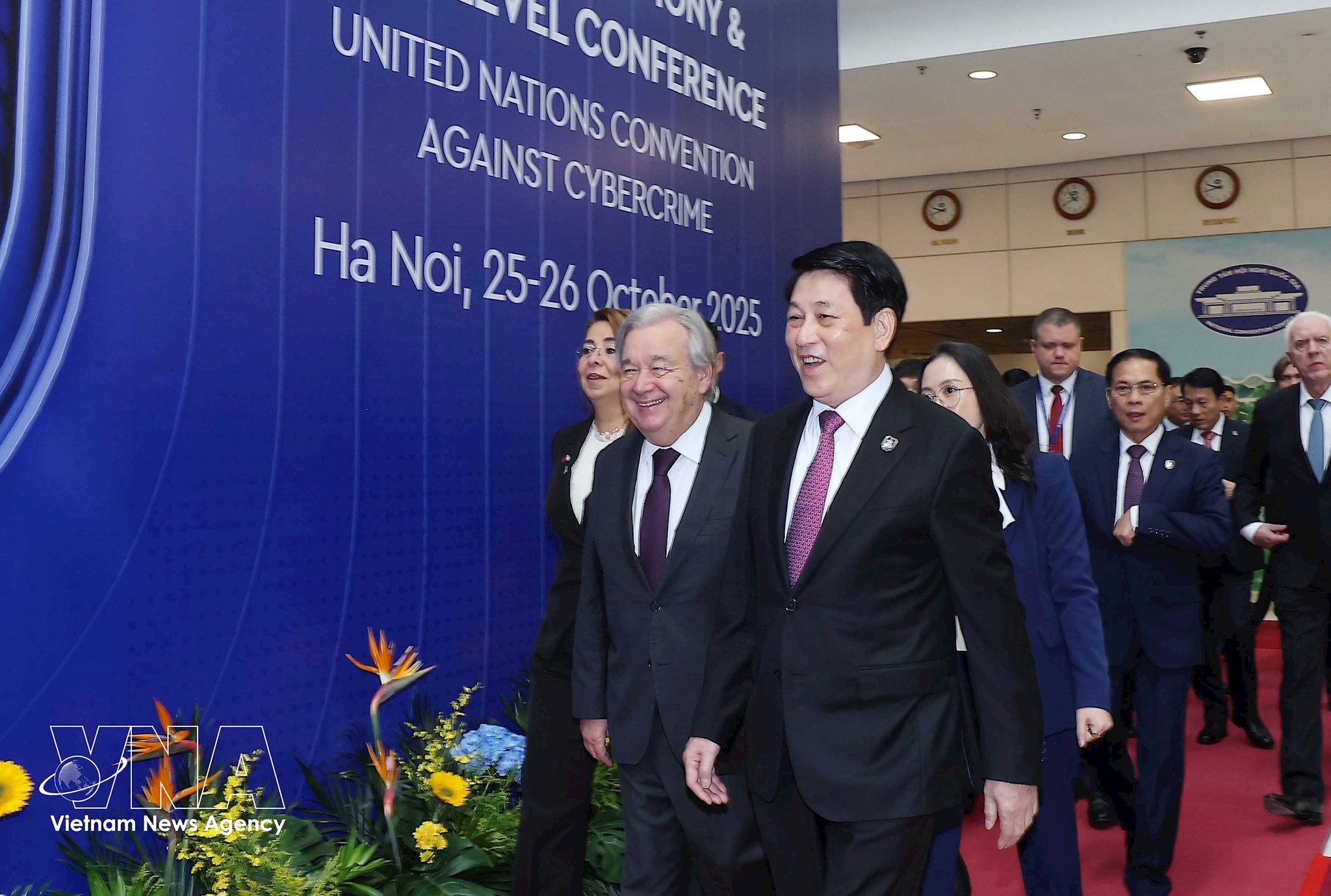
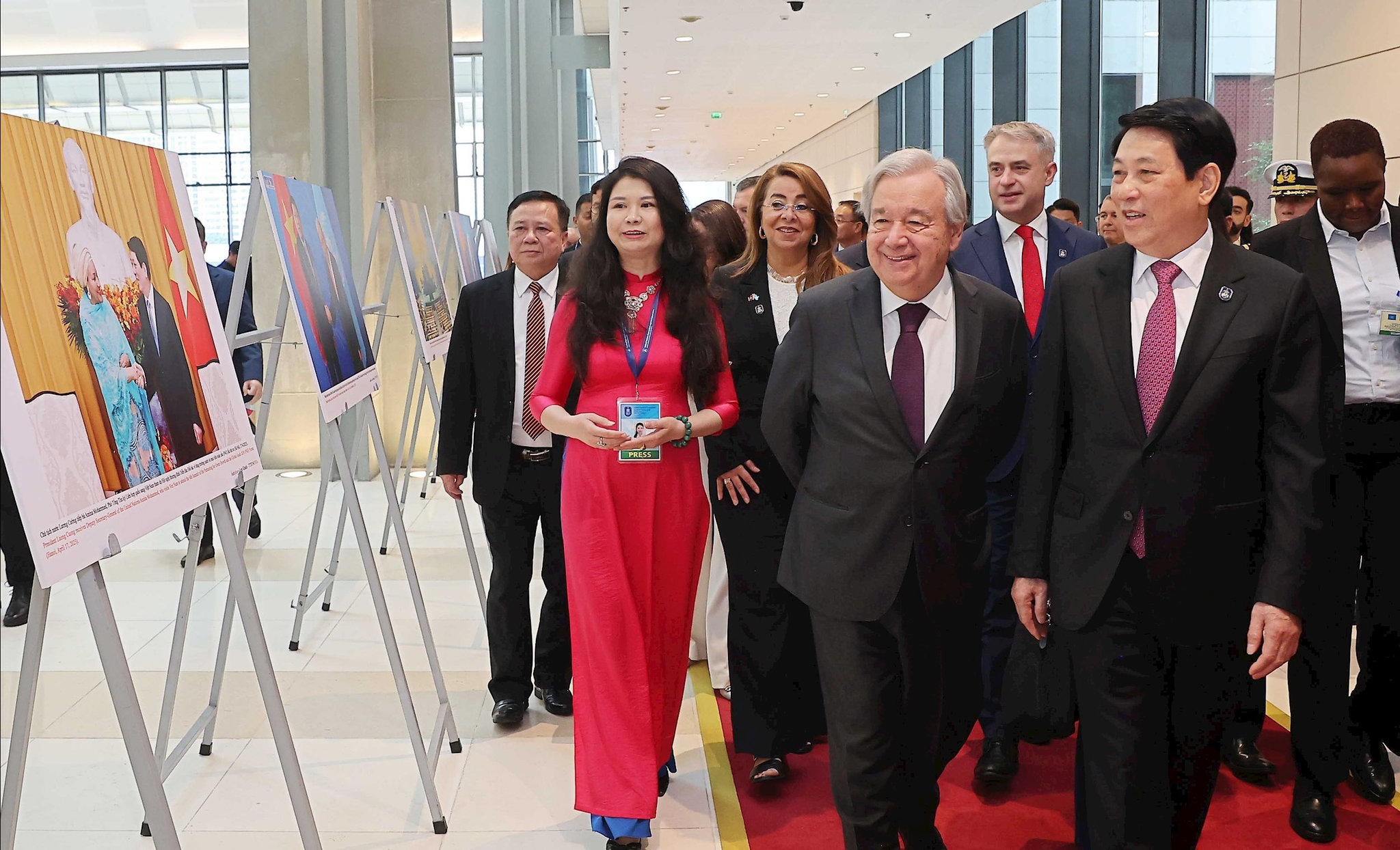
President Luong Cuong welcomes the United Nations Secretary-General António Guterres to the opening signing ceremony of the Hanoi Convention. (Photo: VNA)
Delegates attend the signing ceremony of the Hanoi Convention. (Photo: VNA)
vnanet_trưng bày 2vnanet_trưng bày 1
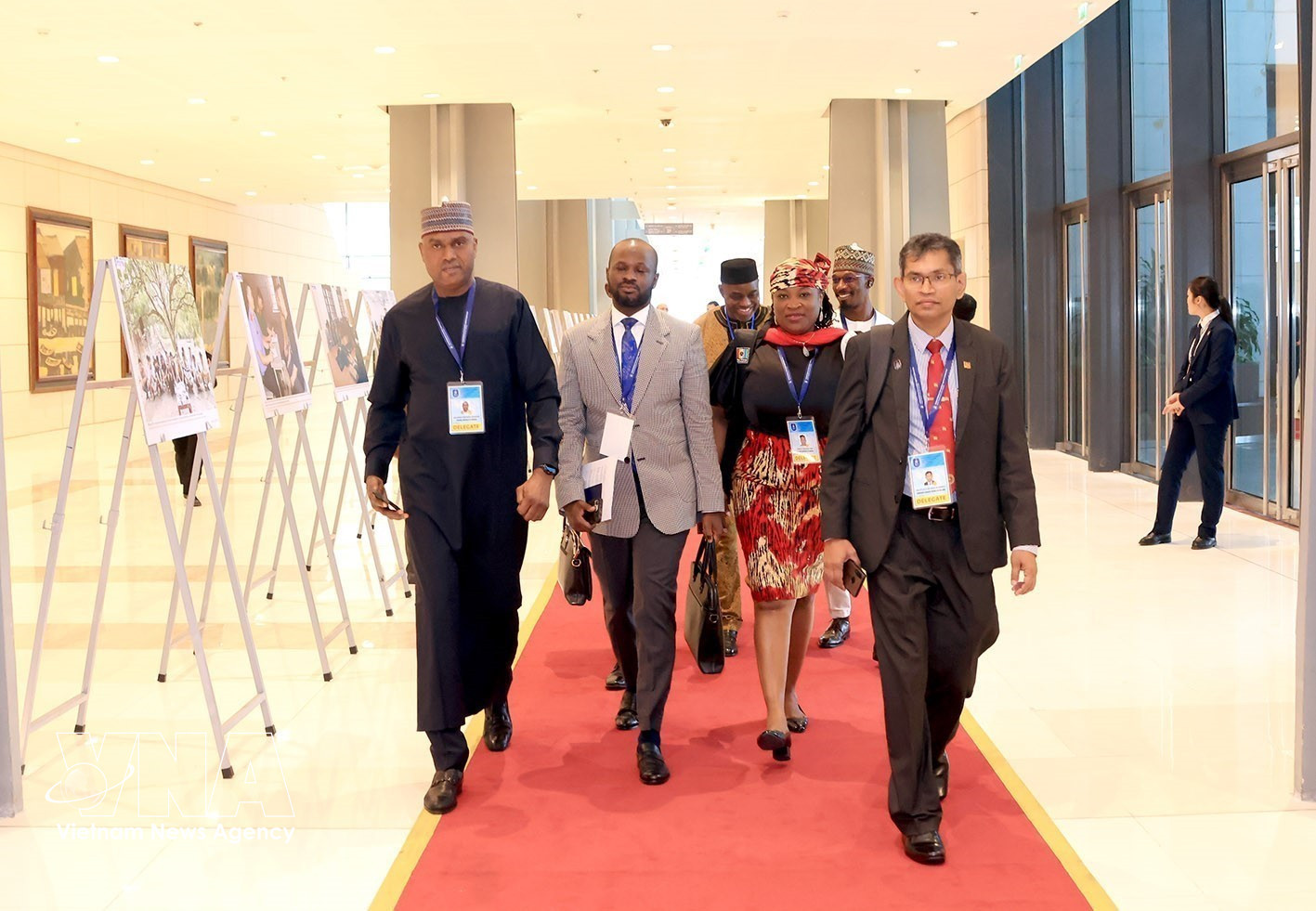
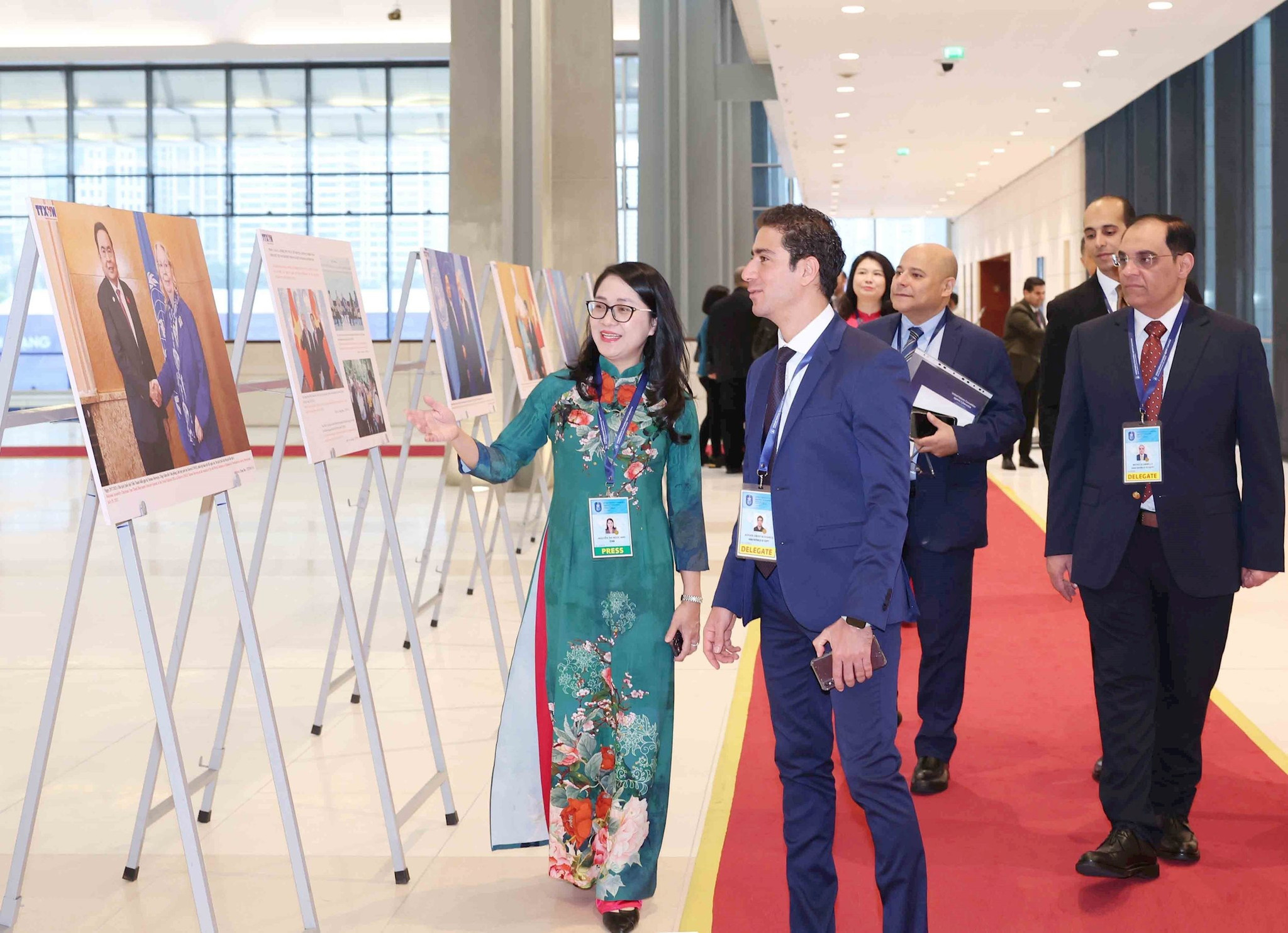
Delegates visit the photo exhibition hosted by the Vietnam News Agency. (Photo: VNA)
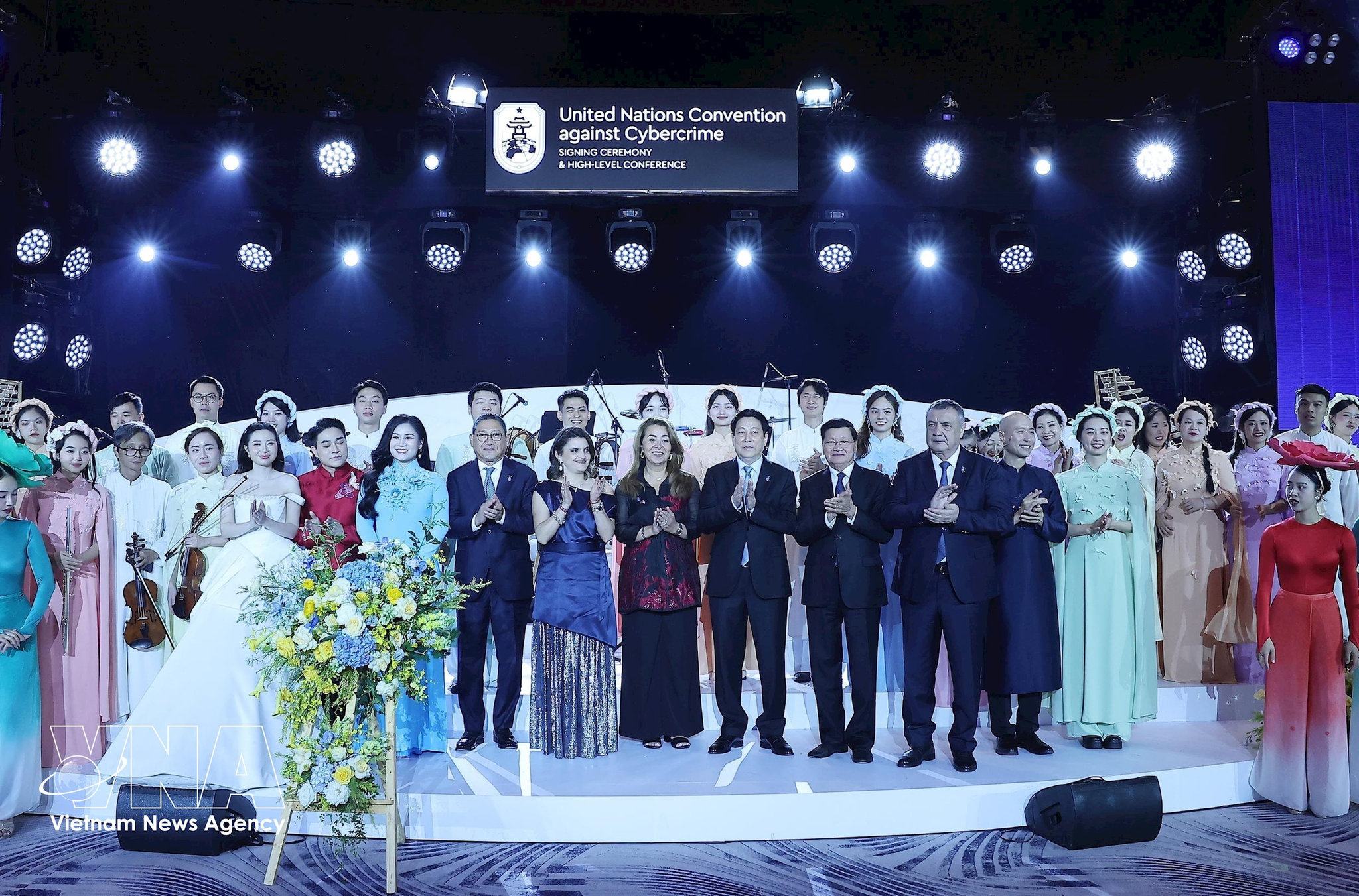
Cultural performance marks the opening signing ceremony of the Hanoi Convention. (Photo: VNA)
“
According to regulations, the Convention will take effect once it secures at least 40 signatures for ratification, but it has already garnered 72 signatories. This is a remarkable step forward, laying an important foundation for the Convention to soon take effect and be implemented in practice, thereby contributing to the establishment of a stronger global cooperation mechanism in preventing and combating cybercrime.
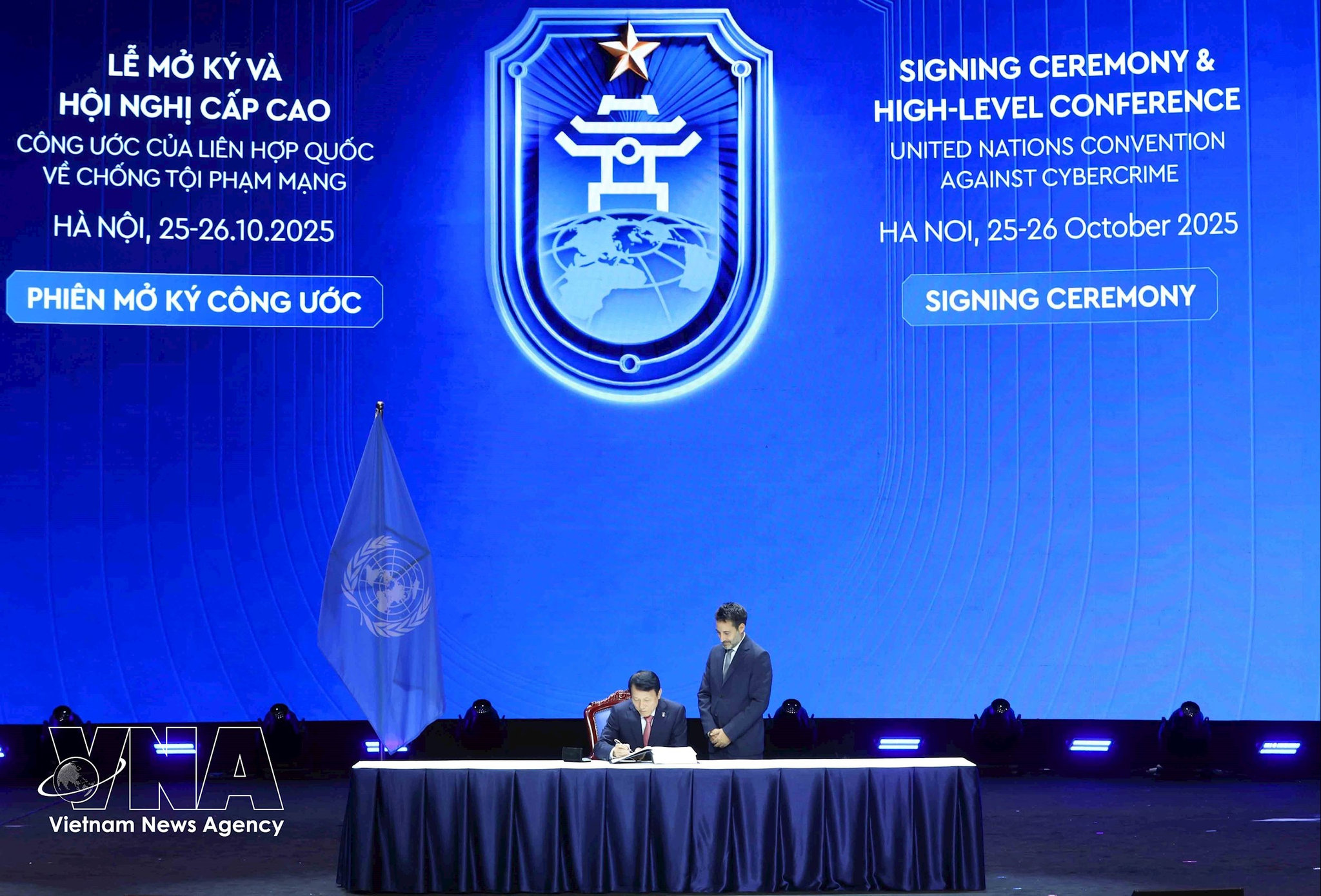
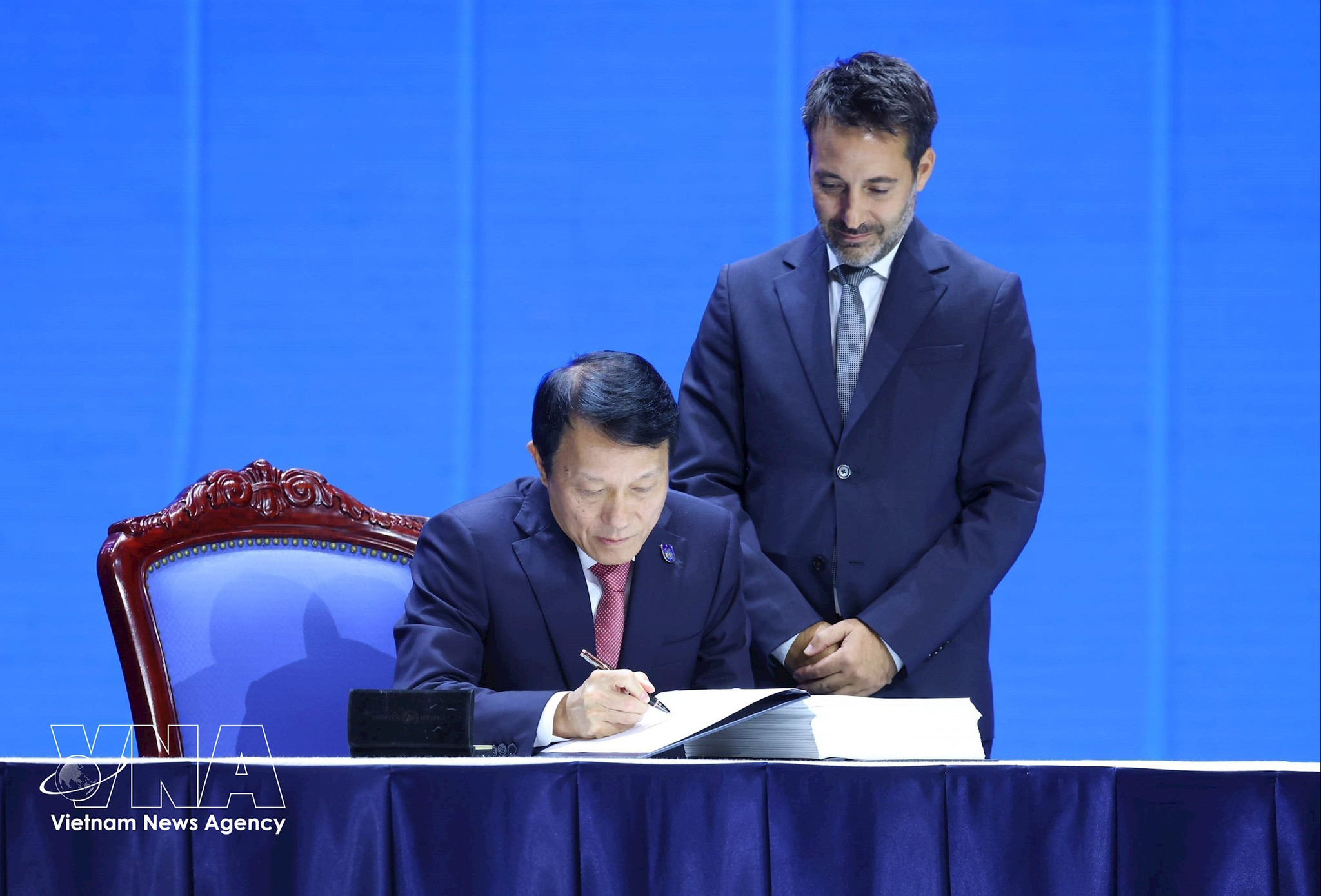
Vietnamese Minister of Public Security Luong Tam Quang signs the United Nations Convention against Cybercrime. (Photo: VNA)
Representatives of countries sign the Hanoi Convention. (Photo: VNA)
The event welcomed more than 2,500 delegates from 110 national delegations, 150 international, regional and private organisations along with over 50 research institutions. This figure exceeded our expectations, reflecting the broad and genuine interest of the international community and friends around the world in this event, which is the first of its kind held in Vietnam, according to the Ministry of Public Security. The signing ceremony and high-level conference of the convention also received strong attention from domestic and international media, with more than 400 reporters from 189 news agencies.
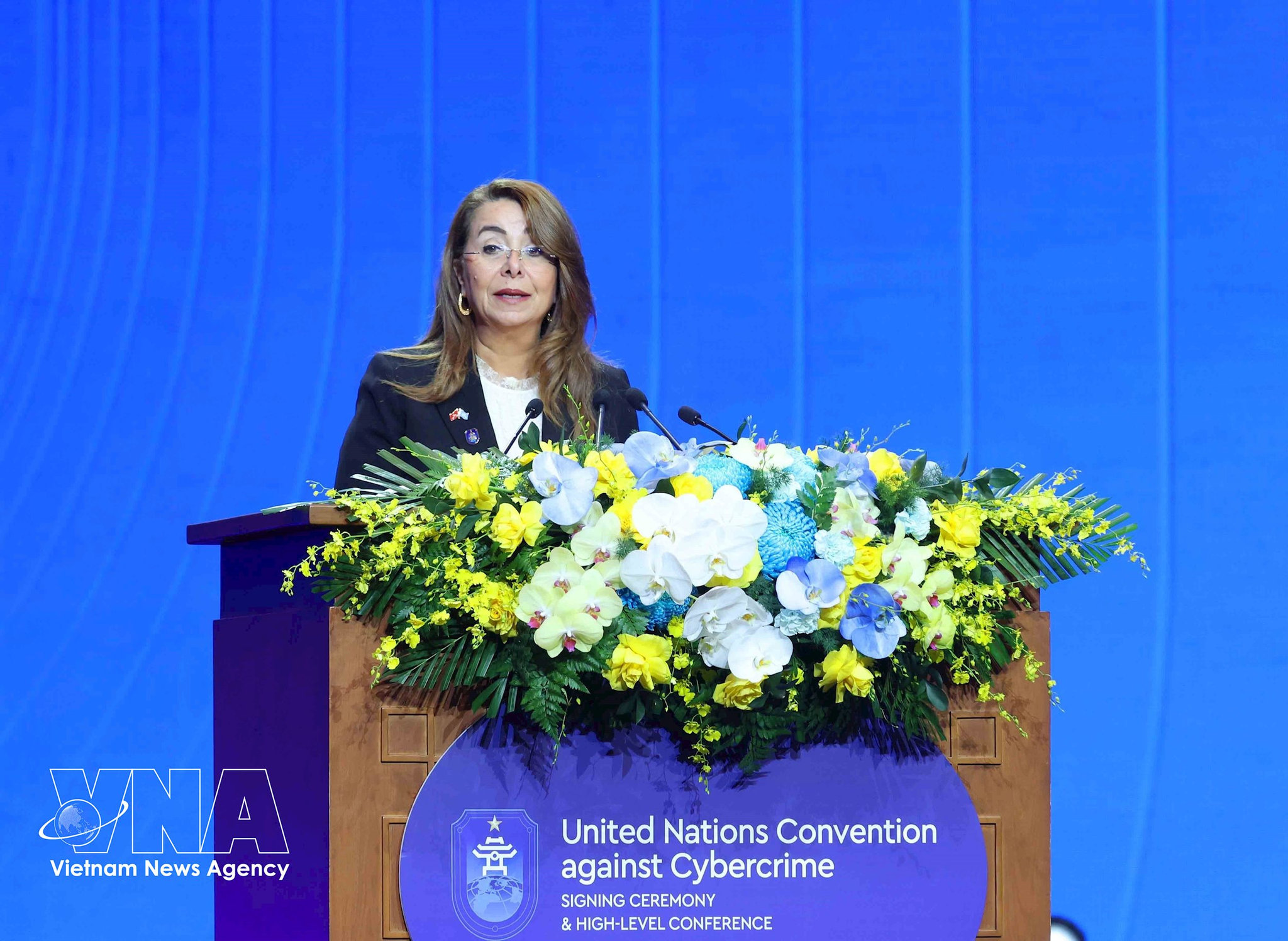
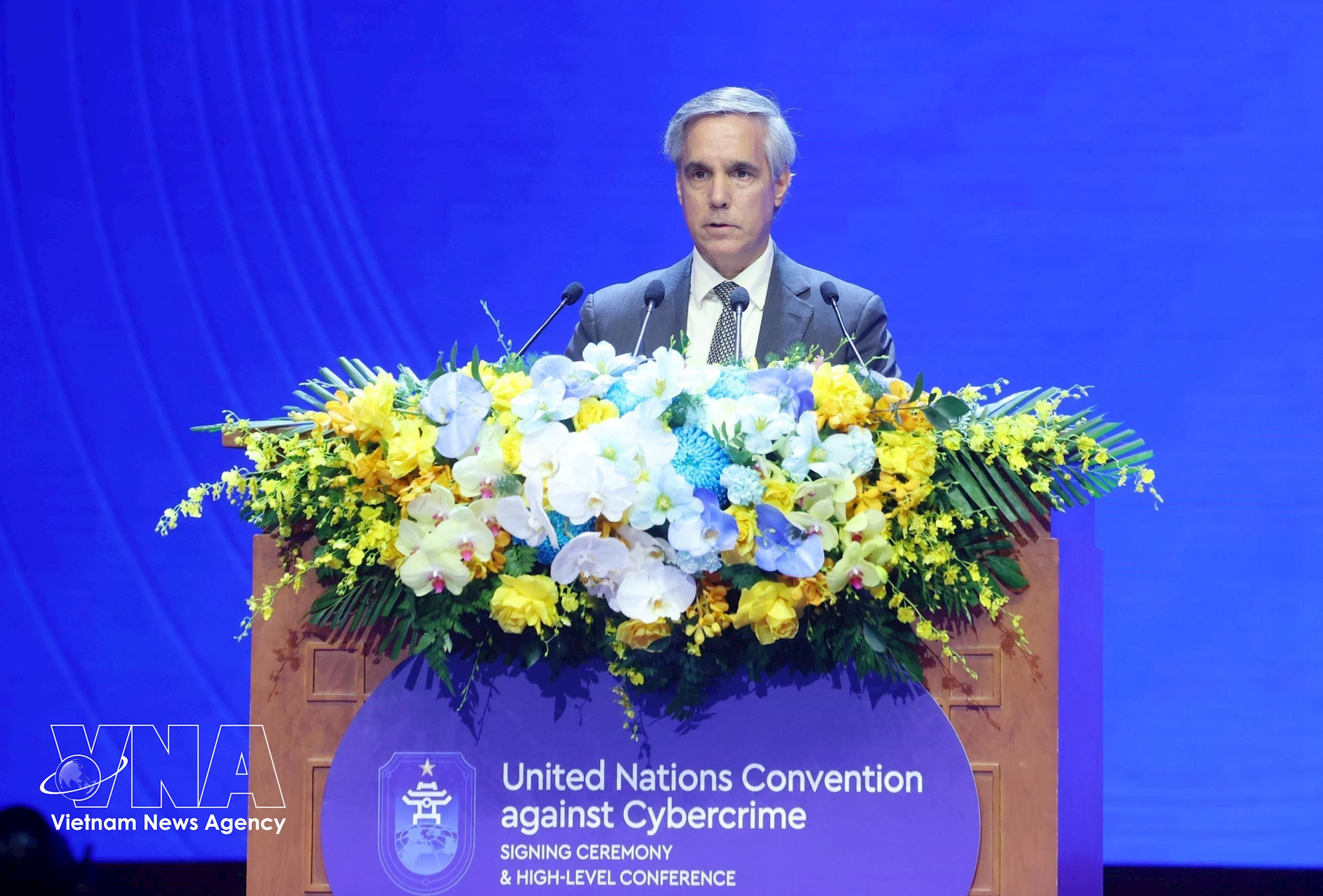
Ghada Waly, Executive Director of the United Nations Office on Drugs and Crime (UNODC) (Left) and John Brandolino, representative of the United Nations Office on Drugs and Crime (UNODC), speaks at the event. (Photo: VNA)
Vice President of Ecuador Maria Jose Pinto Gonzalez Artigas (Photo: VNA)
“
It’s pretty clear that Vietnam has its leadership and the commitment to the global world to share, to strengthen overall what we are here to do, it’s cybercrime. The convention is a historical step to protect children as in the digital world, children and women are among the most vulnerable groups to various forms of cybercrime.
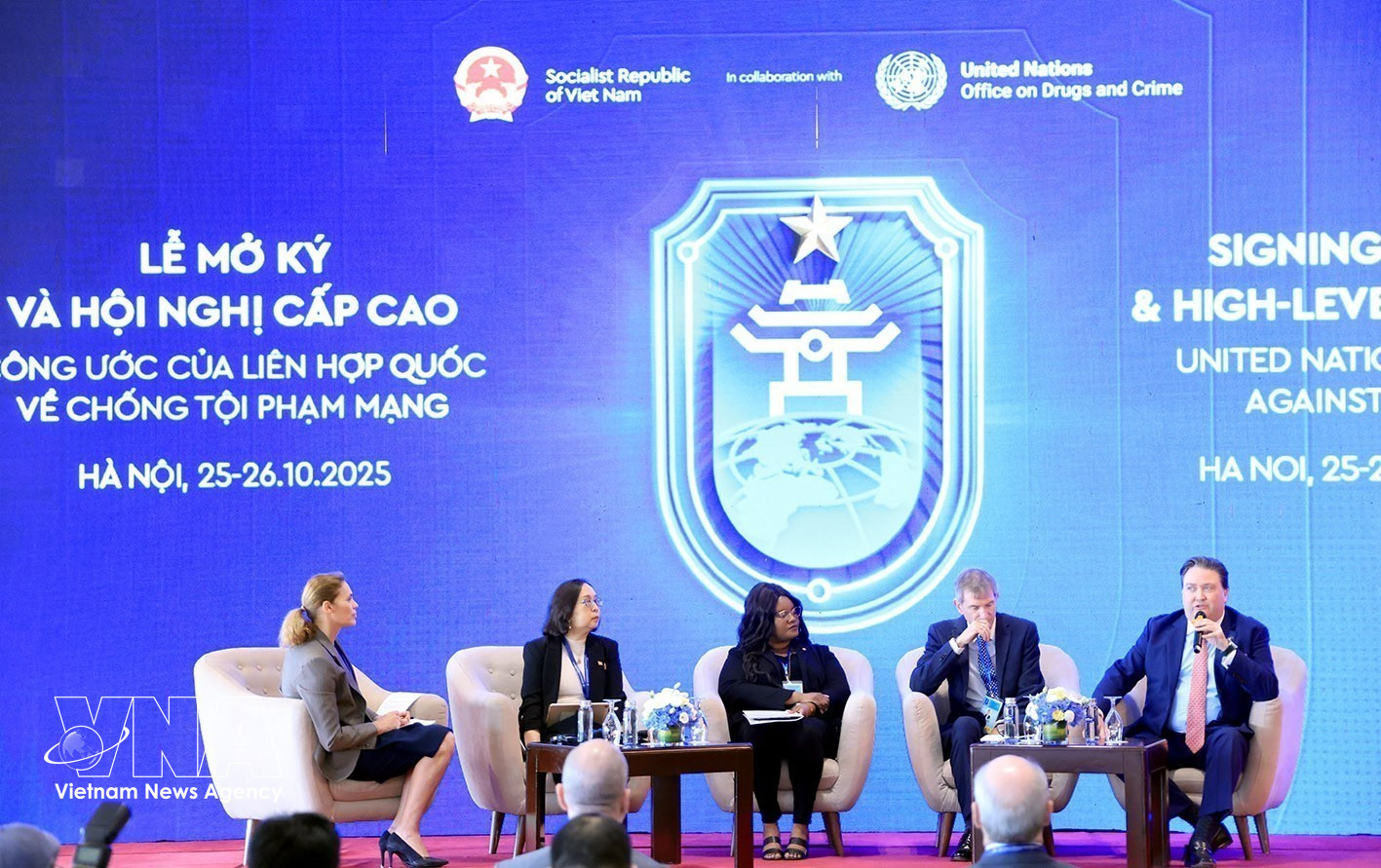
Hanoi Convention: Workshop discussing protection of women and children in the cyber space (Photo: VNA)
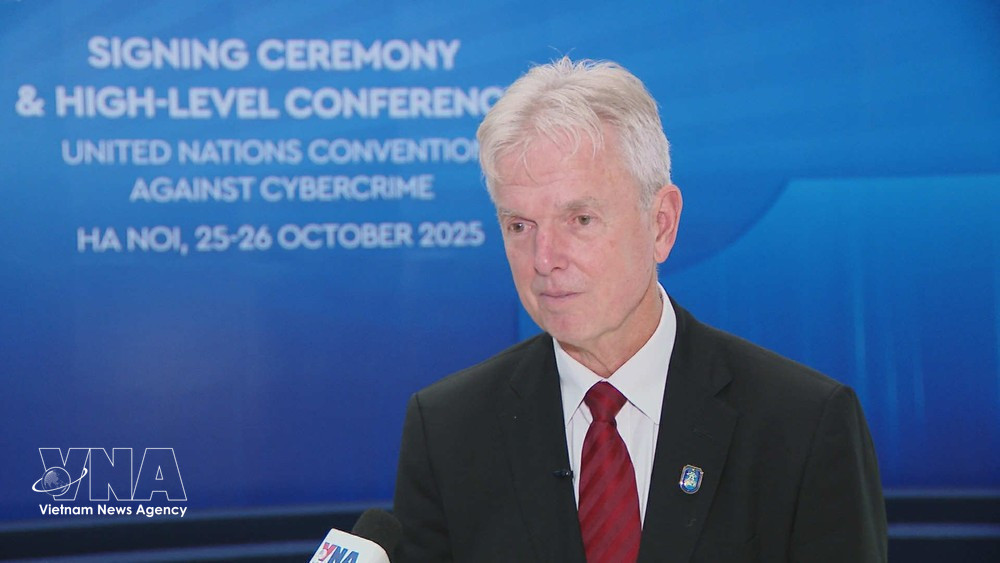
Ernst Noorman, Ambassador-at-large for Cyber Affairs of the Netherlands, speaks to the Vietnam News Agency on the sidelines of the signing ceremony of the Hanoi Convention. (Photo: VNA)
“
I’m really impressed at the signing ceremony which clearly showed Vietnam’s commitment to combat cybercrime. I'm happy that the Convention was finally signed after more than five years of challenging negotiations. For us, it was very important to have human rights strongly embedded in the convention, and I think we were successful with that.
During the sideline events and discussions, there were 71 speeches from national representatives, international organisations and technology corporations, offering varied and constructive perspectives for the upcoming implementation of the convention. Particularly, the main signing ceremony in Hanoi was broadcast live on the United Nations Web TV system, creating opportunities for access and outreach to member states and UN bodies through simultaneous interpretation in all six official UN languages. This is the first time an event hosted by Vietnam has been communicated in all official languages of the United Nations.
Representatives of countries deliver speeches at the event. (Photo: VNA)
In addition to professional activities, heads of international delegations also held high-level meetings with leaders of the Party and State of Vietnam, including a meeting with Party General Secretary To Lam, a state banquet hosted by President Luong Cuong, and an international press conference chaired by Prime Minister Pham Minh Chinh.
chieu-dai-1 (1)
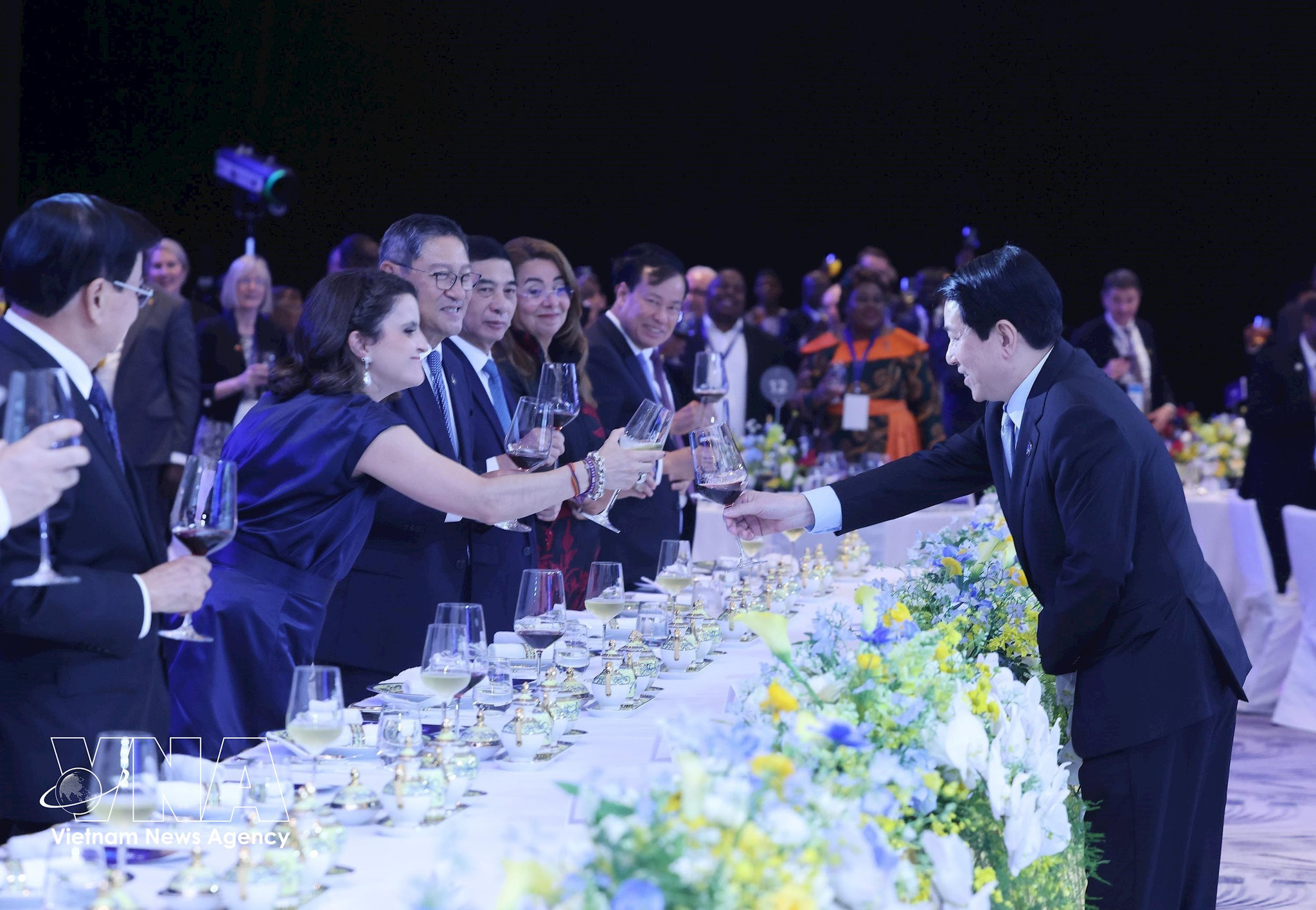
State President Luong Cuong hosts banquet for delegates attending Hanoi Convention signing ceremony. (Photo: VNA)
Delegates visit the technology exhibition at the event. (Photo: VNA)
Hanoi Convention - Impressive Figures
Video: Hanoi Convention - Historic Milestone and Global Cooperation Vision (Source: VNA)
For safer future
and the next milestone
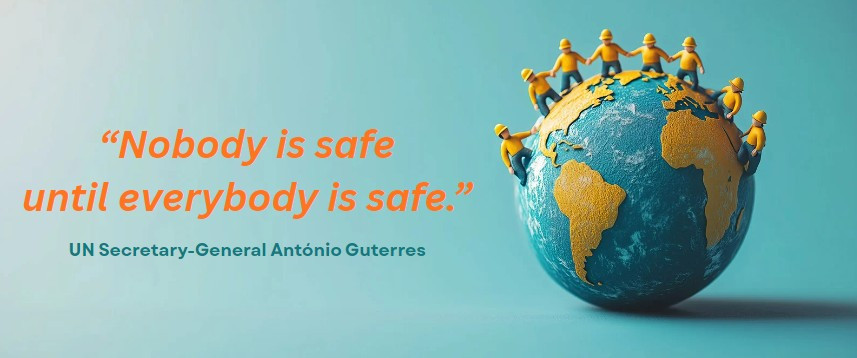
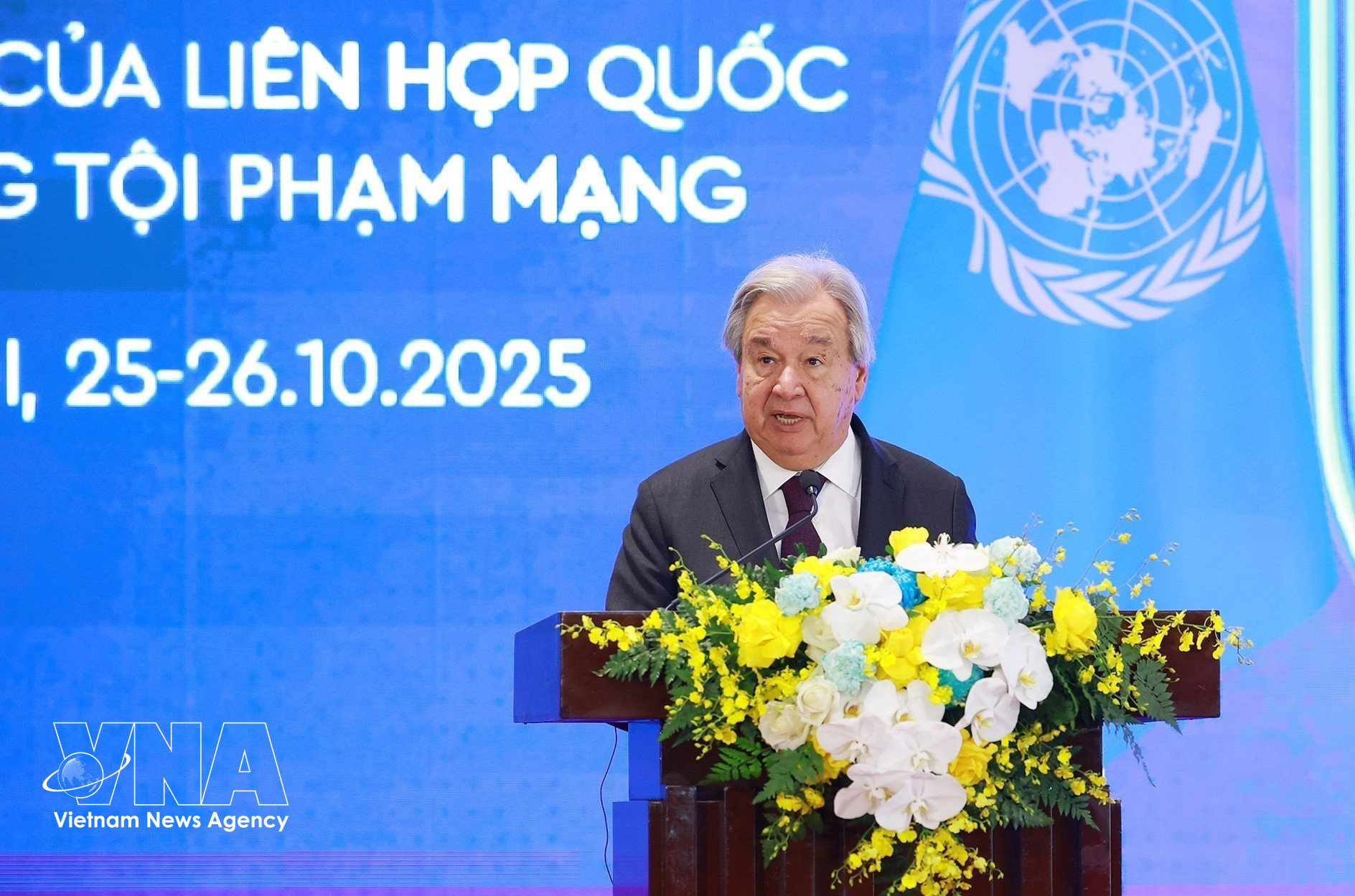
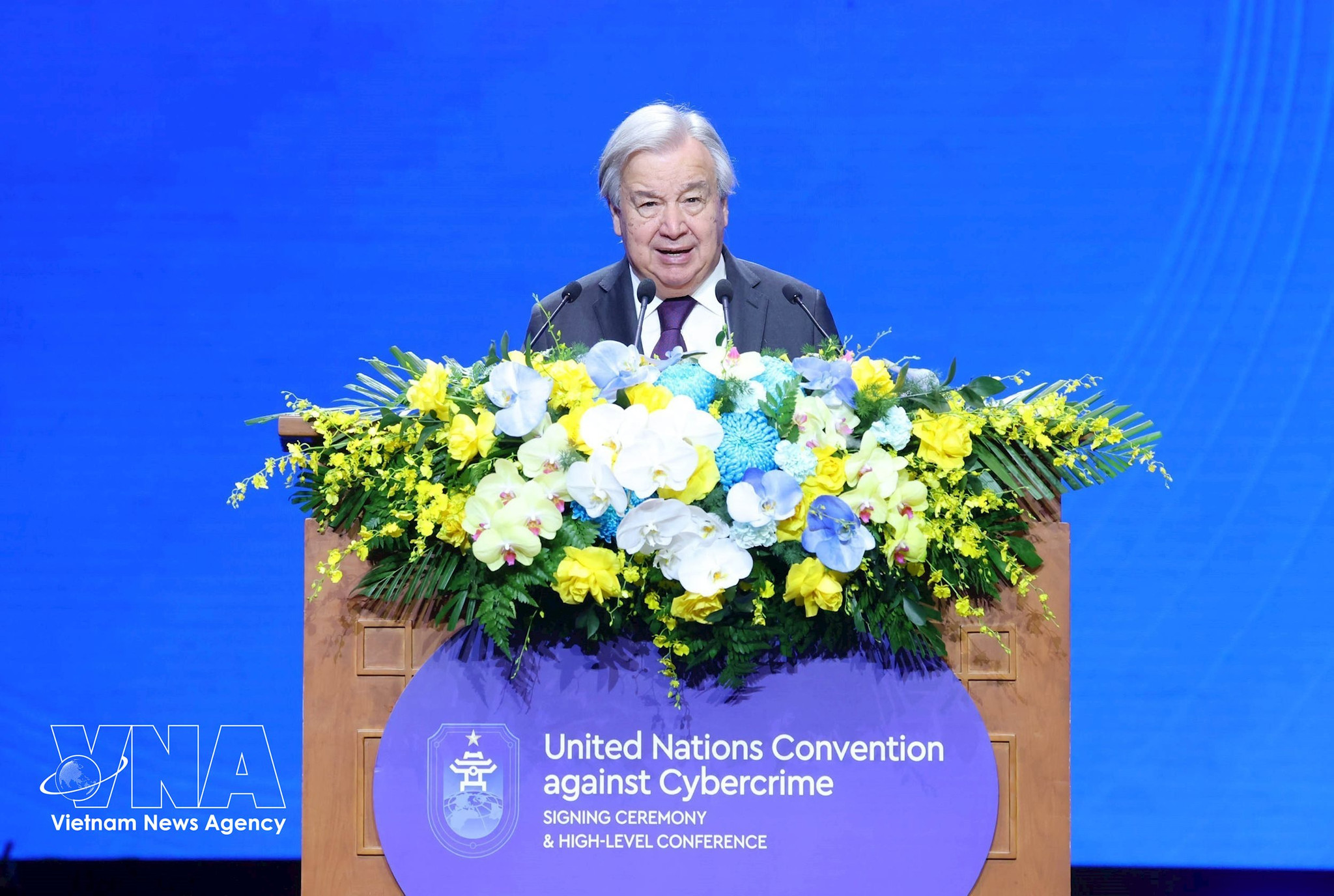
The negotiation process of the Convention, which began with United Nations General Assembly Resolution 74/247 in 2019, is recognized as one of the most comprehensive and inclusive efforts to draft a convention in UN history. The Convention was adopted by consensus, reflecting the serious commitment of the member states. Delegates at the event agreed that a spirit of collective action for global cyber safety is essential to turning commitments into reality. UN Secretary-General António Guterres underscored this with a brief but powerful message:
“
The true strength of the Hanoi Convention lies not in the signatures on the document, but in the actions of each country following the signing ceremony.
UN Secretary-General António Guterres
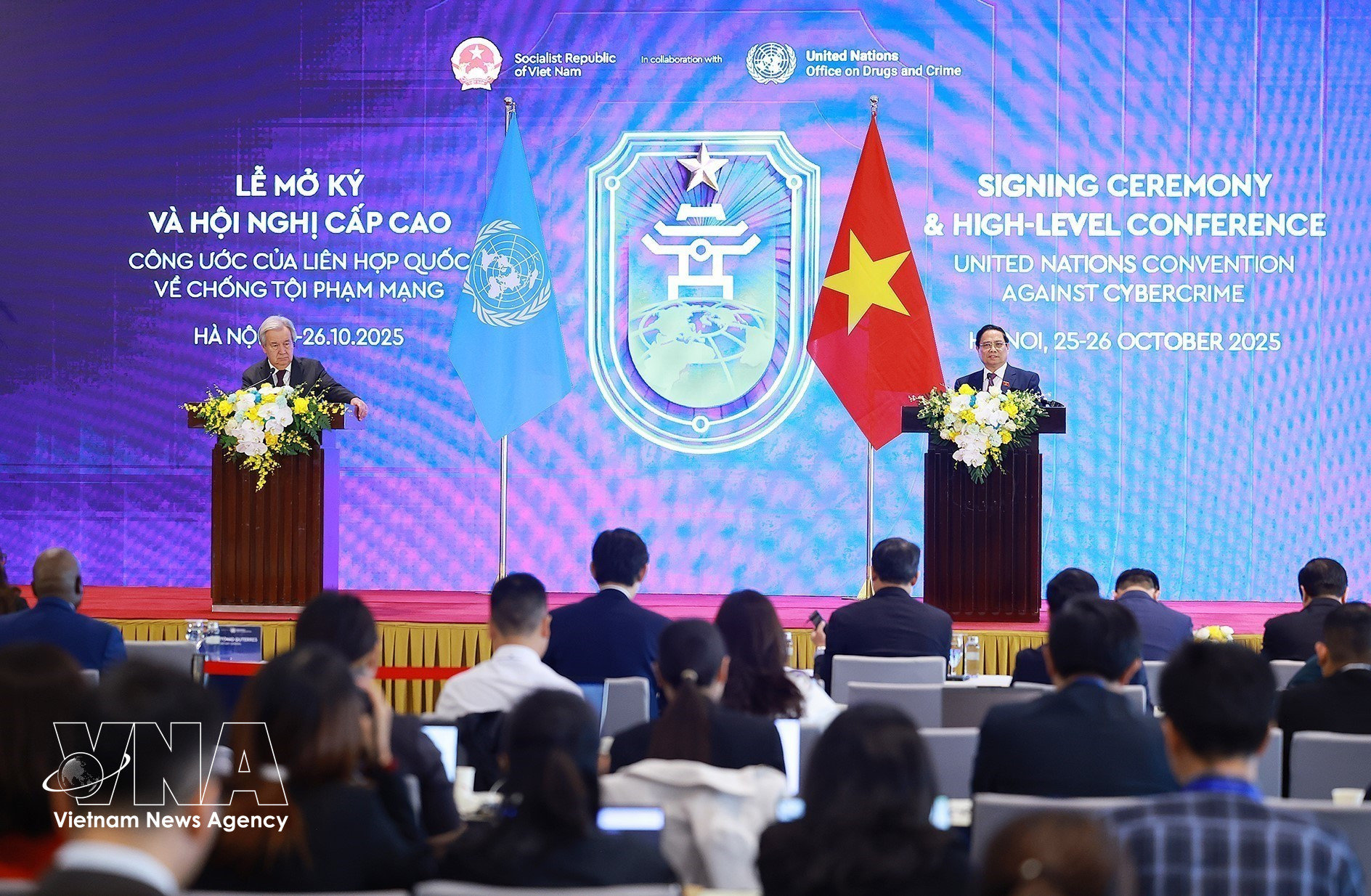
Prime Minister Pham Minh Chinh and UN Secretary-General António Guterres chair the international press conference on the signing ceremony of the Hanoi Convention. (Photo: VNA)
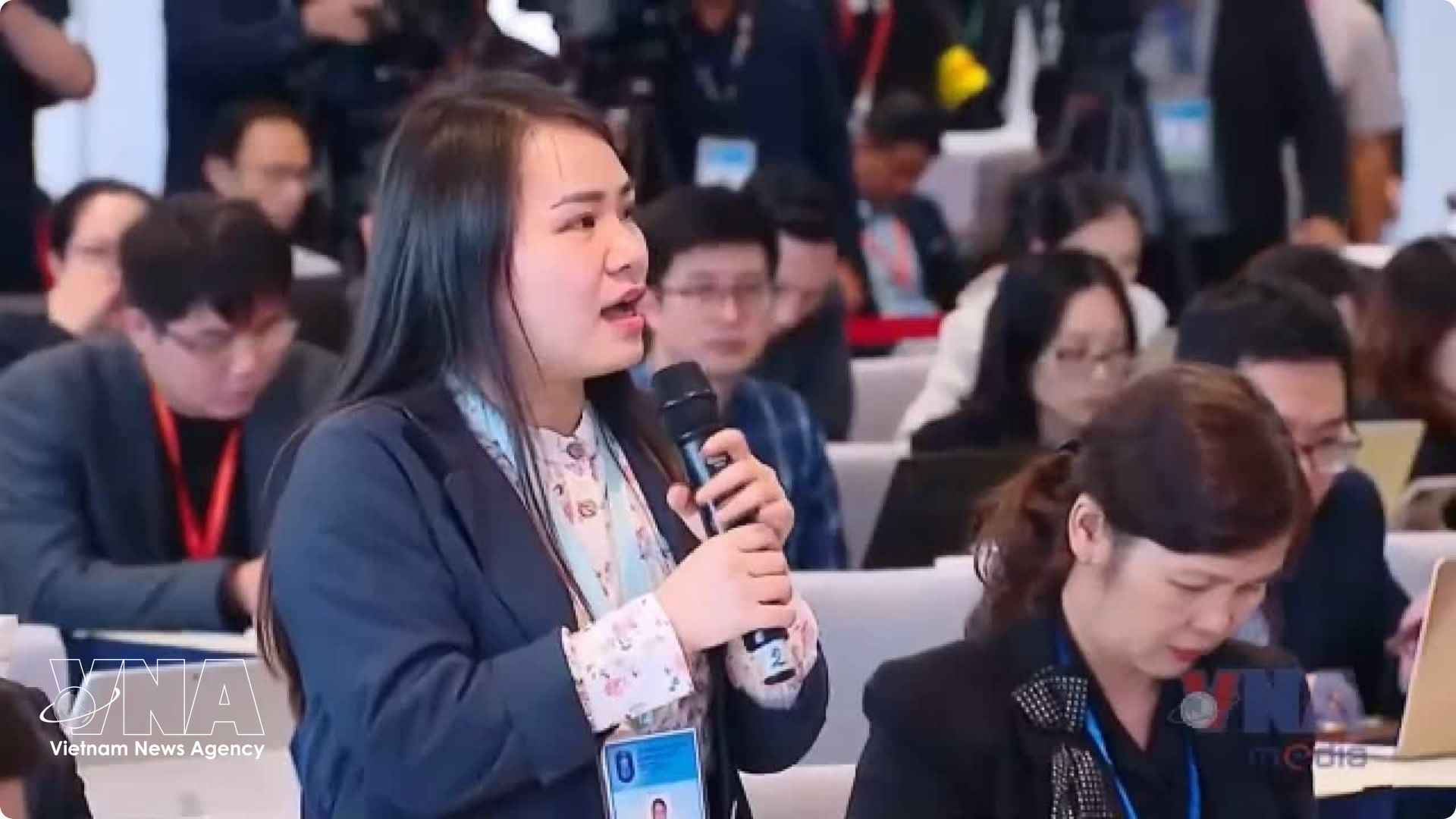
A Vietnam News Agency reporter delivers a question to the UN Secretary-General António Guterres at the press conference. (Photo: VNA)
“
The UN Secretary-General told the Vietnam News Agency that the most important thing to do after the signing ceremony of the Hanoi Convention is to ratify it as quickly as possible, and then to promptly establish implementation mechanisms, while ensuring the capacity and privilege for effective international cooperation.
Vietnam as proactive, responsible, trusted contributor
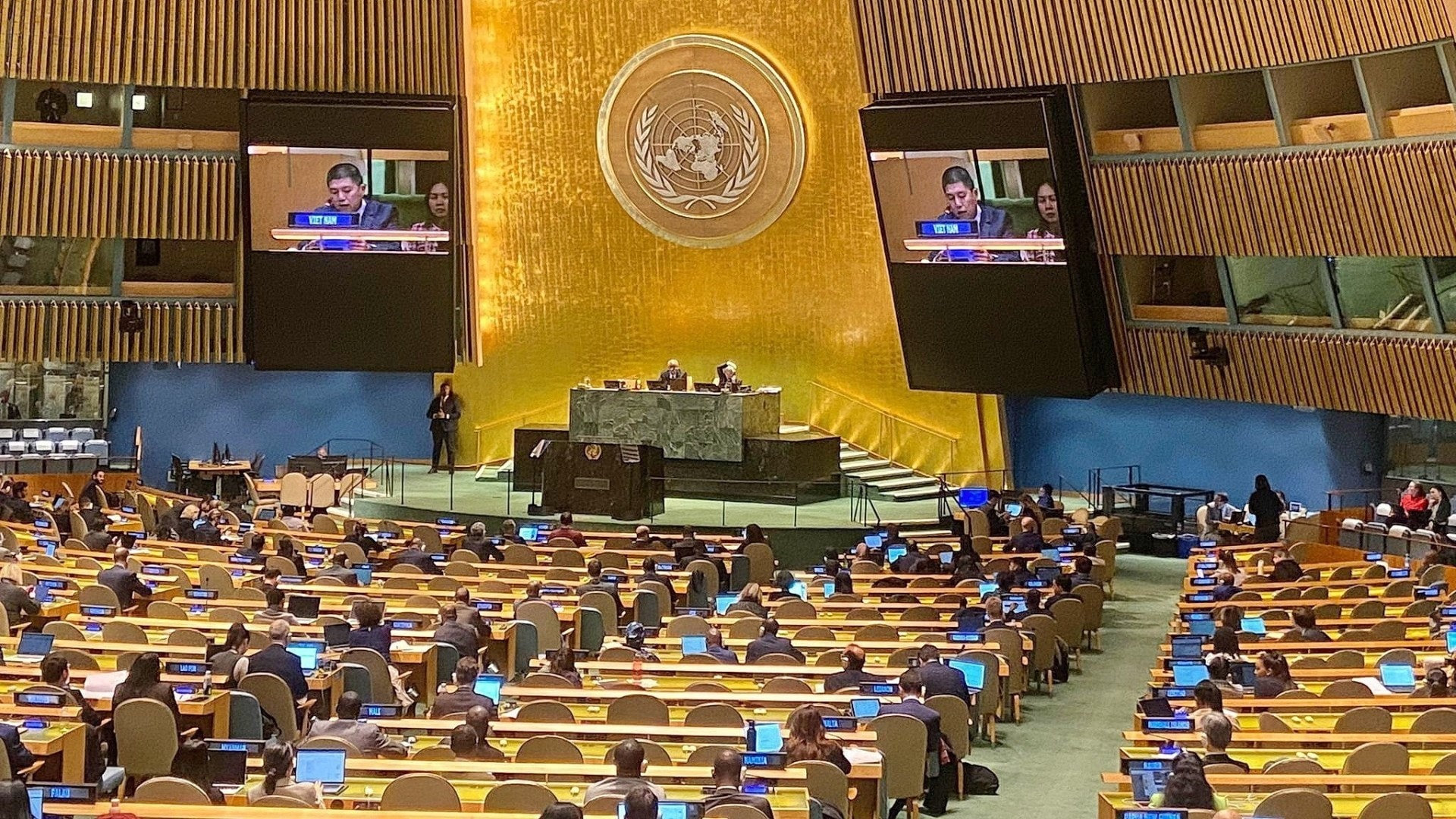
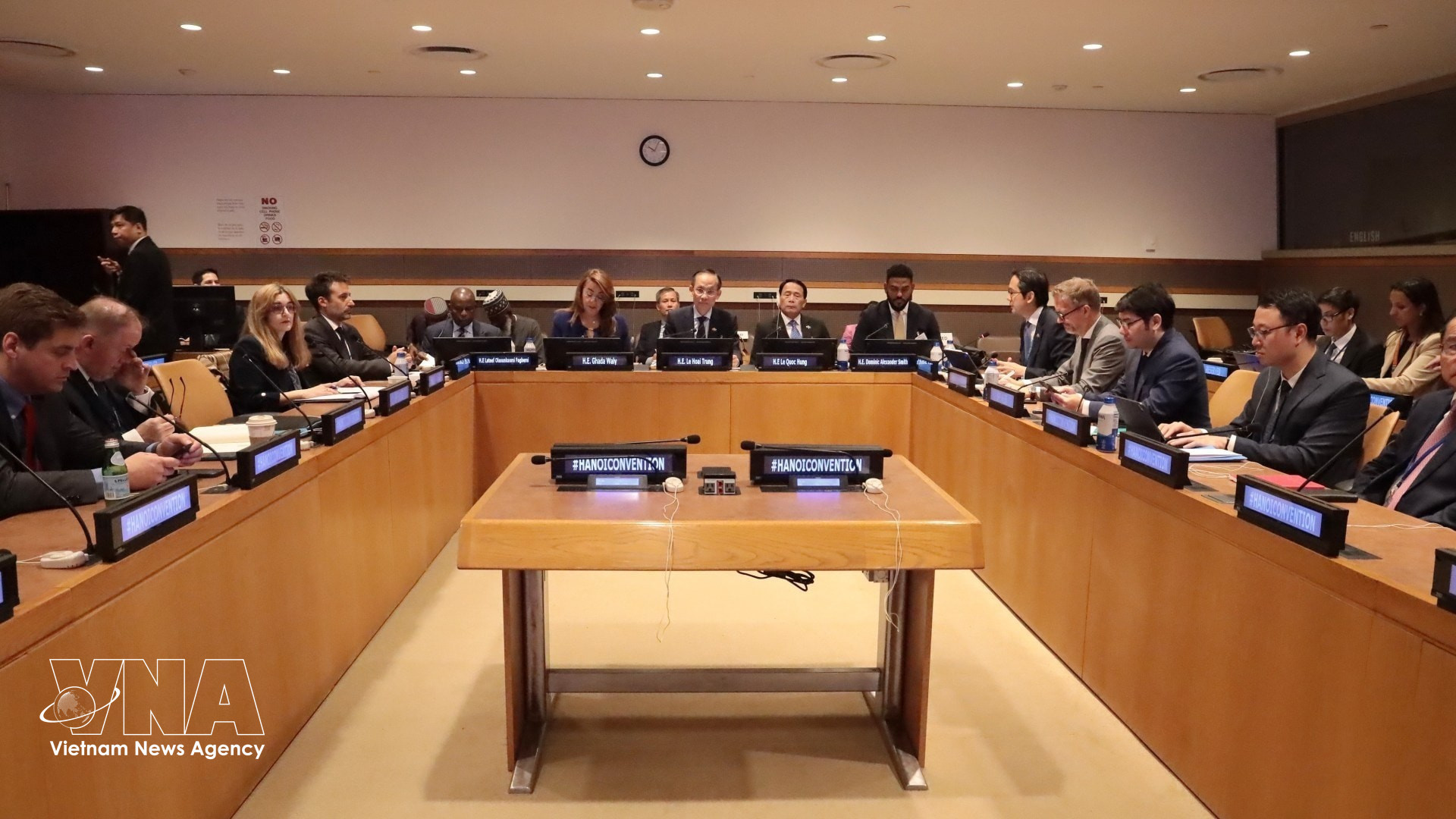
A representative of the Vietnamese delegation speaks at the UN General Assembly for the adoption of the Hanoi Convention, on December 24, 2024. (Photo: VNA )On September 22 at the United Nations headquarters in New York, as part of the High-level General Debate of the 80th Session of the UN General Assembly (UNGA 80), the Vietnamese Ministry of Foreign Affairs and Ministry of Public Security and the UN Office on Drugs and Crime (UNODC) organise an event to introduce the Hanoi Convention signing ceremony. (Photo: VNA)
“
Vietnam’s hosting of the signing ceremony demonstrates its role as a proactive, responsible, resilient, and goodwill nation.
Minister of Public Security Luong Tam Quang
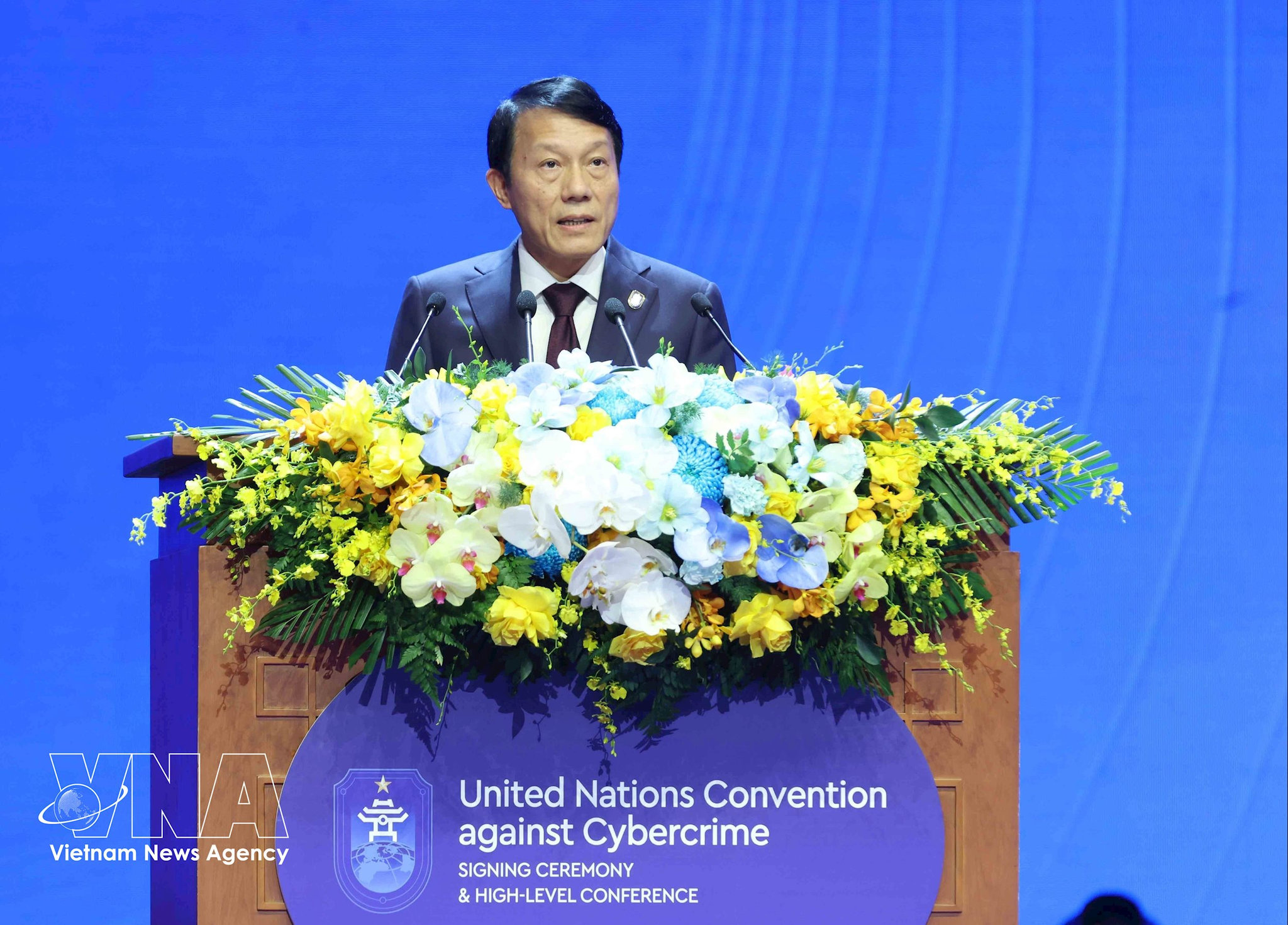
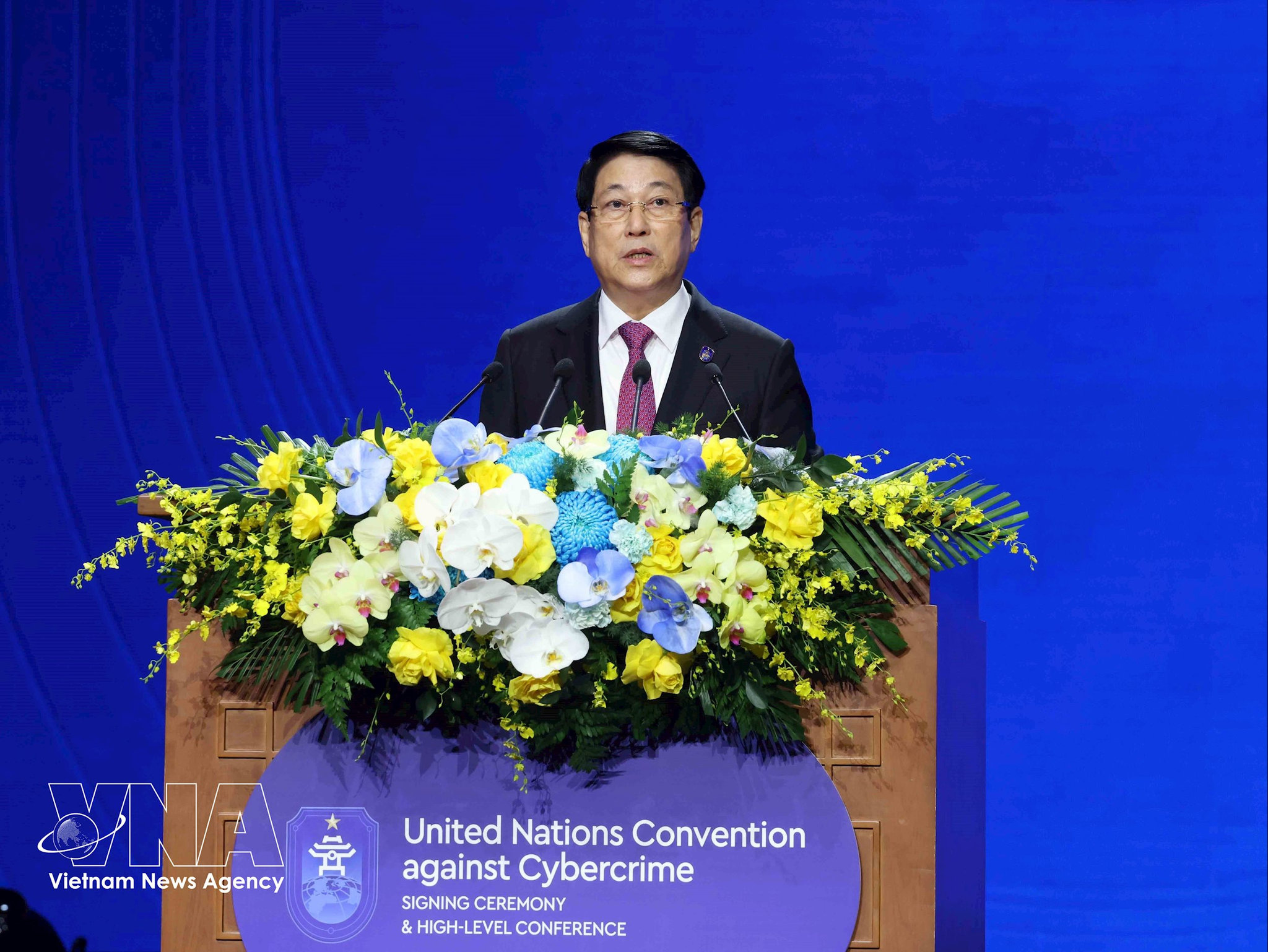
Minister of Public Security Luong Tam Quang speaks at the closing ceremony of the signing ceremony of the Hanoi Convention. (Photo: VNA)
The Hanoi Convention represents a historic strategic step, providing a legal foundation for international cooperation, affirming the value of multilateral collaboration, and respecting national sovereignty.
The presence of a large number of countries reflects the spirit of solidarity, political will, and strong determination of the international community in the fight against cybercrime.
The successful organisation of the opening signing ceremony in Hanoi reaffirms the central role of the United Nations and demonstrates the international community’s trust and confidence in Vietnam, and the Vietnam Ministry of Public Security, for credibility, capacity, and responsible role in addressing global challenges.
“
Putting the Hanoi Convention into practice and incorporating it into domestic law so that countries can ratify and collectively fulfill their commitments is extremely important. This is a shared responsibility of all countries, particularly their leaders, judicial, and law enforcement agencies.
Major General Le Xuan Minh, Director of the Cybersecurity and High-Tech Crime Prevention Department under the Ministry of Public Security
Press conference co-chaired by the Ministry of Public Security and the Ministry of Foreign Affairs about the outcomes of the signing ceremony of the Hanoi Convention. (Photo: VNA)
“
The signing of the Hanoi Convention in Vietnam marks an important milestone. As other countries continue to sign and ratify it, they will see that a developing country like Vietnam is ready to work alongside others to build a safe, healthy, and humane cyberspace for all. This also serves as a source of inspiration and a positive message in the global fight against cybercrime.
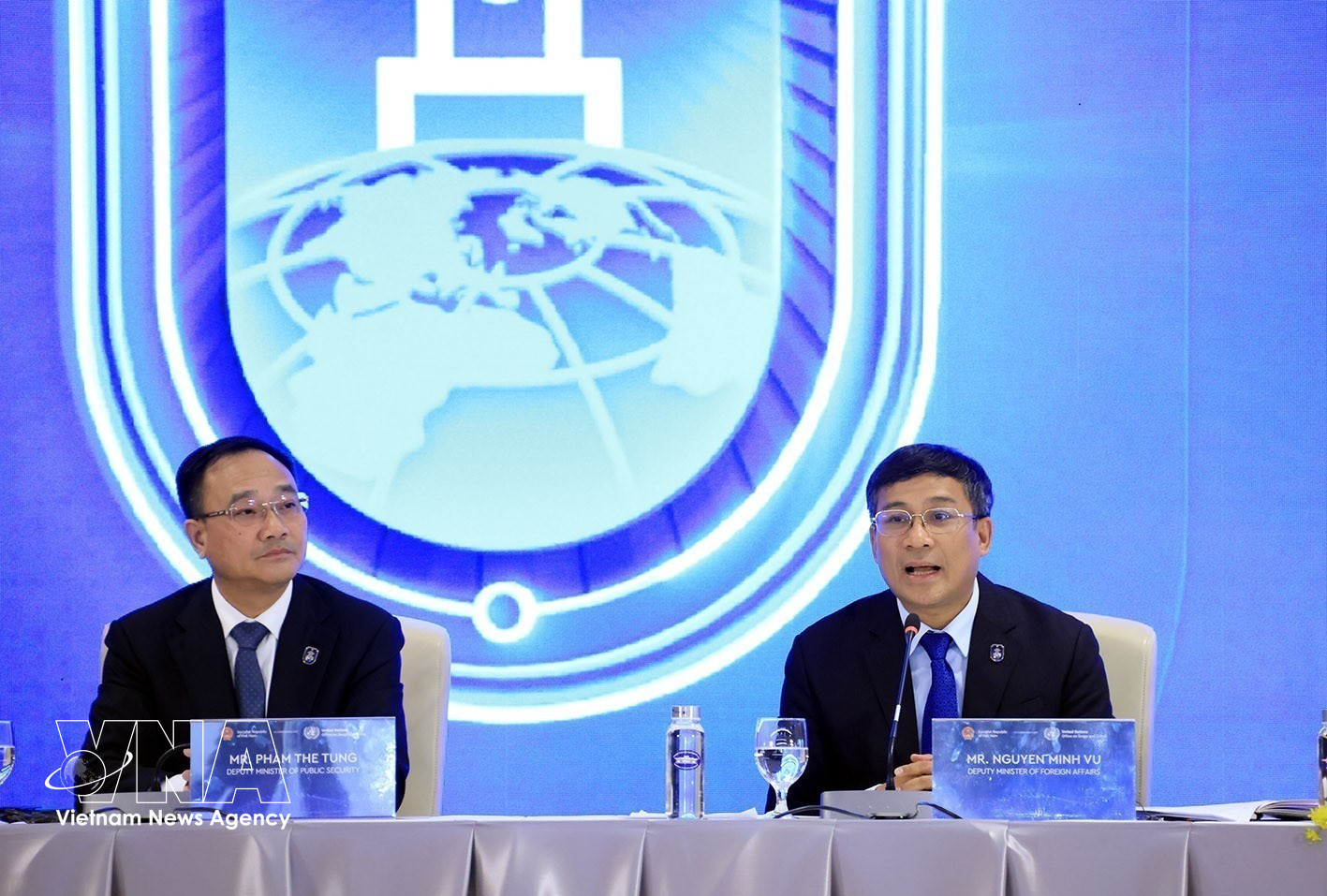
Deputy Minister of Foreign Affairs Nguyen Minh Vu
The support of other countries and the UN’s selection of Vietnam as the host for the signing ceremony also carries great significance, according to Vu. It shows that, although Vietnam’s technological level and cybercrime enforcement capacity may not yet match that of many developed countries, Vietnam has courageously taken the lead, demonstrating the strong spirit and commitment of a developing nation ready to stand at the forefront alongside the international community in facing urgent cybersecurity challenges, he stressed.
The success of the Hanoi Convention signing marks Vietnam’s shift from participation to active engagement, raising its multilateral diplomacy to a new level. The event also laid the groundwork for a global United Nations instrument, set to serve as a legal framework for member states to cooperate in combating cybercrime. The international community is now moving toward the next milestone: bringing the Hanoi Convention into force./.
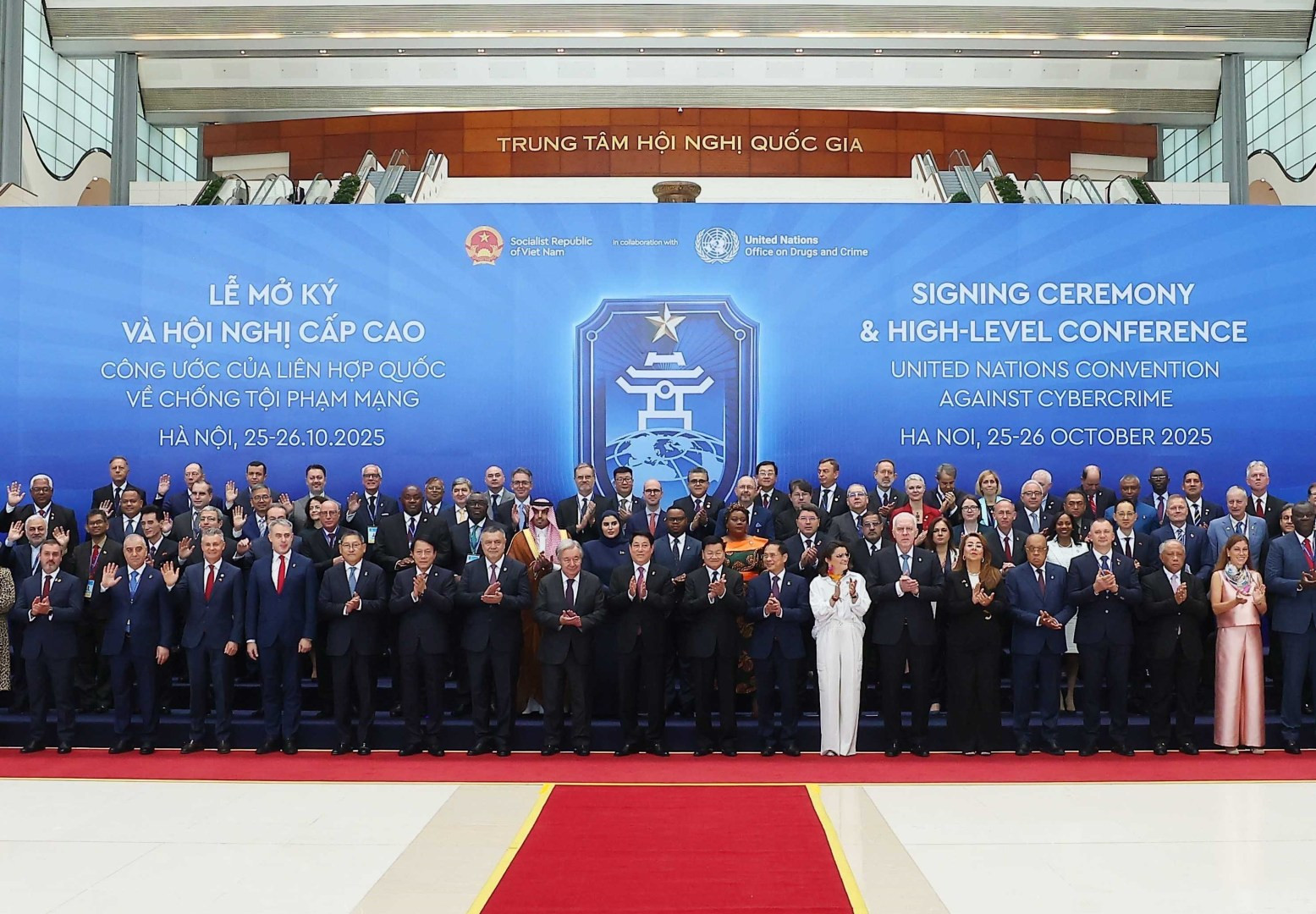
President Luong Cuong and UN Secretary-General António Guterres in a group photo with heads of delegations of countries joining the signing ceremony and high-level conference (Photo: VNA)








.jpg)