LEANER ORGANISATION, SHARPER GOVERNANCE CREATE NEW GROWTH DRIVERS
LongForm - Ngày đăng : 16:56, 29/06/2026
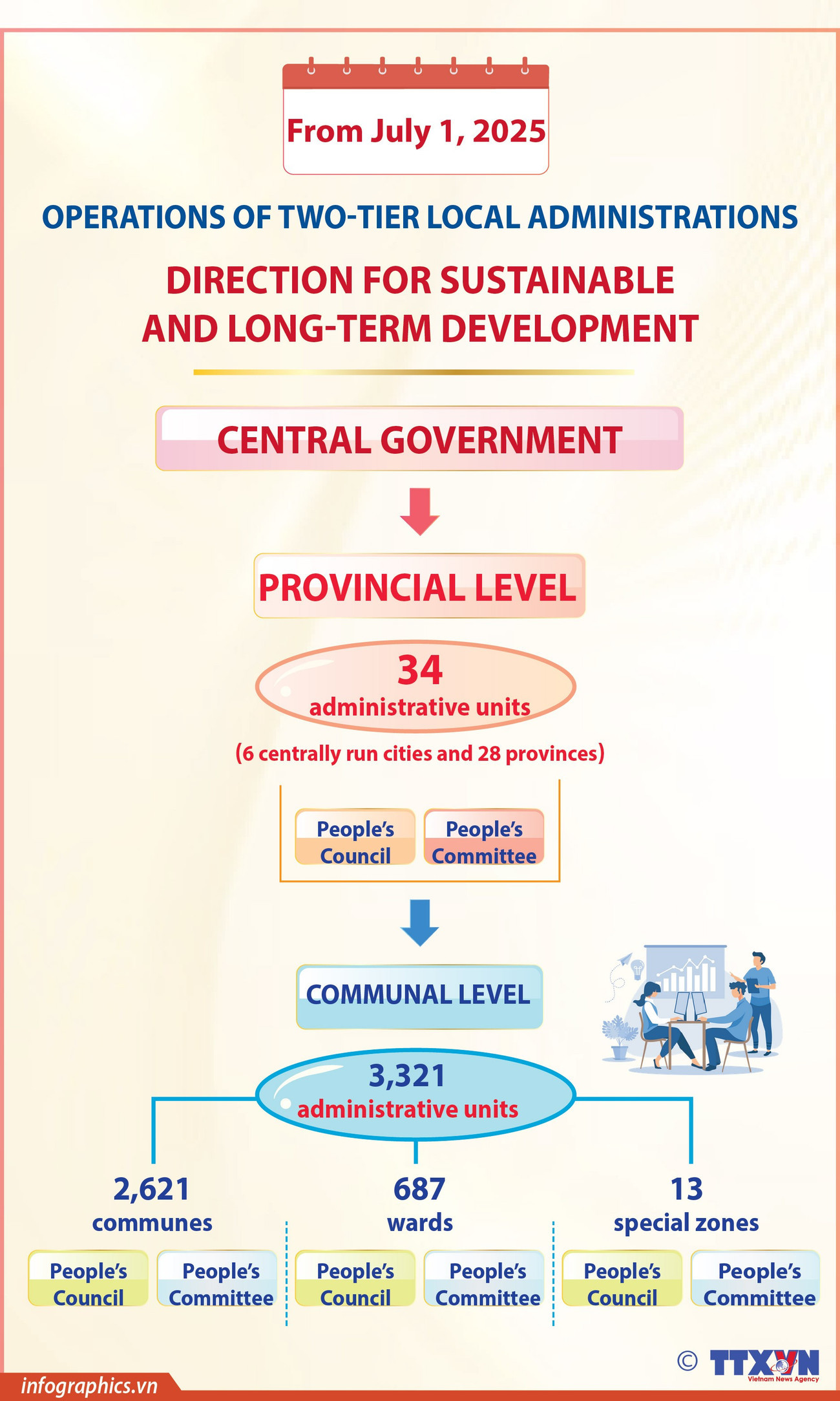
One year after the implementation of the two-tier local administration model, Vietnamese localities are entering a phase focused on improving governance quality, utilising resources, and translating institutional changes into substantive development momentum.
LongForm
LEANER ORGANISATION, SHARPER GOVERNANCE CREATE NEW GROWTH DRIVERS
VNA•{Ngày xuất bản}
One year after the implementation of the two-tier local administration model, Vietnamese localities are entering a phase focused on improving governance quality, utilising resources, and translating institutional changes into substantive development momentum.
The two-tier local administration model is being progressively refined while the decentralisation of power and delegation of authority is further strengthened, helping enhance the proactiveness of grassroots administrations and improve the efficiency of administrative procedure settlement. (Photo: VNA)
Shifting from administrative management to governance and development facilitation
The implementation of the two-tier local administration model represents a governance reform rather than merely an organisational restructuring. Changes in administrative boundaries in the central and Central Highlands regions reflect a shift from an administrative territory-based management mindset to an approach focused on shaping economic development spaces.
Da Nang is no longer confined to a coastal urban area, Gia Lai is no longer defined solely as a highland province, and Lam Dong is also no longer identified only with Da Lat and high-tech agriculture. These localities are now operating as unified economic entities. The transformation goes beyond geographical scale, extending to the very nature of local development. Urban centres, raw material zones, industrial parks, seaports, logistics hubs, and economic corridors are being integrated into a unified development space.
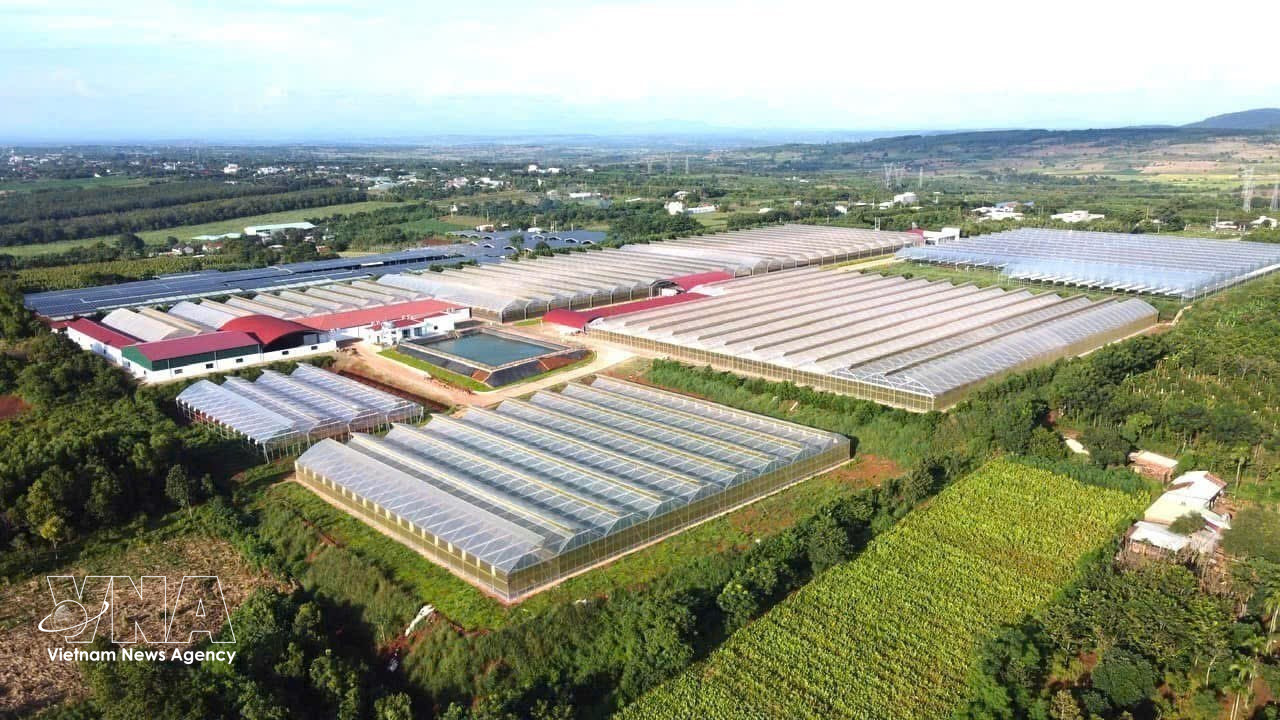
Sunrise over Tra Ly lotus lagoon in Duy Xuyen commune, Da Nang city. (Photo: VNA)Tra Ly lotus lagoon in Da Nang city is an ideal destination for visitors seeking a peaceful retreat amid nature. (Photo: VNA)Foreign visitors are welcomed in Gia Lai province. (Photo: VNA)Gia Lai is emerging as a new hub for high-tech agricultural projects. (Photo: VNA)Lam Dong is positioning itself as a future hub for green energy development. (Photo: VNA)
Commenting on the merger of Da Nang and Quang Nam, Secretary of the Party Committee of the new Da Nang Le Ngoc Quang said the reform is not only about streamlining the administrative apparatus but also about better unlocking the locality’s potential, advantages, and resources in a new development phase.
“
The formation of a larger development space requires new approaches to governance, management, and the implementation of tasks
Secretary of the Da Nang Party Committee Le Ngoc Quang
In practice, post-merger localities are now operating at significantly larger development scales than before. Da Nang is integrating urban space, industry, logistics, seaports, and the Chu Lai growth hub. Gia Lai has, for the first time, formed a direct linkage axis between the Central Highlands and the coastal areas. Lam Dong is bringing together strengths in high-tech agriculture, renewable energy, mining, tourism, and maritime economy. Meanwhile, Khanh Hoa continues to reinforce its role as a regional hub for maritime economy, logistics, and energy in the South Central Coast.
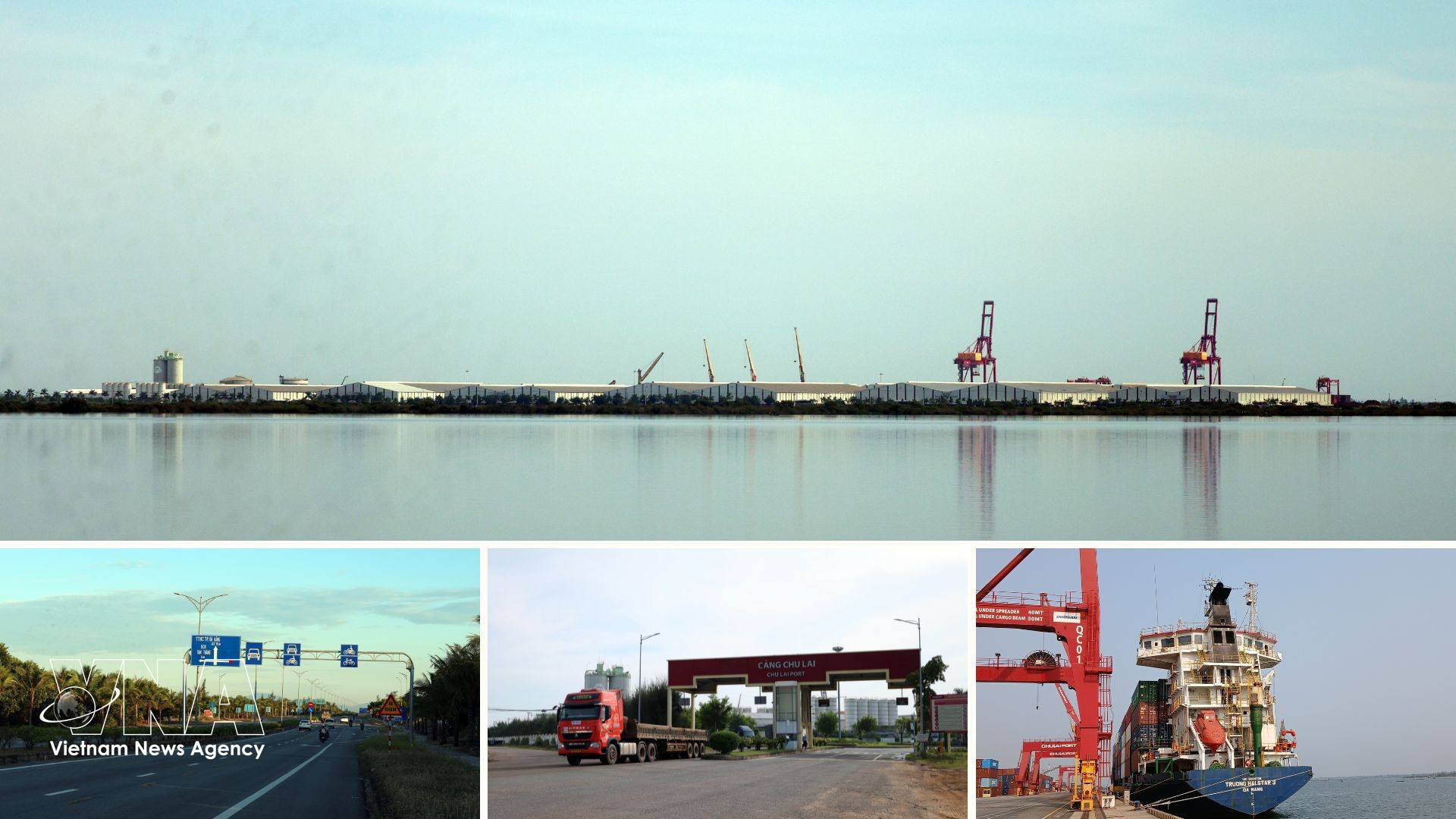
Da Nang is strengthening connectivity among urban, industrial, logistics and seaport areas and the Chu Lai Open Economic Zone. (Photo: VNA)
An important shift under the new model is the transition from development thinking based on administrative boundaries to an approach centred on integrated economic space. In Gia Lai, Chairman of the provincial People’s Committee Pham Anh Tuan instructed that wards and communes formerly belonging to Quy Nhon should be viewed as a unified development entity, mutually supportive and complementary, rather than operating in a fragmented manner. He stressed that grassroots authorities are responsible for administrative management, harnessing local potential, and expanding the development space to create new growth drivers.
A shipbuilding and repair facility operated by HD Hyundai Vietnam Shipbuilding Co., Ltd. in the Van Phong Economic Zone, Khanh Hoa province. (File photo: VNA)Offshore aquaculture using HDPE cages in Khanh Hoa province has proven to be a highly effective technological solution for sustainable marine farming. (Photo: VNA)Visitors flock to Mui Ne beach in Lam Dong province to enjoy the stunning scenery of blue waters and white sandy beaches. (Photo: VNA)Lam Dong is unlocking the tourism potential of the Lien Huong area. (Photo: VNA)A panoramic view of the DT.633 bypass road upon completion. The road is expected to provide seamless connectivity with coastal routes and contribute to the transformation of Gia Lai province’s transport infrastructure. (Photo: VNA)
These changes show that the success of the two-tier local administration model is measured not only by streamlined administrative structures, but also by the ability to reorganise development resources, create new growth poles, and enhance local competitiveness in the new context.
Streamlined apparatus and development-facilitating administration
Whereas the effectiveness of local administrations was previously measured largely by their ability to manage territories, process administrative procedures, and maintain apparatus operations, the focus is now shifting toward their capacity to implement development goals and deliver tangible results.
“
The current requirement goes beyond merely restructuring administrative organisations. The priority now is to improve operational quality, strengthen public service performance, and enhance the capacity of local authorities to meet development demands in a rapidly changing environment.
Permanent Deputy Secretary of the Dak Lak provincial Party Committee Cao Thi Hoa An
As greater authority is delegated to grassroots levels, the competence of public officials, the effectiveness of coordination among different levels of government, and the ability to apply digital technologies are becoming decisive factors in governance.
Against this backdrop, many localities have proposed the early development of a comprehensive set of criteria to assess the performance, effectiveness, and efficiency of administrations at all levels in line with the Government's requirements.
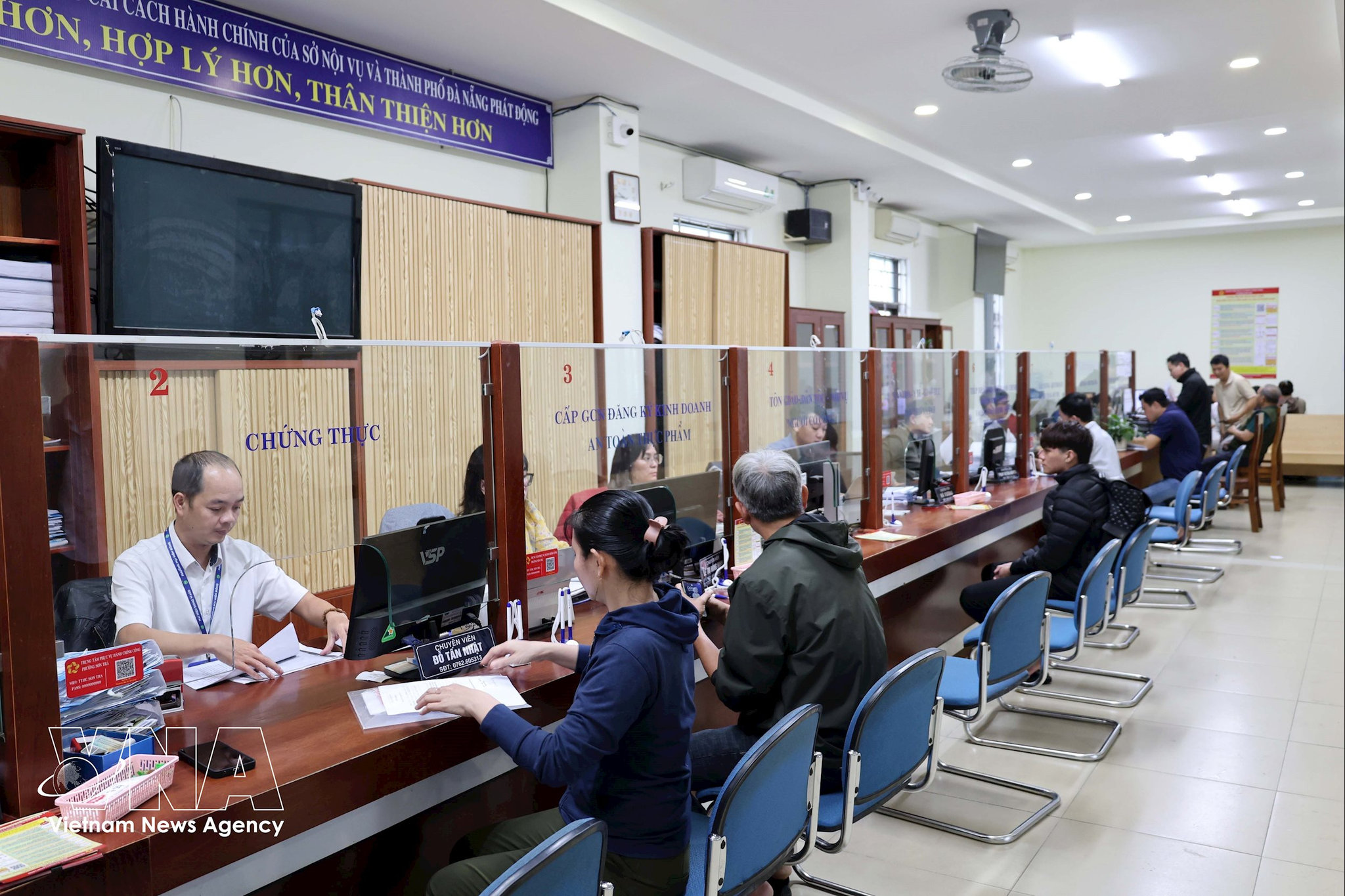
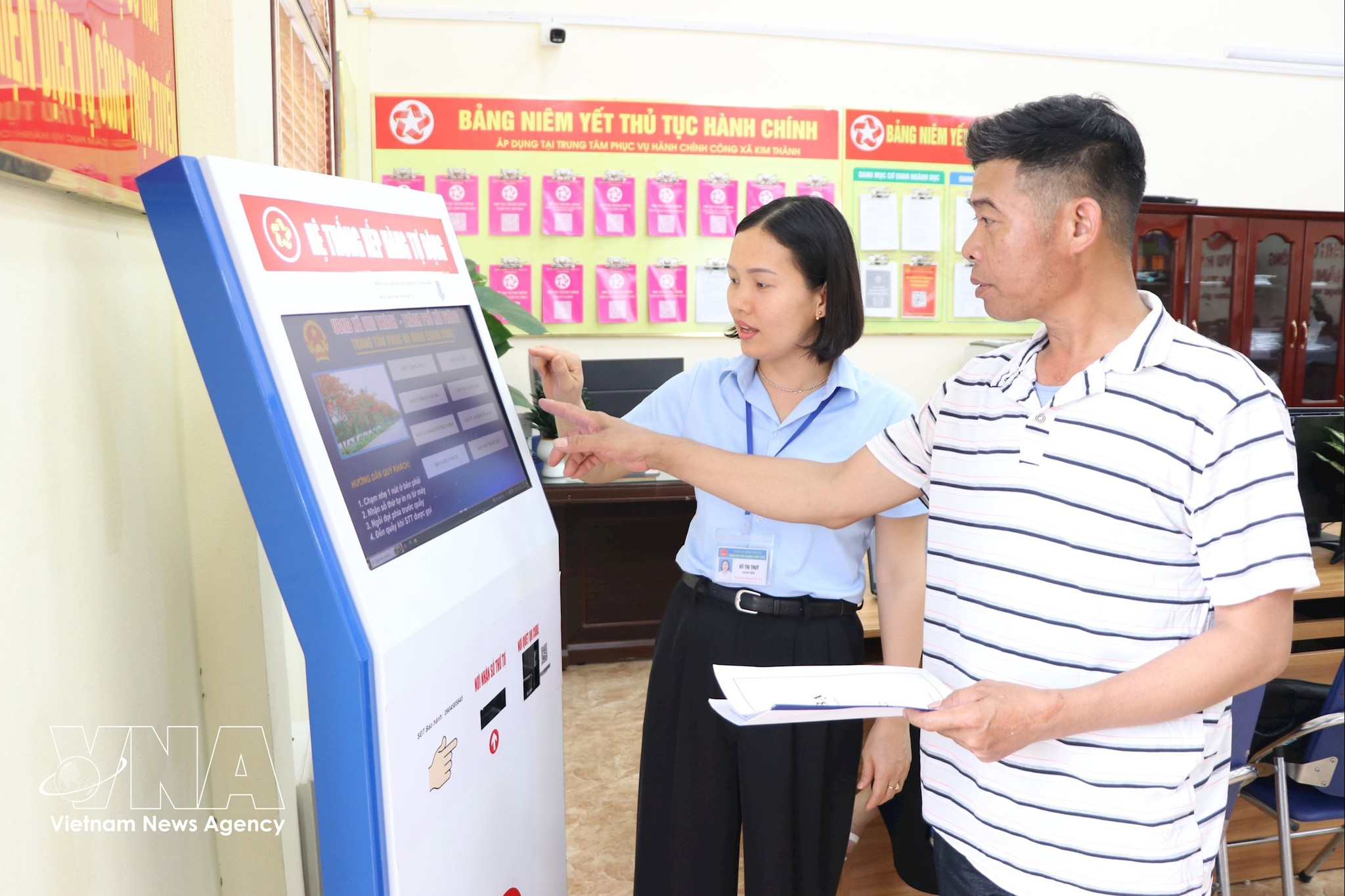
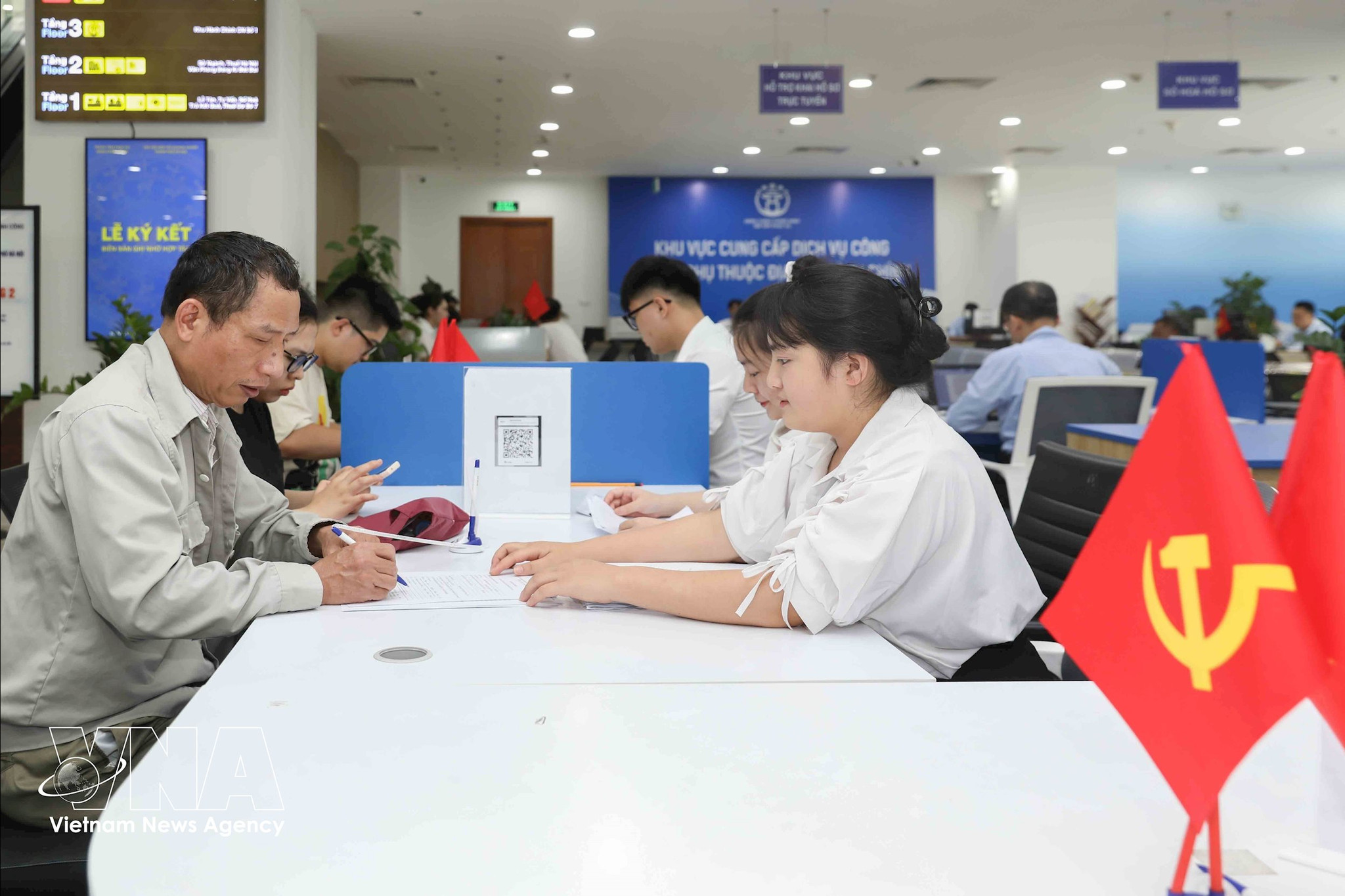
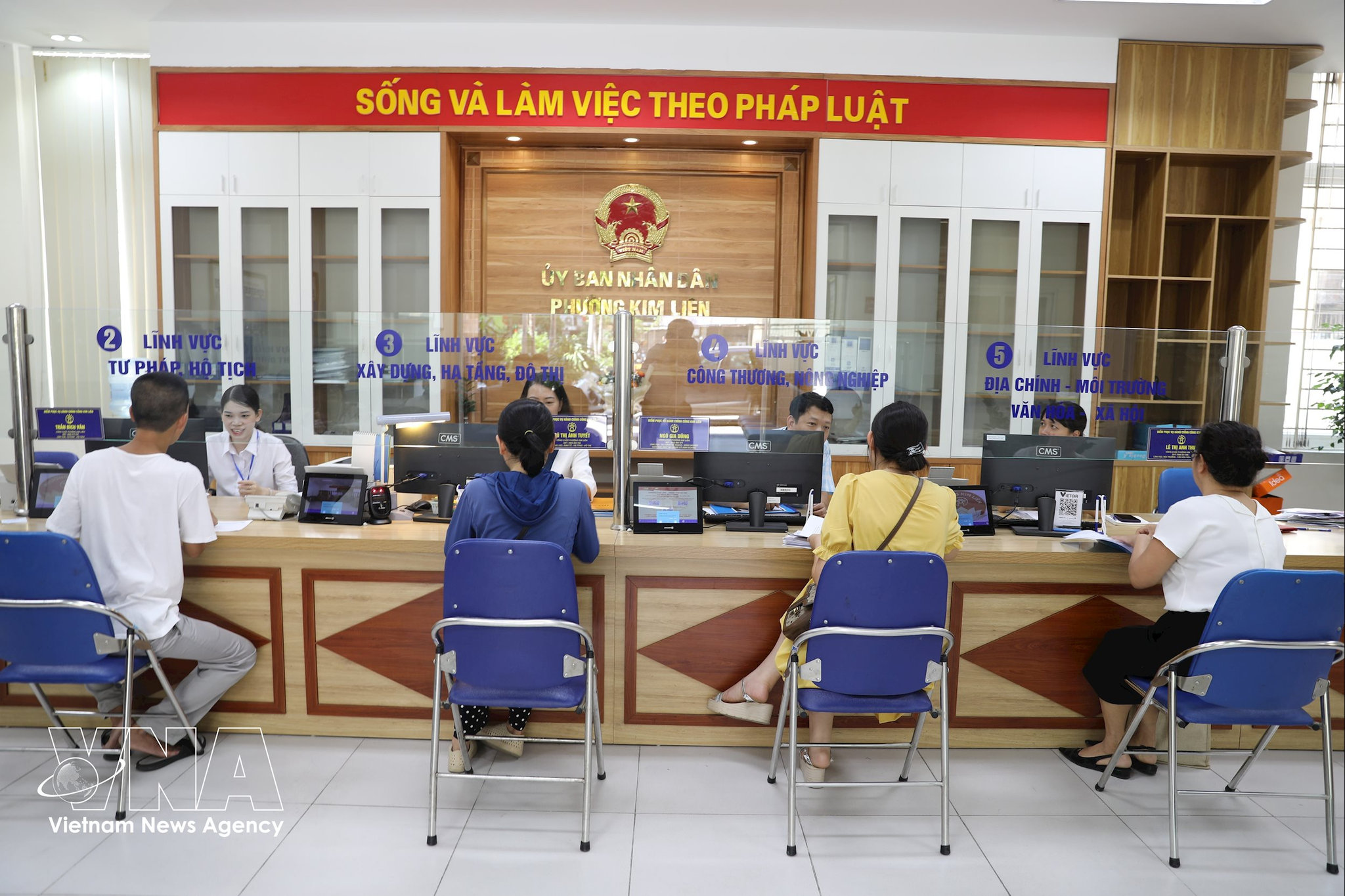
The two-tier local administrationt system operates efficiently, delivering better services to both citizens and businesses. (Photo: VNA)The two-tier local administration model is being progressively refined, improving the efficiency of administrative procedure processing and public service delivery. (Photo: VNA)The Hanoi Public Administrative Service Centre is advancing a modern and professional administrative model, with data serving as the foundation. (Photo: VNA)Residents carry out administrative procedures at the Public Administrative Service Centre in Kim Lien ward, Hanoi. (Photo: VNA)
Such evaluation criteria should not be limited to measuring the number of agencies streamlined or staffing structures reorganised. Instead, they should focus on more substantive indicators, including the quality of public services, citizen and business satisfaction, the effectiveness of administrative procedures, progress in achieving socio-economic development targets, and the capacity for digital transformation.
More importantly, the true test after one year is not how administrative structures have been reorganised, but how localities operate the new system to optimise resources, restructure development space, and generate new growth drivers. This will ultimately serve as the most meaningful measure of the two-tier local administration model in the years ahead.
Experience over the past year has shown that as greater authority is delegated to grassroots levels, the capacity of public officials becomes a decisive factor in determining the effectiveness of the administrative apparatus. Even a streamlined system will struggle to deliver results if officials are unable to keep pace with new demands in governance, digital transformation, and the implementation of development objectives.
Da Nang continues to identify digital transformation as a key driver for enhancing urban governance and improving public services. Many other localities are also accelerating the development of digital government platforms, shared databases, and digital management systems to meet governance requirements in the new context.
Drawing on practical experience from local administrations, many experts and policymakers have called for the early establishment of a comprehensive set of indicators to assess the performance of administrations. Such indicators could be measured through factors including processing times for administrative procedures, levels of citizen and business satisfaction, progress in achieving development targets, digital transformation outcomes and the quality of coordination among different levels of administration.
Ultimately, the success of the two-tier local administration model will be measured by the pace of local development and the satisfaction of citizens. The past year has largely been a period of building the institutional framework. The next phase will require leaders at all levels to think big, act bold, and strive to tackle bottlenecks and emerging challenges in order to transform a streamlined administrative system into a genuine engine of growth for the country./.
Nghinh Phong Tower Square on Tuy Hoa beach in Tuy Hoa ward, Dak Lak province. (Photo: VNA)